
Months of closure and reduced business had created enormous financial losses. When restrictions ended, many establishments prioritised survival and recovery over quality. Labour costs became a target for savings. Quality food and service went down the drain
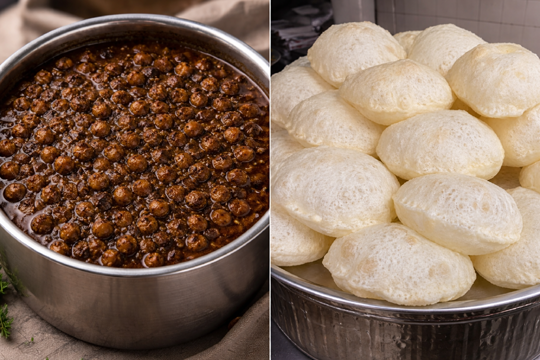
Few dishes are as deeply woven into the identity of Delhi as choley bhaturey. For generations, the sight of giant white bhaturas ballooning in hot oil and the aroma of spicy Pindi-style chholey simmering in large iron kadhais have defined mornings across the city. From Karol Bagh to Lajpat Nagar, from Chandni Chowk to Rajouri Garden, the dish has long been more than breakfast. It has been a cultural institution, a marker of culinary pride, and a source of fierce debate among Delhiites. Every neighbourhood had its favourite vendor. Every family had an opinion about which shop made the softest bhaturas, the darkest chholey, or the sharpest pickle to accompany them.
Yet something changed after the Covid-19 pandemic. Many Delhiites who had spent decades eating choley bhaturey began noticing that the dish no longer tasted the same. The bhaturas were often smaller, harder, redder, and oilier. The chholey increasingly resembled generic chickpea curry rather than the distinctive Pindi-style preparation that once defined the dish. The magic that had elevated a humble combination of chickpeas and fried bread into one of India’s most beloved foods seemed to be disappearing.
The reasons behind this decline are not mysterious. The pandemic disrupted the entire restaurant industry. During the lockdowns, thousands of cooks, helpers, cleaners, and kitchen workers returned to their villages across Uttar Pradesh, Bihar, Haryana, Punjab, Rajasthan, and beyond. Many never came back. Some found alternative livelihoods closer to home. Others discovered that returning to Delhi no longer made economic sense. The hospitality industry suddenly found itself without the skilled labour force that had quietly sustained its standards for decades.
Restaurant owners faced a different challenge. Months of closure and reduced business had created enormous financial losses. When restrictions ended, many establishments prioritised survival and recovery over quality. Labour costs became a target for savings. Instead of hiring experienced cooks at higher salaries, many restaurants relied on less-skilled workers willing to accept lower wages. Dishwashers became assistant cooks. Assistant cooks became head cooks. Recipes that once required patience, experience, and attention to detail were simplified. Ingredients were substituted. Resting times were shortened. Traditional techniques disappeared.
The result was visible on the plate. Choley bhaturey became one of the clearest examples of this transformation because the dish depends heavily on technique. Unlike some foods that can tolerate shortcuts, a great bhatura requires knowledge accumulated over years of practice. A great batch of Pindi chholey depends upon understanding spices, textures, temperatures, and timing. Remove those skills and the dish quickly deteriorates.
For decades, Delhi’s finest choley bhaturey establishments were run by cooks who understood the dish almost instinctively. They knew how dough should feel beneath the fingers. They knew how much fermentation was required on a humid summer morning compared with a cold winter day. They knew precisely when chickpeas had reached the correct consistency. Such knowledge rarely existed in recipe books. It was passed from master to apprentice through observation and repetition.
When these experienced cooks disappeared from kitchens after Covid, much of that knowledge disappeared with them. New workers could follow written instructions, but they often lacked the intuition developed through years of practice. The difference between excellent choley bhaturey and mediocre choley bhaturey is often found in details too subtle to quantify. Yet those details determine whether customers remember a meal fondly or forget it immediately.
The tragedy is that many younger Delhiites may never realise what has been lost. Those who discovered the dish only after the pandemic may assume that today’s versions represent the authentic standard. Older generations know otherwise. They remember bhaturas that remained soft for hours. They remember chholey with a deep, smoky complexity rather than a one-dimensional chilli flavour. They remember meals that justified standing in long queues on Sunday mornings.
The decline of choley bhaturey is therefore not simply about one dish. It reflects broader changes within Delhi’s restaurant industry. It illustrates what happens when economic pressures force businesses to prioritise cost reduction over craftsmanship. It demonstrates how culinary traditions can deteriorate when skilled workers leave and are not adequately replaced. Most importantly, it reminds us that great food is ultimately created by people, not merely ingredients.
The exodus of culinary talent
The Covid period produced one of the largest labour migrations in modern Indian history. Images of migrant workers walking hundreds of kilometres back to their villages became symbols of the crisis. Among those migrants were countless restaurant cooks whose expertise had shaped Delhi’s culinary landscape.
Before Covid, Delhi’s restaurant ecosystem relied heavily upon a network of skilled workers from across northern India. Many had spent years mastering specific dishes. Some specialised in tandoor cooking. Others focused on breads, sweets, gravies, or regional cuisines. Choley bhaturey establishments particularly depended upon cooks who understood fermentation and spice balancing.
When lockdowns arrived, restaurants closed almost overnight. Income disappeared. Workers returned home because remaining in Delhi without employment was impossible. What many restaurant owners underestimated was that these workers might never return.
Life in villages had changed during the pandemic. Families reunited. Some migrants found agricultural work or local employment. Others started small businesses. Rising transportation costs and urban living expenses further reduced the attractiveness of returning to Delhi. Meanwhile, restaurant owners attempting to recover financially were often unwilling to offer significantly higher wages.
This created a mismatch. Skilled cooks expected compensation reflecting their expertise. Restaurant owners wanted to minimise expenses. As a result, many experienced workers remained absent from Delhi kitchens.
The consequences became evident almost immediately. Restaurants that once employed veteran cooks found themselves relying on inexperienced replacements. Kitchen hierarchies collapsed. Workers previously responsible only for cleaning utensils or preparing ingredients suddenly found themselves handling complex dishes.
No disrespect should be directed towards these workers. Many worked hard and learned quickly. The problem was structural. Culinary expertise requires time. A dishwasher promoted to cook cannot instantly acquire the skills developed through fifteen years of experience. Yet financial pressures forced many establishments to make precisely such substitutions.
Customers noticed the results. Consistency vanished. One day’s meal differed dramatically from the next. Texture, flavour, and presentation became unpredictable. The dish that once represented reliability became a gamble.
Why a proper bhatura is difficult to make
Many people assume that bhaturas are simply large puris. Nothing could be further from the truth. The distinction between the two lies at the heart of what has gone wrong in many Delhi restaurants.
A true bhatura should be white, soft, airy, and spongy. It should puff dramatically during frying and remain tender even after cooling slightly. When pressed gently, it should spring back. When torn open, the interior should reveal an intricate network of air pockets. Most importantly, it should not be hard, brittle, or excessively oily.
Achieving these characteristics requires understanding fermentation. Traditionally, the dough relies upon curd and resting time rather than commercial yeast. Fresh curd introduces natural acidity. Time allows subtle fermentation. The resulting gases create the distinctive sponge-like structure.
The process begins with high-quality maida. Baking powder and baking soda act as leavening agents. Semolina contributes texture. Sugar supports fermentation and colour development. Sour curd provides acidity necessary for chemical reactions. Oil enriches the dough and improves elasticity.
After mixing, kneading becomes critical. The dough must be worked thoroughly until smooth and supple. Under-kneading produces dense bhaturas. Overly stiff dough prevents proper expansion. Experienced cooks learn to judge readiness through touch rather than measurement.
Resting is equally important. Many traditional cooks insist that dough should rest overnight with curd. This extended period develops flavour and texture impossible to achieve through shortcuts. Modern restaurants often reduce resting time to accelerate production. The result is immediately noticeable.
Frying presents another challenge. Oil temperature must be extremely high yet carefully controlled. Dough pieces should be rolled using oil rather than excessive dry flour. Once immersed, gentle pressure encourages inflation. Timing determines colour, texture, and oil absorption.
A properly made bhatura emerges pale white with only minimal golden spots. Excessive redness often indicates incorrect temperature or poor fermentation. A bhatura that cracks when tapped resembles a puri more than a bhatura.
These nuances explain why the dish deteriorates when experienced cooks disappear. Every stage requires judgement rather than mere recipe following. Shortcuts accumulate. Quality declines.
The forgotten science of overnight fermentation
Among traditional Delhi cooks, one principle was almost sacred: bhatura dough benefited enormously from overnight resting. This practice distinguished exceptional establishments from average ones.
Fresh curd mixed into maida creates conditions for slow fermentation. During an overnight rest, microscopic activity transforms the dough. Acids develop. Gluten relaxes. Gases form gradually. The dough becomes more extensible and flavourful.
The next morning, cooks encounter a living product dramatically different from the mixture prepared the previous evening. It stretches more easily. It fries more beautifully. It produces the distinctive white, fluffy bhaturas that generations of Delhiites cherished.
Post-Covid cost pressures encouraged many restaurants to abandon this practice. Overnight fermentation requires planning, storage space, and skilled supervision. Same-day dough production is easier and cheaper. Yet convenience comes at a cost.
Without adequate fermentation, bhaturas often become dense and chewy. Operators compensate by increasing chemical leavening agents or altering frying techniques. These adjustments rarely replicate traditional results.
The loss of overnight fermentation represents a broader trend. Modern restaurant economics increasingly rewards speed and efficiency. Traditional methods often appear inefficient because they require time rather than machinery or additives. Unfortunately, flavour and texture frequently depend upon precisely that investment of time.
Many younger cooks have never learned these techniques because the masters who understood them left during the pandemic. Knowledge transmission was interrupted. As older experts retire, some methods risk disappearing entirely.
The decline of authentic Pindi keechad chholey
If bhaturas have suffered, the chholey accompanying them have often fared even worse. Authentic Pindi keechad chholey represent a highly specialised style associated with the Punjab region. Their defining characteristics differ significantly from generic chickpea curries commonly served today.
Traditional Pindi chholey contain no onions and no garlic. Their flavour emerges from roasted spices, careful cooking, and the natural richness of chickpeas themselves. The consistency is thick and earthy, almost muddy in appearance, which explains the term “keechad.” The dish relies upon concentration rather than dilution.
Roasted spice blends play a central role. Coriander, cumin, black pepper, dried chillies, anardana, and other ingredients are roasted before grinding. This process creates depth impossible to achieve using pre-packaged powders. The aroma becomes more complex. Flavours become layered rather than harsh.
Mustard oil provides another crucial element. Used correctly, it contributes sharpness and character. However, traditional cooks rarely rely exclusively on mustard oil. Neither should the dish be prepared entirely with ghee or entirely with refined vegetable oil. Balance is essential.
Many modern restaurants simplify these processes. Ready-made spice mixes replace freshly roasted blends. Onion-tomato gravies replace traditional preparations. Pressure cooking shortcuts alter texture. Large batches prioritise efficiency over authenticity.
The resulting dish may still be edible, but it ceases to be genuine Pindi chholey. It becomes another generic chickpea curry served beside fried bread.
Customers accustomed to authentic versions immediately recognise the difference. The deep roasted notes disappear. The thick consistency becomes thinner. Complexity gives way to straightforward spiciness. A culinary heritage gradually erodes.
Profit maximisation and the changing economics of restaurants
Restaurant owners face genuine challenges. The pandemic imposed severe financial burdens. Rent continued accumulating even when dining rooms remained empty. Loans required repayment. Revenue vanished for months.
When businesses finally reopened, survival became the immediate priority. Many operators concluded that reducing costs offered the fastest path to recovery. Labour expenses attracted particular scrutiny because they represent a substantial portion of restaurant budgets.
From a financial perspective, replacing an experienced cook with a less expensive worker may appear rational. Yet culinary quality often depends upon precisely those experienced workers. What appears as a cost saving can become a long-term liability.
Customers initially tolerated declining standards because they were simply happy to return to restaurants. Over time, however, expectations returned. Comparisons emerged. Loyal patrons noticed differences. Word-of-mouth reputations weakened.
Choley bhaturey businesses are especially vulnerable because competition is intense. The dish exists throughout Delhi. Customers have numerous alternatives. A decline in quality quickly affects reputation.
Yet the temptation to cut corners remains powerful. Inferior ingredients cost less. Reduced resting times increase throughput. Simplified recipes require less expertise. Smaller portions improve margins.
Individually, each compromise appears minor. Collectively, they transform the dining experience. A restaurant may preserve short-term profitability while gradually undermining the qualities that originally attracted customers.
This dynamic helps explain why so many Delhiites feel that their favourite establishments are no longer what they once were. The issue is not merely nostalgia. Economic incentives have genuinely altered production methods.
Can Delhi reclaim its lost culinary heritage?
Despite the challenges, there are reasons for optimism. Culinary traditions possess remarkable resilience. Knowledge can be preserved, rediscovered, and transmitted if sufficient value is placed upon it.
A growing number of consumers are becoming more conscious about authenticity. Social media discussions frequently highlight traditional methods. Food enthusiasts increasingly seek establishments maintaining older standards. This creates market incentives for quality.
Some restaurant owners have already recognised that differentiation depends upon craftsmanship. In a crowded marketplace, authentic preparation can justify premium pricing and generate customer loyalty. Investing in skilled cooks may ultimately prove more profitable than constant cost-cutting.
Training programs could also play a role. Younger cooks need opportunities to learn from experienced practitioners before knowledge disappears. Recipes alone are insufficient. Techniques must be demonstrated and practised repeatedly.
Most importantly, consumers must reward quality when they encounter it. Restaurants maintaining traditional standards often face higher costs. Customers unwilling to pay slightly more for authentic preparation inadvertently encourage shortcuts elsewhere.
The future of Delhi’s choley bhaturey therefore remains uncertain but not hopeless. The city still possesses a deep reservoir of culinary passion. Many cooks retain traditional knowledge. Many customers still recognise excellence when they taste it.
What has been lost since Covid can, at least partially, be restored. Doing so requires acknowledging that great food is not accidental. It emerges from skill, patience, investment, and respect for tradition. A white, spongy bhatura resting overnight in curd-based dough and a pot of authentic Pindi keechad chholey prepared with roasted spices and mustard oil represent more than ingredients. They embody generations of accumulated expertise.
Delhi’s culinary identity was built upon such expertise. The pandemic disrupted that foundation, but it did not erase it completely. Whether the city regains its reputation for exceptional choley bhaturey will depend upon the choices made by restaurant owners, cooks, and customers in the years ahead.
The story of post-Covid choley bhaturey is ultimately a story about craftsmanship. When skilled people leave, standards decline. When profit becomes the sole consideration, traditions weaken. When knowledge ceases to be valued, quality suffers. Yet when communities recognise what has been lost and decide that it matters, revival becomes possible.
For Delhi, a city that takes immense pride in its food, that revival may be one of the most important culinary challenges of the coming decade.