
European Union has already increased imports of American LNG and committed to significant purchases extending through the coming years. However, American policymakers have often sought even longer-term commitments
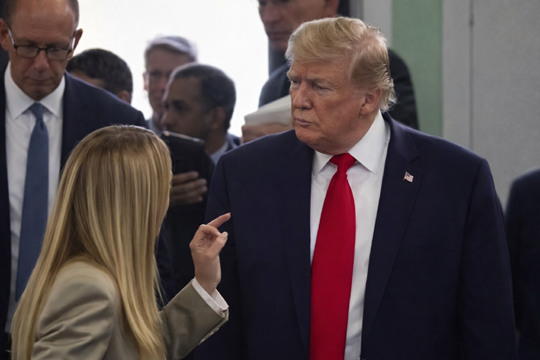
Donald Trump’s return to the White House for a second term has coincided with a period in which many nations are increasingly willing to challenge American preferences. The issue is not necessarily hostility toward the United States. Rather, it reflects a broader trend in which countries are pursuing their own interests through diversification. Allies and partners are no longer automatically accepting American demands regarding military commitments, energy purchases, currency use, or trade relationships.
One of the clearest examples can be found in relations between the United States and Europe. Washington has sought stronger commitments from European countries on a range of issues, from defense spending to energy purchases. American policymakers have argued that Europe should deepen its reliance on American liquefied natural gas as part of a broader strategy to reduce dependence on rival suppliers. While some European governments have increased imports of American LNG, many remain reluctant to lock themselves into long-term arrangements that could limit their flexibility.
Italy illustrates this changing reality. As one of Europe’s largest economies and a longstanding American ally, Italy has historically maintained close relations with Washington. It hosts American military facilities, supports NATO initiatives, and generally cooperates with U.S. strategic objectives. Yet even such a close partner has demonstrated that alliance does not necessarily mean unconditional compliance.
Energy politics and the limits of economic pressure
Italy’s energy situation reveals why many countries are becoming less willing to accept exclusive arrangements with any single supplier. The country imports roughly 95 percent of its natural gas requirements, making energy security a critical national concern. Because of this dependence, Italian policymakers have spent decades building a diversified network of suppliers. Gas arrives from Algeria, Azerbaijan, Qatar, Libya, and other sources through pipelines and LNG infrastructure. This diversified approach provides flexibility and bargaining power while reducing vulnerability to disruptions from any single source.
From Washington’s perspective, expanding European purchases of American LNG serves multiple objectives. It strengthens economic ties, creates markets for American energy producers, and reduces opportunities for competing suppliers. The European Union has already increased imports of American LNG and committed to significant purchases extending through the coming years. However, American policymakers have often sought even longer-term commitments.
Italy has shown caution toward such proposals. Rather than replacing one form of dependence with another, Rome has preferred maintaining a balanced portfolio of suppliers. This approach reflects a broader trend visible across Europe. Governments increasingly recognize that energy security is best served through diversification rather than exclusivity.
The disagreement is not merely commercial. Energy relationships often carry strategic implications. Long-term contracts create interdependence that can influence diplomatic decisions and economic policies. Consequently, countries are increasingly reluctant to surrender flexibility in exchange for short-term advantages.
This trend extends beyond Europe. Across Asia, Africa, and Latin America, governments are seeking multiple sources of investment, technology, energy, and security cooperation. The goal is not necessarily to oppose the United States but to maximize national autonomy. By maintaining relationships with multiple partners, countries gain leverage and reduce vulnerability.
The rise of alternative economic centers reinforces this strategy. China offers financing and trade opportunities. India provides a rapidly growing market and expanding industrial capabilities. Gulf states possess substantial investment resources. Regional organizations create additional avenues for cooperation. Together, these developments reduce the ability of any single power to dictate terms.
For decades, American influence often rested on the assumption that alternatives were limited. Today, alternatives exist in many sectors. Nations can compare offers, negotiate better terms, and pursue more independent policies. This does not eliminate American influence, but it changes the nature of international bargaining.
The symbolic significance of Italy’s repeated refusals therefore extends beyond the specific issues involved. A country that remains firmly within the Western alliance structure has nonetheless demonstrated a willingness to disagree when its interests diverge from Washington’s preferences. Such behavior would have been far less common during earlier periods of overwhelming American dominance.
The broader lesson is that influence increasingly depends on persuasion rather than expectation. Allies still value relationships with the United States, but they also expect their own priorities to be respected. Cooperation is becoming more transactional, more negotiated, and less automatic than it once was.
Military refusals and the changing nature of alliances
The military sphere offers another illustration of these changing dynamics. Historically, the United States could often rely on allies to support major strategic initiatives, especially within NATO. While disagreements occurred, the alliance generally operated under strong American leadership.
Recent tensions involving Iran demonstrated how much this landscape has changed. Following heightened tensions in the Middle East, Washington sought broader international participation in efforts related to maritime security and pressure on Tehran. Yet several major European allies proved reluctant to become involved in actions that they believed could escalate into a wider regional conflict.
Countries such as Britain, France, and Germany adopted cautious approaches, emphasizing diplomacy and de-escalation rather than direct participation in American-led initiatives. European leaders repeatedly expressed concerns about becoming entangled in another prolonged Middle Eastern confrontation. Their calculations reflected domestic political realities, economic interests, and differing assessments of regional risks.
This reluctance highlighted an important shift in alliance politics. NATO members continue to cooperate extensively on defense matters, but they increasingly reserve the right to evaluate specific operations according to their own interests. Alliance solidarity no longer guarantees unanimous support for every American initiative.
The same pattern appears in discussions surrounding burden-sharing and military spending. European governments have gradually increased defense expenditures in response to changing security conditions. However, many reject the notion that increased spending should automatically translate into participation in every U.S.-backed military operation.
This evolution reflects the maturation of allied decision-making rather than the collapse of alliances. European governments remain committed to collective defense but are increasingly determined to preserve strategic autonomy. They seek the benefits of partnership without surrendering independent judgment.
For Washington, this creates a more complex environment. Military superiority remains formidable, but influence depends increasingly on building consensus rather than issuing expectations. Coalition-building requires greater attention to allied concerns, domestic political constraints, and regional interests.
The implications extend beyond Europe. In Asia, Middle Eastern partners, and other regions, governments are likewise demonstrating greater independence. They may cooperate with the United States on some issues while maintaining different positions on others. Such selective engagement reflects a world in which power is more distributed and choices are more abundant.
The result is not necessarily American decline in a traditional sense. The United States remains one of the world’s most powerful countries economically, technologically, and militarily. However, the ability to translate those assets into automatic compliance has diminished. Influence increasingly requires negotiation, compromise, and recognition of partners’ priorities.
The challenge to dollar dominance and oil diplomacy
Perhaps the most significant long-term challenge concerns the role of the U.S. dollar in global commerce. For decades, the dollar has served as the primary currency for international trade, financial reserves, and energy transactions. This status provided substantial advantages to the United States, including lower borrowing costs, enhanced financial influence, and the ability to impose sanctions with global reach.
However, recent years have witnessed growing interest in alternative arrangements. Countries facing sanctions, geopolitical tensions, or concerns about financial vulnerability have explored mechanisms that reduce dependence on the dollar. While no single currency currently threatens the dollar’s dominant position, the cumulative effect of these efforts is significant.
Energy trade represents a particularly important arena. The traditional petrodollar system linked global oil transactions to the American currency. Yet major producers and consumers increasingly experiment with alternative settlement methods. Some transactions are conducted in local currencies, while others involve arrangements designed to bypass traditional financial channels.
India has played an important role in this trend. As one of the world’s largest energy consumers, it has sought pragmatic solutions to secure supplies while managing costs. Indian policymakers have demonstrated a willingness to explore non-dollar mechanisms when circumstances require. Similar approaches have appeared in dealings involving Iran and other sanctioned producers.
China has pursued comparable objectives through the internationalization of the renminbi. While the Chinese currency remains far behind the dollar in global usage, its role in trade settlements continues to expand. Gulf producers have also shown interest in accepting multiple currencies for some transactions, reflecting broader efforts to diversify economic relationships.
American sanctions policies have unintentionally accelerated some of these trends. When access to dollar-based systems becomes a tool of geopolitical pressure, affected countries gain incentives to develop alternatives. Even nations that remain friendly toward Washington may seek contingency arrangements to reduce future vulnerabilities.
Oil diplomacy illustrates this challenge clearly. The United States has repeatedly encouraged countries to reduce purchases from sanctioned suppliers such as Iran and Russia. While some governments have complied, others have balanced American requests against their own economic needs. India, for example, has frequently emphasized energy security and affordability as central considerations.
China has adopted a similarly pragmatic approach, prioritizing stable access to resources. These decisions do not necessarily represent ideological opposition to the United States. Instead, they reflect national calculations about economic interests and strategic flexibility.
The cumulative effect is a gradual erosion of the assumption that American preferences automatically determine global economic behavior. Countries increasingly assess costs and benefits independently, even when doing so creates friction with Washington.
A multipolar world and the search for sovereignty
The most important development underlying all these trends is the emergence of a more multipolar international system. Unlike the Cold War, when countries often aligned with one of two competing blocs, today’s environment offers a wider range of partnerships and opportunities.
India occupies a particularly significant position in this transformation. With its vast population, expanding economy, technological capabilities, and strategic location, India has become an increasingly attractive partner for countries seeking alternatives. European governments have intensified engagement with New Delhi because they recognize its growing importance in global supply chains, manufacturing, technology, and geopolitics.
France has expanded cooperation with India across defense and economic sectors. Italy has pursued stronger commercial ties. The European Union has elevated relations with New Delhi through trade discussions and strategic dialogue. These efforts reflect recognition that the future global economy will be shaped increasingly by emerging powers.
The same logic applies to relationships with Gulf states, Southeast Asian nations, and other regional actors. Countries are constructing networks of partnerships rather than relying exclusively on a single dominant power. Sovereignty in the twenty-first century increasingly means maintaining options.
This does not imply the disappearance of American influence. The United States remains a central actor in global affairs, possessing unmatched strengths in innovation, finance, higher education, and military capabilities. Yet influence today operates in a different environment than it did during earlier decades.
Nations that once felt compelled to choose now have greater room for maneuver. They can engage with Washington while simultaneously deepening ties with Beijing, New Delhi, Riyadh, or other centers of power. This flexibility enhances their bargaining position and reduces dependence.
The disputes over LNG contracts, military cooperation, oil purchases, and currency arrangements are therefore symptoms of a larger transformation. They reveal a world in which power is becoming more diffuse and decision-making more decentralized. Countries increasingly prioritize national interests over bloc discipline.
The central lesson is that the United States can still make requests, offer incentives, and exercise considerable influence. What has changed is the assumption that allies and partners will automatically comply. Italy’s resistance on energy issues, European reluctance regarding military initiatives, India’s independent energy policies, and the gradual diversification away from exclusive dollar dependence all point toward the same reality.
The world is not becoming anti-American. Rather, it is becoming more pluralistic. Multiple centers of power now coexist, compete, and cooperate simultaneously. In such an environment, influence depends less on commanding obedience and more on building mutually beneficial relationships.
That may be the most profound geopolitical change of the early twenty-first century. The era in which Washington could confidently assume the answer would be yes is giving way to an era in which every nation, large or small, increasingly asks a different question first: what best serves our own interests?
USA’s period of reign over the world
For much of the period following the end of the Second World War, the United States occupied a position in international affairs unlike any other nation in modern history. Its economy was the largest in the world, its military capabilities were unmatched, its currency became the foundation of global trade, and its political influence stretched across continents. Nations often disagreed with Washington, but few could afford to ignore its wishes. American military alliances shaped security arrangements, American financial institutions influenced economic policies, and American energy interests played a major role in determining global trade flows.
The collapse of the Soviet Union in 1991 appeared to strengthen this position even further. Analysts described the era as a unipolar moment in which the United States enjoyed unprecedented influence over international affairs. Whether in Europe, Asia, the Middle East, or Latin America, American preferences often carried enormous weight. Countries seeking investment, security guarantees, or diplomatic support frequently aligned themselves with Washington’s priorities. The dollar emerged as the dominant reserve currency, and the global energy trade became closely tied to the American-led financial system.
Yet power in international politics is never static. Economic growth in Asia, technological advancements outside the West, and the emergence of new regional powers gradually altered the balance. Countries that once depended heavily on American markets or military support began cultivating alternative partnerships. China emerged as a manufacturing giant and later as a technological competitor. India transformed itself into one of the world’s fastest-growing major economies. Gulf nations expanded their diplomatic reach beyond traditional Western partnerships. Russia sought to reassert itself as a strategic actor despite sanctions and geopolitical isolation.