
The recent developments between Chile and Argentina is cooperation forged in the crucible of global demand. The global demand for copper has surged dramatically. Chile already stands as the world’s largest producer, while Argentina, historically under-leveraged in mining, is rapidly catching up. Together, they form a geological jackpot that the world cannot ignore
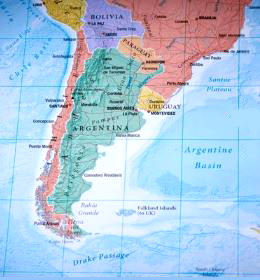
There is something almost poetic about geography when it chooses to be ironic. The southern cone of South America—anchored by Chile and Argentina—sits at the far end of the continental map, like an afterthought trailing behind the grand narratives of North Atlantic power and Pacific ambition. Yet this so-called “tail” is anything but marginal. Stretching from the sunburnt heights of the Andes to the icy desolation of Patagonia, these nations are rewriting their place in the global order through a mix of mineral wealth, political recalibration, social unrest, and ecological anxiety.
The recent developments between Chile and Argentina offer a fascinating snapshot of how geography, economy, and politics collide. At the center of this evolving story lies copper—ancient metal, modern necessity. In an era defined by electrification, renewable energy, and digital infrastructure, copper is no longer just a commodity; it is a strategic asset. The two nations are now doubling down on what can only be described as a “copper axis,” a collaborative economic spine projected to reach a staggering $130 billion portfolio by 2033.
This is not cooperation born of idealism. It is forged in the crucible of global demand. As the world transitions toward greener technologies—electric vehicles, solar panels, wind turbines—the demand for copper has surged dramatically. Chile already stands as the world’s largest producer, while Argentina, historically under-leveraged in mining, is rapidly catching up. Together, they form a geological jackpot that the world cannot ignore.
Projects like Taca Taca in Argentina and the Vicuña district straddling the Chilean border are not just mining ventures; they are symbols of a new economic diplomacy. Infrastructure is being built not merely to extract resources, but to integrate supply chains, streamline exports, and position the region as indispensable to the global energy transition. Roads, railways, and ports are quietly becoming the arteries through which future economies will pulse.
But beneath this gleaming narrative of cooperation lies a more complicated reality. Mining, after all, is not a neutral activity. It reshapes landscapes, displaces communities, and often ignites environmental debates that are as fierce as they are unresolved. In both Chile and Argentina, local populations are increasingly vocal about the ecological costs of extraction. Water scarcity, land degradation, and biodiversity loss are no longer abstract concerns—they are lived experiences.
And so, even as the copper axis strengthens, it does so under the shadow of protest and negotiation. Governments are walking a tightrope, trying to balance economic ambition with social legitimacy. It is a delicate act, one that reveals the deeper tension at the heart of these nations: how to leverage their natural wealth without becoming prisoners of it.
The copper dream and its discontents
The promise of a $130 billion mining portfolio sounds like a triumph of strategic foresight, but it also raises an uncomfortable question: what happens when a nation’s future becomes too tightly bound to a single resource? Chile knows this story well. Its economy has long been tethered to copper, making it vulnerable to global price fluctuations and external demand shocks. Argentina, stepping into this arena with renewed enthusiasm, risks inheriting both the rewards and the pitfalls.
The Vicuña district, often touted as a model of cross-border collaboration, encapsulates this duality. On one hand, it represents efficiency—shared infrastructure, coordinated policy frameworks, and a unified approach to attracting investment. On the other, it highlights the complexities of governance when two nations must align not just economically, but environmentally and socially.
Consider water usage, a critical issue in mining operations. The Andes, while majestic, are not infinitely generous. Glacial melt, climate variability, and competing agricultural needs make water a contested resource. Communities downstream are increasingly wary of large-scale mining projects that threaten their livelihoods. In Chile, where environmental activism has gained significant traction, such concerns often translate into organized resistance.
Argentina faces a slightly different but equally challenging landscape. Its mining sector is less mature, which means regulatory frameworks are still evolving. This creates both opportunity and risk. Investors are drawn to the relative openness, but the absence of robust oversight can lead to conflicts that are harder to resolve.
What binds these challenges together is a broader question of identity. Are Chile and Argentina resource economies, or are they aspiring to something more diversified and resilient? The answer, it seems, is both. While copper provides immediate economic leverage, there is a growing recognition that long-term stability requires broader foundations—technology, education, and sustainable industries.
Yet, for now, the copper dream remains irresistible. It is the engine powering infrastructure projects, the magnet attracting foreign capital, and the narrative through which these nations are asserting their relevance on the global stage. The discontents, while significant, are being managed—if not fully resolved—through a combination of policy innovation and political pragmatism.
Borders, biosecurity, and the fragile dance of trade
If mining represents the future, agriculture remains the heartbeat of daily life. And it is here that the fragility of cooperation becomes most apparent. Chile’s recent suspension of poultry imports from Argentina due to bird flu detections may seem like a routine biosecurity measure, but it underscores the delicate balance that governs cross-border trade.
In a globalized world, diseases travel faster than diplomacy. A single outbreak can disrupt supply chains, inflate prices, and strain bilateral relations. For Chile, known for its stringent agricultural standards, the decision was almost inevitable. For Argentina, it was a reminder of how quickly economic opportunities can be curtailed by factors beyond immediate control.
This episode highlights a broader reality: cooperation between Chile and Argentina is not a linear progression toward integration. It is a constant negotiation, shaped by shifting priorities and unforeseen challenges. Trade policies must adapt not only to economic conditions but also to health risks, environmental changes, and domestic pressures.
Agriculture, unlike mining, is deeply embedded in local communities. It is not just an economic activity but a cultural one. Farmers, traders, and consumers are all stakeholders in a system that is both resilient and vulnerable. When disruptions occur, they ripple through society in ways that are often invisible to policymakers but acutely felt on the ground.
At the same time, both nations are exploring ways to strengthen agricultural resilience. Investments in technology, improved disease surveillance, and diversified export markets are part of a broader strategy to mitigate risks. Yet, these efforts require coordination—not just within each country, but between them.
The irony is that while copper is pulling Chile and Argentina closer together, agriculture occasionally pushes them apart. This push-and-pull dynamic is not a sign of failure but of complexity. It reflects the reality that integration is not about eliminating differences, but about managing them effectively.
And in this management lies the true test of their partnership. Can they build systems that are robust enough to withstand shocks, yet flexible enough to adapt? Can they align their policies without sacrificing their sovereignty? These are not questions with easy answers, but they are central to the evolving relationship between these southern giants.
Fire, fury, and the climate reckoning
If there is one force that respects no borders, it is climate change. The devastating wildfires that have swept through parts of Chile and Argentina in 2026 are a stark reminder that nature operates on its own terms. Studies suggesting that such fires are now three times more likely are not just statistics; they are warnings.
In regions already grappling with water scarcity and environmental stress, wildfires add another layer of vulnerability. Forests that once acted as carbon sinks are transformed into sources of emissions. Communities are displaced, ecosystems disrupted, and economic activities halted. The cost is not just immediate but long-term.
For Chile and Argentina, the challenge is twofold. On one hand, they must respond to immediate crises—deploying firefighting resources, supporting affected communities, and rebuilding damaged infrastructure. On the other, they must address the underlying drivers of these events: rising temperatures, changing rainfall patterns, and human activities that exacerbate risk.
This is where the narrative circles back to mining. The same copper that fuels the global transition to renewable energy is extracted through processes that can strain local environments. It is a paradox that defines our time: the solutions to climate change often come with their own ecological costs.
Both nations are increasingly aware of this tension. Environmental regulations are being tightened, and there is a growing emphasis on sustainable mining practices. Renewable energy is being integrated into mining operations, and efforts are being made to reduce water usage and emissions.
Yet, progress is uneven. Economic pressures often push governments to prioritize growth over sustainability. In times of fiscal strain, environmental considerations can become secondary. This is not unique to Chile and Argentina, but it is particularly pronounced in regions where natural resources are a primary source of revenue.
The wildfires, in this context, serve as both a symptom and a signal. They highlight the urgency of climate action, but they also expose the limitations of current approaches. Addressing climate change requires not just national policies but regional cooperation. Shared ecosystems demand shared solutions.
And here, perhaps, lies an opportunity. Just as Chile and Argentina have come together around copper, they could do the same around climate resilience. Joint initiatives in forest management, water conservation, and disaster response could transform a shared vulnerability into a shared strength.
Streets, stadiums, and the pulse of unrest
While policymakers negotiate and industries expand, the streets tell a different story. In both Buenos Aires and Santiago, recent events have revealed the undercurrents of social tension that run through these societies.
Football, often described as a religion in South America, became a flashpoint for violence when clashes erupted between fans of clubs from both nations. What might appear as mere sporting rivalry is, in reality, a complex interplay of identity, politics, and social dynamics. Stadiums become arenas not just for sport, but for the expression of grievances that extend far beyond the pitch.
At the same time, protests related to Gaza have added another layer of complexity. These demonstrations, while rooted in international issues, reflect domestic concerns about justice, governance, and representation. Security alerts in Santiago during late March 2026 underscore the government’s concern about maintaining order in an increasingly volatile environment.
Social unrest is not new to either country. Chile, in particular, has witnessed significant protests in recent years, driven by demands for greater equality and systemic reform. Argentina, with its history of economic instability, is no stranger to public demonstrations.
What is notable, however, is the convergence of different types of unrest. Economic, political, and cultural grievances are intersecting in ways that make them harder to address in isolation. Governments are faced with the challenge of responding to immediate triggers while also tackling deeper structural issues.
In this context, security becomes a major concern. Ensuring public safety without infringing on civil freedoms is a delicate balance. Heavy-handed responses can exacerbate tensions, while inaction can lead to further instability.
The football clashes and protests are not isolated events; they are signals of broader social dynamics. They reveal a society that is engaged, vocal, and at times, deeply divided. For Chile and Argentina, managing this energy is as important as managing their economies.
Because ultimately, the strength of a nation lies not just in its resources or its policies, but in the cohesion of its society. And in this regard, both countries are navigating a complex and evolving landscape.
Geopolitics at the edge of the world
Even at the far end of the continent, global politics finds a way to intrude. Chile’s decision to withdraw backing for Michelle Bachelet as a potential UN Secretary-General candidate may seem like a minor diplomatic shift, but it carries broader implications.
It signals a recalibration of Chile’s international strategy, perhaps reflecting changing domestic priorities or shifting alliances. In a world where multilateral institutions are under increasing strain, such decisions are rarely taken lightly.
Argentina, too, is navigating its own geopolitical landscape. Balancing relationships with major powers while addressing domestic challenges requires a nuanced approach. The southern cone may be geographically distant from global power centers, but it is far from isolated.
In fact, its very distance can be an advantage. Free from the immediate pressures of great power rivalries, Chile and Argentina have the space to craft their own paths. Their cooperation on mining, their responses to climate change, and their management of social unrest are all part of a broader effort to define their place in the world.
And perhaps that is the central theme of this unfolding story. Being at the “tail” of the continent is not a limitation; it is a perspective. From this vantage point, Chile and Argentina can see both the challenges and the opportunities that define the 21st century.
They are not merely reacting to global trends; they are shaping them. Whether through their copper resources, their environmental policies, or their social movements, they are contributing to a larger narrative about how nations adapt and evolve.
The journey from the sunlit Andes to the icy expanses of Patagonia is not just a geographical one. It is a metaphor for the diversity and complexity of these countries. It is a reminder that even at the edges of the map, there are stories of significance, struggle, and possibility waiting to be told.
And as Chile and Argentina continue to navigate this intricate landscape, one thing becomes clear: the tail of the continent is, in many ways, its most dynamic frontier.