
The danger arises when early-stage research is misrepresented as established fact. Social media platforms amplify these distortions, allowing unverified claims to spread rapidly. Influencers, self-proclaimed experts, and even a minority of licensed professionals contribute to the confusion by promoting off-label uses without sufficient evidence
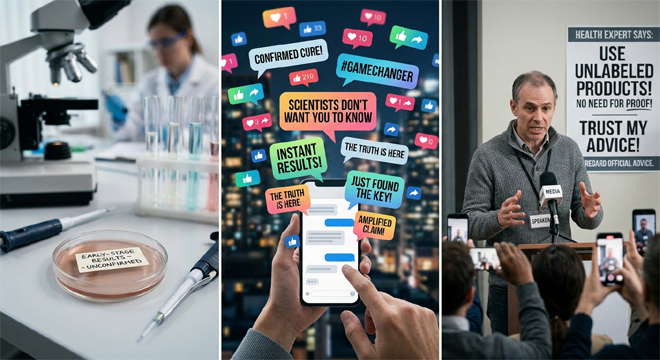
The modern age has delivered extraordinary medical advancements, but it has also ushered in an era of unprecedented misinformation. Among the most troubling trends is the rise of so-called “magic cures”—simple, low-cost drugs promoted as universal solutions for complex diseases. Two names frequently emerge in this context: Mebendazole and Ivermectin. Originally designed to treat parasitic infections, these medications are now widely discussed as potential treatments for conditions such as cancer and viral illnesses.
The appeal is obvious. Imagine a decades-old drug, inexpensive and widely available, suddenly revealed to possess hidden properties capable of curing life-threatening diseases. It is a compelling narrative—one that resonates deeply with patients who feel failed by conventional medicine or burdened by the high cost of modern therapies. However, the gap between hopeful speculation and clinical reality is vast.
Scientific medicine is not built on anecdotes or viral testimonials. It relies on carefully controlled trials, reproducibility, and a deep understanding of biological mechanisms. While there is ongoing research into the potential secondary effects of certain drugs, including anti-parasitics, these investigations are preliminary and often confined to laboratory settings. Translating such findings into safe and effective human treatments is a complex, multi-stage process that can take years or even decades.
The danger arises when early-stage research is misrepresented as established fact. Social media platforms amplify these distortions, allowing unverified claims to spread rapidly. Influencers, self-proclaimed experts, and even a minority of licensed professionals contribute to the confusion by promoting off-label uses without sufficient evidence. The result is a growing population of patients who may abandon proven therapies in favor of untested alternatives.
This phenomenon is not merely a matter of misinformation—it is a public health concern. When individuals self-medicate based on unreliable sources, they expose themselves to significant risks, including toxicity, drug interactions, and delayed diagnosis or treatment. In the case of antiparasitic drugs, one of the most serious concerns is liver damage, a condition known as Hepatotoxicity.
Understanding these risks requires a closer look at how medicines are developed, tested, and prescribed. It also demands a critical examination of the narratives that drive the popularity of “magic cures.”
Therapeutic precision versus home experimentation
Modern pharmacology is built on precision. Every approved medication undergoes rigorous testing to determine its optimal dosage, safety profile, and mechanism of action. This process ensures that the benefits of a drug outweigh its risks when used as directed. Deviating from this framework—whether by altering dosage, combining substances, or using drugs for unapproved indications—introduces uncertainty and danger.
A pharmaceutical-grade drug is not merely a chemical compound; it is a carefully engineered product. Its concentration, purity, and formulation are standardized to ensure consistent effects. In contrast, home remedies or improvised treatments lack this level of control. Even small variations in dosage can lead to significant differences in outcomes, ranging from inefficacy to toxicity.
Consider the complexity of the human body. It is not a static system but a dynamic network of biochemical pathways, feedback loops, and regulatory mechanisms. When a drug enters this system, it interacts with multiple targets, not all of which are fully understood. This is why medications are tested extensively before being approved for specific uses.
The notion that a single drug could act as a universal cure ignores this complexity. Diseases such as cancer involve intricate processes, including genetic mutations, cellular signaling pathways, and interactions with the immune system. One such pathway often discussed in cancer research is the MAPK pathway, which plays a critical role in cell growth and survival. While some studies suggest that certain drugs may influence this pathway, these findings are far from conclusive and do not justify widespread clinical use.
Moreover, the effectiveness of a drug in a laboratory setting does not guarantee its success in humans. Cells in a petri dish behave differently from cells in a living organism, where factors such as metabolism, immune response, and tissue distribution come into play. Bridging this gap requires extensive clinical trials, which are designed to evaluate not only efficacy but also safety.
When individuals bypass this process and experiment with medications on their own, they essentially become test subjects without the safeguards of a controlled study. This is particularly dangerous when dealing with potent compounds that can affect vital organs such as the liver and kidneys.
Off-label use and the risks of veterinary formulations
Off-label prescribing is a legitimate practice in medicine, but it is governed by strict principles. Physicians may prescribe a drug for an unapproved indication if there is credible scientific evidence supporting its use and if the potential benefits outweigh the risks. However, this decision is made on a case-by-case basis, taking into account the patient’s medical history, current condition, and other medications.
The current trend surrounding antiparasitic drugs often bypasses these safeguards. Individuals are encouraged to use these medications without proper medical supervision, sometimes even resorting to veterinary formulations intended for animals. This practice is particularly concerning, as veterinary drugs may differ in dosage, purity, and inactive ingredients.
The human liver is responsible for metabolizing most medications. When exposed to excessive or inappropriate doses, it can suffer damage ranging from mild enzyme elevation to severe liver failure. This is the essence of hepatotoxicity—a condition that can have long-term consequences and may even be life-threatening.
In the context of drugs like mebendazole and ivermectin, the risk of hepatotoxicity is not hypothetical. These medications are known to affect liver function, especially when used in high doses or over extended periods. Patients who already have compromised liver function are particularly vulnerable, as their ability to process and eliminate drugs is reduced.
The use of veterinary formulations further exacerbates these risks. Dosages intended for large animals may be significantly higher than what is safe for humans. Additionally, the lack of regulatory oversight in some cases increases the likelihood of contamination or incorrect labeling.
It is important to emphasize that the presence of ongoing research does not equate to clinical endorsement. Scientists may investigate a drug’s potential effects on cancer cells, but this does not mean the drug is safe or effective for treating cancer in patients. Misinterpreting such research can lead to dangerous assumptions and harmful practices.
The role of financial incentives and misinformation
The spread of “magic cure” narratives is not always driven by genuine misunderstanding. In many cases, financial incentives play a significant role. The wellness industry, which includes supplements, alternative therapies, and online courses, is a multi-billion-dollar market. Promoting controversial or unconventional treatments can attract attention, build a following, and generate revenue.
Social media platforms amplify this dynamic by rewarding content that is engaging, provocative, or emotionally charged. Claims of hidden cures or suppressed treatments often gain traction because they tap into a sense of distrust toward established institutions. While skepticism can be healthy, it becomes problematic when it leads to the rejection of evidence-based medicine.
Some individuals presenting themselves as experts may lack the necessary qualifications or may selectively interpret data to support their claims. Others may have legitimate credentials but operate outside the boundaries of accepted medical practice. In both cases, the information they provide may be incomplete, misleading, or outright incorrect.
Patients facing serious illnesses are particularly vulnerable to such messages. The promise of a simple solution can be difficult to resist, especially when conventional treatments are associated with side effects, high costs, or uncertain outcomes. However, decisions based on misinformation can have serious consequences, including disease progression and reduced chances of recovery.
It is also worth noting that not all misinformation is intentional. The complexity of medical research makes it easy for findings to be misinterpreted or taken out of context. A study showing that a drug inhibits cancer cell growth in vitro may be reported as evidence of a cure, even though it has not been tested in humans.
Distinguishing between credible information and speculation requires critical thinking and a willingness to consult reliable sources. Peer-reviewed journals, regulatory agencies, and qualified healthcare professionals are better equipped to provide accurate and balanced information than anonymous online posts or viral videos.
Personalization in medicine and the myth of universal cures
One of the fundamental principles of modern medicine is personalization. No two patients are identical, even if they share the same diagnosis. Factors such as genetics, age, lifestyle, and comorbidities influence how a disease progresses and how a patient responds to treatment.
For example, genetic variations can affect how drugs are metabolized, leading to differences in efficacy and toxicity. A medication that is well-tolerated by one person may cause adverse effects in another. Similarly, existing conditions such as liver or kidney disease can alter the way drugs are processed, increasing the risk of complications.
Drug interactions add another layer of complexity. Many patients, particularly those with chronic conditions, take multiple medications simultaneously. Introducing a new drug without considering these interactions can lead to unintended consequences, including reduced effectiveness or increased toxicity.
The idea of a universal cure ignores these individual differences. It assumes that a single treatment can address a wide range of conditions in diverse populations, which is rarely the case in medicine. Even within a specific disease such as cancer, there are multiple subtypes with distinct biological characteristics. Effective treatment often requires a combination of therapies tailored to the individual patient.
Clinical decision-making involves balancing risks and benefits. A physician must consider not only the potential effectiveness of a treatment but also its safety and suitability for the patient. This process is informed by evidence from clinical trials, as well as the physician’s experience and the patient’s preferences.
When patients rely on generalized advice from the internet, they bypass this personalized approach. They may adopt treatments that are inappropriate for their condition or that conflict with their existing therapy. This can compromise their health and reduce the likelihood of a positive outcome.
The bottom line: science over speculation
The allure of “magic cures” is understandable, but it is ultimately a distraction from the realities of medical science. Drugs like mebendazole and ivermectin have important roles in treating parasitic infections, but their use beyond these indications remains an area of ongoing research, not established practice.
The risks associated with unsupervised use, particularly hepatotoxicity, should not be underestimated. The liver is a vital organ, and damage to it can have far-reaching consequences. Protecting it requires careful management of medications and adherence to medical guidance.
In an age of information overload, it is essential to approach health-related claims with skepticism and discernment. Not all sources are equal, and not all information is reliable. Trusting evidence-based medicine does not mean rejecting innovation; it means ensuring that new treatments are validated through rigorous testing before being adopted. Your health is too important to be guided by trends or viral narratives. It deserves the attention of qualified professionals who understand the complexities of the human body and the science behind the treatments they prescribe. By prioritizing safety, evidence, and personalization, we can navigate the challenges of modern medicine without falling prey to the dangers of “magic cures.”