Europe has faced significant energy volatility, with reports indicating sharp increases in oil and gas prices in recent months. So, even unconventional arrangements may work if they promise stability or access to supply. The realities of international trade, maritime law, and financial systems are complex. Any such arrangement would involve multiple stakeholders, including governments, shipping companies, insurers, and regulatory bodies
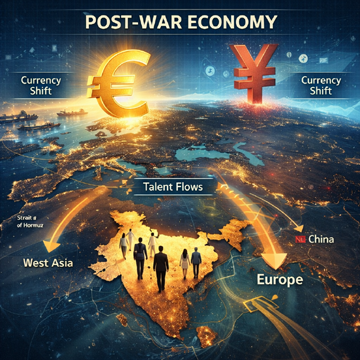
In early 2026, a striking geopolitical narrative began circulating: that Iran had effectively offered Europe a new framework for energy transit through the Strait of Hormuz. At first glance, the proposal appeared technical, a toll system for ships passing through one of the world’s most critical chokepoints. Yet beneath the surface, the implications pointed toward a much larger transformation involving currencies, trade systems, and global power balances.
The Strait of Hormuz is not just another maritime route. It is one of the most strategically important passages on Earth, responsible for the transit of approximately 20 percent of global oil supply. Every day, millions of barrels of crude oil and petroleum products flow through this narrow corridor, linking producers in the Persian Gulf to consumers across Europe, Asia, and beyond. Any disruption, or restructuring, of access to this route has immediate and far-reaching economic consequences.
According to the claims, Iran’s Islamic Revolutionary Guard Corps, often abbreviated as IRGC, is introducing a system in which vessels must pay a transit fee, estimated at around $1 per barrel of oil, to ensure safe passage. Payments are reportedly required in Chinese yuan or cryptocurrency, and ships may need to operate under “friendly” national flags to avoid interference.
For a Very Large Crude Carrier, commonly referred to as a VLCC, which can carry roughly 2 million barrels of oil, such a fee could translate into payments of approximately $2 million per voyage. While this may appear modest relative to the value of the cargo, the broader implications are far more significant.
The proposal suggests not just a logistical arrangement, but a reconfiguration of financial flows. By encouraging or requiring payments in non-dollar currencies, it challenges long-standing norms in global energy trade. For decades, oil transactions have been overwhelmingly denominated in US dollars, reinforcing the central role of the dollar in the international financial system.
What makes this development particularly notable is its timing? Europe has faced significant energy volatility, with reports indicating sharp increases in oil and gas prices in recent months. In such a context, even unconventional arrangements may receive serious consideration if they promise stability or access to supply.
However, interpreting these claims requires caution. While the narrative presents a coherent and dramatic picture, the realities of international trade, maritime law, and financial systems are complex. Any such arrangement would involve multiple stakeholders, including governments, shipping companies, insurers, and regulatory bodies.
Nevertheless, the discussion highlights a critical question: is the global financial system entering a phase of structural change, and if so, what role will energy trade play in shaping that transformation?
The mechanics of the proposed toll system
To understand the significance of the reported proposal, it is essential to examine how such a system might function in practice. The idea of charging transit fees in the Strait of Hormuz is not entirely unprecedented; strategic waterways have historically been subject to tolls and regulations. However, the introduction of currency-specific payment requirements adds a new dimension.
Under the described framework, ship operators would be required to coordinate with intermediaries linked to the IRGC. These intermediaries would facilitate payments, often in Chinese yuan, to secure safe passage. The use of cryptocurrency is also mentioned, suggesting an attempt to bypass traditional banking channels.
The requirement for ships to fly “friendly” flags introduces another layer of complexity. Maritime operations are governed by international conventions, and the flag under which a vessel sails determines its legal jurisdiction. Requiring specific flags could effectively create a tiered system of access, where certain nations receive preferential treatment.
From a purely operational perspective, shipping companies would need to factor these requirements into their logistics. This includes calculating additional costs, managing currency conversions, and ensuring compliance with both local and international regulations. Insurance considerations would also play a critical role, as insurers assess risks associated with navigating politically sensitive regions.
The financial aspect is particularly noteworthy. By denominating fees in yuan, the system would increase demand for the Chinese currency in energy transactions. Over time, even incremental shifts in currency usage can have cumulative effects, especially in high-volume markets like oil.
It is important to recognize, however, that implementing such a system would not be straightforward. The Strait of Hormuz is an international waterway, and any attempt to impose unilateral control could face legal and diplomatic challenges. Major naval powers, including the United States and its allies, maintain a presence in the region to ensure freedom of navigation.
Moreover, global shipping operates on thin margins and tight schedules. Any additional layer of complexity, whether financial or regulatory, must be justified by clear benefits. For many operators, the risks associated with unconventional arrangements may outweigh potential cost savings.
Despite these challenges, the proposal underscores a broader trend: the increasing intersection of geopolitics and financial systems. As nations seek to assert influence, control over critical infrastructure and trade routes becomes a powerful tool.
The petrodollar system and its historical dominance
To fully appreciate the potential implications of non-dollar energy transactions, one must understand the origins and significance of the so-called petrodollar system. This system emerged in the 1970s, following agreements that established the US dollar as the primary currency for global oil trade.
Under this arrangement, countries around the world needed to hold US dollars to purchase oil. This created a constant demand for the currency, reinforcing its status as the world’s dominant reserve currency. The system also enabled the United States to finance its deficits more easily, as global demand for dollars remained strong.
Over time, the dollar’s share of global reserves has declined from approximately 70 percent to around 56.9 percent over a period of 25 years. While still dominant, this gradual shift reflects the emergence of alternative currencies and financial systems.
The narrative surrounding the Strait of Hormuz proposal suggests that even a single major non-dollar oil transaction could have symbolic significance. If large economies begin to conduct energy trade in euros, yuan, or other currencies, it could signal that alternatives to the dollar-based system are viable.
However, it is important to distinguish between symbolic and structural change. The global financial system is deeply entrenched, with networks of banks, clearing systems, and regulatory frameworks built around the dollar. Transitioning away from this system would require not just isolated transactions, but sustained and coordinated efforts across multiple sectors.
Institutions such as the European Central Bank play a key role in this process. Statements from policymakers, including board members, often reflect concerns about financial stability and currency dynamics. While remarks about long-term impacts may be interpreted as warnings, they are typically grounded in complex economic analysis rather than dramatic narratives.
The petrodollar system’s resilience lies in its integration with global markets. Oil producers, consumers, and financial institutions have all built systems around dollar-based transactions. Changing this structure involves not only economic considerations but also political and strategic decisions.
Europe’s energy dilemma and strategic choices
Europe’s position in this scenario is shaped by its energy needs and geopolitical constraints. The continent relies heavily on imported energy, making access to stable supply routes a critical priority. Recent fluctuations in energy prices, such as reported increases of 60 percent in oil and 100 percent in natural gas, highlight the vulnerability of this dependence.
In such an environment, proposals that promise secure transit through key chokepoints may attract attention. However, any decision to engage in non-traditional arrangements would involve careful consideration of risks and benefits.
Paying for energy transit in euros or yuan, rather than dollars, could offer certain advantages, such as reducing exposure to currency fluctuations. At the same time, it could complicate relationships with existing partners and financial systems.
The decision-making process would likely involve multiple stakeholders, including national governments, energy companies, and financial institutions. Each would need to assess the legal, economic, and strategic implications of any agreement.
It is also worth noting that Europe has been actively pursuing energy diversification strategies. These include investments in renewable energy, liquefied natural gas infrastructure, and alternative supply routes. Such efforts aim to reduce dependence on any single region or transit point.
The idea that Europe is “desperate and bleeding” simplifies a complex situation. While challenges exist, the region also has significant resources and institutional capacity to manage them. Decisions are unlikely to be driven by short-term pressures alone, but rather by long-term strategic considerations.
Multipolar finance and the role of emerging blocs
The broader context of this discussion involves the gradual emergence of a more multipolar financial system. Groups such as BRICS have been exploring ways to increase the use of local currencies in trade and reduce reliance on the US dollar.
Countries in the Global South, as well as major energy producers in the Gulf region, have shown interest in diversifying their financial relationships. This includes establishing alternative payment systems and strengthening regional cooperation.
The use of the Chinese yuan in energy transactions is part of this trend. China is one of the world’s largest energy consumers, and its influence in global markets continues to grow. Expanding the role of its currency aligns with broader economic and strategic objectives.
However, the transition to a multipolar system is likely to be gradual. The dollar’s dominance is supported by factors such as the size of the US economy, the depth of its financial markets, and the stability of its institutions. These advantages are not easily replicated.
At the same time, incremental changes can accumulate over time. As more transactions occur in alternative currencies, the relative share of the dollar may continue to decline. This does not necessarily imply a sudden collapse, but rather a постепенный rebalancing of the global financial system.
The narrative of a “financial nuclear bomb” captures the sense of disruption, but it may overstate the immediacy of change. Financial systems tend to evolve rather than collapse, adapting to new conditions while retaining core structures.
War, perception, and the struggle for monetary influence
The final dimension of this discussion involves the interplay between geopolitical conflict and financial systems. The narrative suggests that the visible aspects of regional tensions, such as military actions or nuclear concerns, may obscure a deeper struggle over monetary influence.
While it is true that economic power and currency dominance are closely linked, framing conflicts solely in these terms risks oversimplification. Geopolitical events are driven by a wide range of factors, including security concerns, regional dynamics, and historical relationships.
The idea that control over the world’s reserve currency is a central objective reflects a broader understanding of power in the modern era. Currency systems influence trade, investment, and economic stability, making them a key component of national strategy.
However, changes in these systems typically occur through a combination of policy decisions, market forces, and technological developments. They are rarely the result of a single event or agreement.
The question of whether the world is moving toward a post-dollar era remains open. While there are signs of diversification, the dollar continues to play a central role in global finance. Any shift away from this system would likely unfold over years or decades rather than in a sudden, dramatic transition.
In conclusion, the reported developments in the Strait of Hormuz highlight important trends in geopolitics and finance. They underscore the interconnectedness of energy, currency, and power, while also illustrating the complexity of interpreting such events.
Rather than viewing these changes as a definitive break from the past, it may be more accurate to see them as part of an ongoing evolution, one in which multiple systems coexist and compete, shaping the future of the global economy.