
The issue now centers on approximately $3.5 billion in loans that the UAE has reportedly demanded be repaid. This includes a $2 billion tranche maturing on April 17, 2026, along with smaller amounts, some dating back to as early as 1996. The refusal to roll over these deposits marks a significant departure from past extensions without much friction
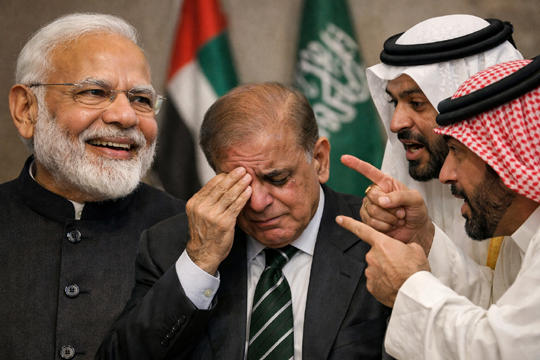
The evolving financial and diplomatic situation surrounding Narendra Modi and Pakistan reflects a deeper transformation in regional geopolitics, where economic leverage, diplomatic signaling, and credibility intersect in increasingly visible ways. Over the past decade, India’s foreign policy approach under Modi has sought to systematically recalibrate Pakistan’s global standing—not through direct confrontation alone, but by shaping the perceptions and responses of key international stakeholders.
A recent development involving Hamdan bin Mohammed bin Rashid Al Maktoum has added a new layer to this unfolding narrative. The reported remarks questioning Pakistan’s invocation of “national dignity” in the context of loan repayment highlight a growing impatience among traditional allies. These statements are not merely rhetorical; they reflect a shift in expectations where long-standing financial support is no longer unconditional.
Historically, Pakistan has relied heavily on financial assistance from Gulf nations such as the United Arab Emirates and Saudi Arabia. These relationships were built not only on economic considerations but also on shared strategic and security interests. Over time, however, repeated extensions of loans and deposits have begun to test the patience of these creditor nations.
The issue now centers on approximately $3.5 billion in loans that the UAE has reportedly demanded be repaid. This includes a $2 billion tranche maturing on April 17, 2026, along with smaller amounts, some dating back to as early as 1996. The refusal to roll over these deposits marks a significant departure from past practices, where such extensions were often granted without much friction.
This shift signals a broader recalibration in international financial relations. Loans between nations are no longer seen as mere economic transactions; they carry implicit expectations regarding political alignment, strategic cooperation, and reliability. In this context, Pakistan’s current predicament reflects not just financial strain but also a perceived erosion of trust among its key partners.
Diplomatic isolation and strategic repositioning
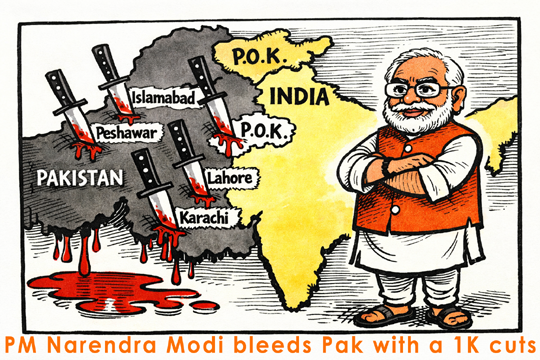
India’s foreign policy under Modi has increasingly focused on strengthening ties with Gulf nations, a region historically aligned more closely with Pakistan. Over the past decade, India has significantly expanded its economic, security, and cultural engagement with countries like the UAE and Saudi Arabia, creating a new diplomatic equilibrium.
This strategic outreach has included high-level visits, defense cooperation agreements, and large-scale investments. As a result, India has emerged as a key economic partner for Gulf economies, particularly in sectors such as energy, infrastructure, and technology. The growing Indian diaspora in these countries has further reinforced these ties, adding a socio-economic dimension to the relationship.
In contrast, Pakistan’s attempts to maintain its traditional influence in the region have faced challenges. Reports suggest that its efforts to act as a mediator in regional conflicts, particularly involving Iran and the United States, have not been well received by Gulf allies. Instead of enhancing its diplomatic standing, these efforts appear to have created friction, with some allies perceiving Pakistan’s stance as inconsistent or misaligned with their strategic interests.
The ongoing tensions related to the Iran–United States tensions have further complicated the situation. Gulf nations, which have clear stakes in these conflicts, expect their partners to align with their positions. Pakistan’s perceived neutrality—or closer ties with Iran—has reportedly contributed to dissatisfaction among these countries.
This dissatisfaction has translated into tangible actions, such as the UAE’s decision to demand immediate repayment of loans. Similar signals have reportedly emerged from Saudi Arabia, indicating a broader pattern rather than an isolated incident. These developments underscore the extent to which geopolitical considerations now influence financial decisions.
Financial strain and reserve depletion
The immediate economic impact of the UAE’s demand is significant. Pakistan’s foreign exchange reserves, estimated between $16.3 billion and $21 billion in early April 2026, are expected to take a substantial hit. The repayment of $3.5 billion alone could erode nearly 18% of these reserves, placing considerable pressure on the country’s financial stability.
This depletion comes at a time when Pakistan is already navigating a challenging economic environment. High inflation, currency volatility, and structural fiscal deficits have constrained the government’s ability to manage external obligations effectively. The sudden requirement to repay a large sum exacerbates these challenges, limiting the country’s financial flexibility.
Moreover, Pakistan’s commitments under its program with the International Monetary Fund add another layer of complexity. The IMF program requires maintaining specific reserve thresholds as part of its conditionalities. A sharp decline in reserves could jeopardize Pakistan’s compliance with these requirements, potentially affecting future disbursements.
The situation highlights the interconnected nature of global finance, where actions by one set of stakeholders can have cascading effects across multiple domains. The UAE’s decision, while rooted in bilateral considerations, has implications for Pakistan’s broader economic framework, including its relationship with multilateral institutions.
Credibility crisis and trust deficit
Beyond the immediate financial implications, the current developments point to a deeper issue: a crisis of credibility. In international relations, trust is a critical currency, often determining the willingness of nations to extend support during times of need. The reported “massive trust deficit” reflects concerns about Pakistan’s ability to honor its commitments and align with the expectations of its partners.
This credibility gap is not a recent phenomenon but has evolved over time. Repeated requests for loan extensions, coupled with perceived inconsistencies in foreign policy, have contributed to a growing sense of skepticism among creditor nations. The recent demand for repayment can thus be seen as a culmination of these concerns.
The remarks attributed to Hamdan bin Mohammed bin Rashid Al Maktoum encapsulate this sentiment. By questioning the invocation of “national dignity” in the context of financial obligations, the statement underscores the importance of accountability in international engagements. It suggests that dignity is not merely a rhetorical construct but is closely tied to the fulfillment of commitments.
For Pakistan, addressing this credibility gap will require more than short-term financial adjustments. It will involve a comprehensive reassessment of its foreign policy priorities, economic strategies, and institutional frameworks. Building trust is a long-term process, requiring consistent actions and transparent communication.
India’s strategic advantage in a shifting landscape
In this evolving scenario, India appears to have gained a strategic advantage. By strengthening its relationships with key global and regional players, India has positioned itself as a reliable partner in both economic and geopolitical terms. This perception has been reinforced by its consistent policy approach and growing economic influence.
The Modi government’s emphasis on economic diplomacy has played a crucial role in this transformation. Initiatives aimed at attracting foreign investment, enhancing trade relations, and promoting technological collaboration have contributed to India’s rising global profile. These efforts have not only boosted India’s economic prospects but also enhanced its diplomatic leverage.
At the same time, India’s approach to Pakistan has remained firm, focusing on isolating it on issues related to security and international norms. By engaging with Pakistan’s traditional allies and offering alternative partnerships, India has effectively reshaped the regional balance of power.
The current financial pressures on Pakistan can thus be seen as part of a broader pattern, where economic and diplomatic strategies converge to influence outcomes. While it would be simplistic to attribute these developments solely to India’s actions, the cumulative impact of its policies is evident in the shifting dynamics.
Future implications for regional geopolitics
Looking ahead, the implications of these developments are likely to extend beyond the immediate financial crisis. The evolving relationships between Pakistan and its traditional allies could lead to a reconfiguration of regional alliances, with potential ripple effects across South Asia and the Middle East.
For Pakistan, the challenge will be to navigate this complex landscape while addressing its internal economic vulnerabilities. Diversifying its sources of financial support, strengthening domestic institutions, and recalibrating its foreign policy will be critical steps in this process.
For India, the current scenario presents both opportunities and responsibilities. As it continues to expand its influence, maintaining a balance between strategic interests and regional stability will be essential. The ability to leverage its position without exacerbating tensions will define its role in the coming years.
Ultimately, the situation underscores a fundamental principle of international relations: economic strength and credibility are inseparable from geopolitical influence. In a world where financial decisions are increasingly shaped by strategic considerations, nations must align their economic policies with their diplomatic objectives to remain relevant and resilient.