
Walking into any Dum Pukht feels like stepping into a story, centuries in the making — one where spices are protagonists and patience is the secret ingredient. A continuum of Awadhi culinary streams: from the diplomatic avenues of Lutyens’ Delhi to the urban pulse of Bengaluru and the cultured boulevards of Calcutta somewhat subdued by the recent communism of Kolkata
In the world of fine dining, few names resonate as profoundly with heritage, craftsmanship, and sensory indulgence as Dum Pukht. Rooted in the ancient North Indian art of dum — slow-cooking in sealed pots that allow ingredients to release their deepest aromas and flavors — Dum Pukht transcends the ordinary. Across celebrated locations in New Delhi, Bengaluru, and Kolkata, each restaurant bearing this name offers not just a meal, but an unveiling of history, hospitality, and haute gastronomy.
Each venue, distinct in its architecture and rhythm, is a node in the continuum of Awadhi culinary traditions: from the diplomatic avenues of Lutyens’ Delhi to the urban pulse of Bengaluru and the cultured boulevards of Kolkata. Walking into any Dum Pukht feels like stepping into a story, centuries in the making — one where spices are protagonists and patience is the secret ingredient.
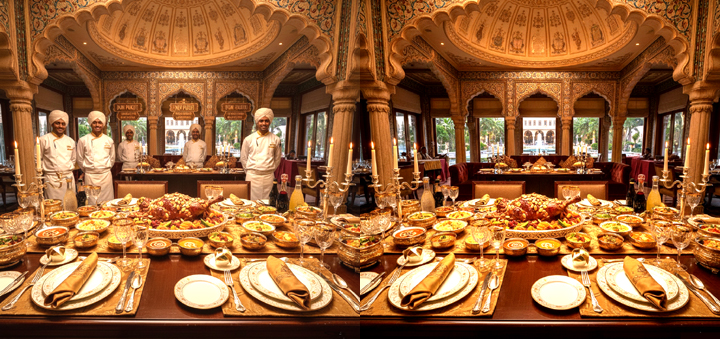
Dum Pukht at ITC Maurya, New Delhi
Approach and Setting: In New Delhi, the Dum Pukht flagship is ensconced in the legendary ITC Maurya Hotel, along Sardar Patel Marg in the Diplomatic Enclave — a broad, tree-lined boulevard where black cars glide past manicured greens and imposing embassies. From the moment you turn off the main road, the energy shifts. Valet attendants in crisp uniforms greet you with polite salutes, while polished stone and subtle architectural lighting hint at the sumptuous experience inside.
Descending into the plush interiors (the restaurant resides in the hotel’s lower levels), the atmosphere evokes a bygone era: walls hung with Persian-inspired textiles, crystal lanterns suspended above shimmering tabletops, and plush blue upholstery that whispers royalty. The lighting is warm and contemplative — perfect for lingering conversations over courses that unfold like verses in a classical epic.
Best time to visit:
For most visitors, dinner (7:00 PM–11:00 PM) brings out the restaurant’s full charm: gentle classical music in the background, candlelight dancing against rich decor, and a relaxed rhythm that invites you to savor every morsel. A Sunday lunch (12:30 PM–3:00 PM) is also wonderful for first-time visitors seeking a daytime expression of the Dum Pukht legacy.
First Impressions and Hospitality
From the host at the entrance offering a respectful greeting to the service team guiding you to your table, there is an unmistakable thread of warmth. Conversations with the maitre d’ reveal how the restaurant’s philosophy centers on vazn — balance — between flavors and the guest’s comfort. Servers, polished yet relational, suggest courses with confidence and humility. Patrons — from expatriates and diplomats to longtime food lovers — share an eager curiosity about the next dish.
At the heart of the kitchen, the head chef embodies centuries of culinary memory. In a discreet moment before the first course arrives, you’re invited — as many guests are — to hear about the philosophy of dum: how sealing handis (earthen pots) with dough locks in steam and infuses dishes with the slow alchemy of flavor. Sous-chefs bustle behind the scenes, yet there’s a flow about them that feels serene, almost balletic.
The Menu: A Sensory Expedition
Here, menus aren’t hastily delivered; they arrive like companions to a journey. Each distinct course is an argument for patience and sensory awareness — a chance to taste textures, scents, and heat profiles that have been perfected over decades.
Starters: Whispered Beginnings
Kakori Kebabs arrive first — legendary in reputation and sublime in execution. Small, oblong minced lamb patties glisten with clarified butter. The first bite is like velvet dissolving: tender beyond belief, whispering of cardamom, mace, and raw papaya that tenderizes the meat. It’s not smoky, but rich with deep, fragrant warmth that warms the senses rather than overwhelms.
Next comes Seekh Nilofari — a kebab unlike any other. Imagine lotus seeds and stem marinated with green herbs and exotic spices, then grilled so that each bite dances between earthiness and floral perfume. The texture is firm yet yielding, a bridge between classic kebab traditions and inventive nuance.
Vegetarian starters like Harra Kebab Awadhi (spinach and chana dal kebab) surprise with spicy but balanced aromatics, soft interiors offset by light charcoal kisses. Kham Khatai offers patties delicately perfumed with saffron and mace — subtle, elegant, perfect preludes to heartier mains.
Breads accompany these starters: Warqi Paratha, with its delicate layers, flakes effortlessly; Sheermal comes with warm saffron accents; Roomali Roti folds like a whisper.
Mains: The Rule of Dum
The journey’s core is here: Dum Pukht Biryani is a whispered legend in itself. Long-grain basmati rice, each strand glowing with saffron’s golden hue, is folded tenderly with marinated lamb. The handi is sealed and slow-cooked so that heat and steam infuse every grain and morsel. The bouquet that escapes when the seal is broken — a heady mingling of kewra water, rose essence, and cardamom — is a moment of sensory revelation. The lamb is silky, each grain of rice stands independently yet resonates with layered spices.
The Koh-E-Awadh — a tender lamb shank slow-braised in saffron-spiced jus — is rich without heaviness, deeply comforting with whispers of mint and yogurt. Nearby, Murgh Khushk Purdah presents a chicken marinated in garlic and yogurt, encased in a thin dough sealing that traps its essence — resulting in meat that is tender, aromatic, and quietly sumptuous.
For those favoring lighter grains, Murgh Yakhni Pulao offers a melody of fluffy rice and chicken — a nuanced balance of savory broth and delicate spice, almost like a lullaby after the robust richness of other dishes.
Vegetarians find delights too — Dum Pukht Badin Jaan transforms eggplant into an aromatic indulgence layered with yogurt and garlic, slow-cooked until succulent and resonant.
Desserts: Poesy in sweet form
After such grandeur, the desserts are contemplative:
Gulab Ki Kheer, creamy rice pudding kissed with rose essence and cardamom, finishes with sweet floral undertones.
Phirni, set in an earthen bowl, offers gentle rice cream sweetness with cardamom whispers.
Kulfi Falooda harmonizes dense ice cream with vermicelli and sweet syrup — a cool, refreshing capstone.
Every dessert is gentle, refined — a soft landing for the senses after courses rich with spice and heat.
Service and fellow diners: Service at Dum Pukht is anticipatory without being intrusive. A server will refill your glass before you realize it’s low; suggest pairings that elevate courses rather than distract; and check in with a smile that feels warm and grounded.
Fellow guests vary widely: international travelers keen on authentic India, local gourmets celebrating milestones, couples on long dinners that turn into late evenings. Conversations occasionally drift into shared appreciation — someone murmuring about the depth of biryani spices, another marveling at how a kebab can be so delicately textured. These shared moments bring a quietly social warmth to the restaurant’s refined environment.
Dum Pukht in Vasanth Nagar, Bengaluru
Approach and Setting: In Bengaluru’s upscale Vasanth Nagar, Dum Pukht sits amid the city’s calm residential avenues, not far from Cubbon Park and major commercial arteries. Arriving by cab or car, you pass neat boulevards where parks and trees soften the urban edges. Valets greet you at the entrance — this restaurant, though newer than its Delhi flagship, carries a confident presence and an air of measured elegance.
Inside, the ambiance is warm and contemporary, blending modern Indian aesthetics with subtle nods to Awadhi heritage. Lighting is subdued but intimate; artwork and furnishings alongside polished stone floors offer a welcoming yet elevated dining frame.
Best time to visit: Bengaluru’s dinner service (7:30 PM–11:30 PM) is ideal for slow, unrushed experiences. Weekends see a livelier, convivial energy, while weekday evenings offer quieter contemplation.
Menu and Flavours: While the Bengaluru menu reflects local interpretations, the core dum philosophy is palpable in every dish.
Starters include Dudiya Kebab — cottage cheese and spiced potato, shallow fried and finished on dum until the edges carry that char-kissed perfume; Hara Kebab Awadhi, a grilled medley of spinach and chickpea dal with cottage cheese, fragrant with herbs; and Seekh Nilofari — a skewer of lotus seeds seasoned with cardamom and aromatic spices. Each texture navigates between tender and composed, with flavors that are open-hearted and inviting rather than overtly spicy.
Departing from tradition slightly, dishes like Beetroot Kebab bring a vegetal sweetness and saffron earthiness to the table — a demonstration of how the Dum Pukht idea can embrace regional palates.
Mains in Bengaluru echo the luxury of slow cooking: spiced lamb preparations that melt with every forkful, aromatic rice pilafs that sit gently upon the tongue, and slow-cooked sauces that carry warmth without overwhelming heat. Pair these with local craft beers or refined Indian wines — the service team offers recommendations that complement rather than compete with the palate.
Desserts are similarly thoughtful — sweet yet controlled, bringing the meal to a simmer rather than a crescendo.
Dum Pukht at ITC Sonar, Calcutta NOT Kolkata
Approach and setting: In Kolkata’s sophisticated Science City area, the Dum Pukht at ITC Sonar sits within a grand hotel that’s both serene and urbane. Approaching through wide, landscaped driveways off busy city roads, you are enveloped in the calm refuge of colonial charm and tropical greenery. This Dum Pukht feels gracious and expansive — a place where conversations and courses unfold at the diner’s pace.
Inside, lighting is generous but gentle; tall windows, soft upholstery, and thoughtful artwork create an ambience that blends Kolkata’s cultural richness with the regal aspirations of Awadhi cuisine.
Best time to visit: Dinner (7:30 PM–11:45 PM) is ideal here, particularly if you want to combine an evening about town with a lingering, unhurried meal. The restaurant’s timing creates a relaxed, social energy rather than rushed turnover.
Flavours and culinary identity: The Kolkata menu — while carrying the familiar pillars of dum cooking — feels infused with regional poise. Signature Kakori Kebabs have that melt-in-the-mouth texture, but the spice profile balances between delicate warmth and aromatic richness. The city’s penchant for subtlety in spice and emphasis on fragrance rather than heat complements the Awadhi language of food here.
The Dum Pukht Mutton Biryani in Kolkata manifests with succulent chunks of meat bathed in a mosaic of spices and ghee-infused basmati, each grain echoing its own story of saffron, caramelized onions, and slow-cooked depth. Served in individual sealed handis that are ceremonially opened at the table, the aroma itself becomes the overture to the meal.
Rich main courses like Koh-E-Awadh and slow-braised chicken preparations reflect a grandeur that is generous yet balanced — luxuriant without cloying. Vegetarian options infuse the same dum philosophy into seasonal produce, resulting in dishes that are hearty and nuanced.
Desserts — rose-infused puddings and delicate sweet finales — bring the experience to a gentle close.
Beyond the menu: The collective experience: Across all locations — Delhi, Bengaluru, and Kolkata — what unifies Dum Pukht is a commitment to culinary patience and soulful cooking. Whether it is the celebrated flagship in Delhi that has hosted diplomats and culinary pilgrims for decades, or the newer iterations in Bengaluru and Kolkata that extend the dum ethos into varied urban contexts, the principle remains: cook slow, serve graciously, taste deeply.
Interactions with chefs and service teams follow this same rhythm. Chefs speak of cooking not just as technique but as heritage — a lineage carried forward in each sealed pot and spice mix. Servers act as bridges between the kitchen’s intention and the diner’s experience — offering suggestions, explaining flavour layers, and ensuring that each course arrives with timing that feels natural rather than hurried.
Guests around you — whether savoring biryani column by column or debating the perfect balance between cloves and saffron — add a social warmth to the setting. The din of contented dining, the clink of glassware, and the murmured pleasure at a well-executed course all elevate the collective ambience.
Final thought: Dum Pukht as living heritage
To dine at Dum Pukht is not merely to consume food; it is to engage with a living culinary heritage — one that honors restraint, celebrates aroma, and elevates slow craft over instant gratification. Each dish is a narrative arc: beginnings in the subtle depth of starters, expansions in the main’s rich complexity, and closures in the gentle poetry of desserts. Across cities and through time, Dum Pukht continues to be more than a signature on a menu. It is a dialogue between past and present, between chef and diner, between spice and silence. This dialogue — slow, deliberate, and deeply satisfying — is the essence of the Dum Pukht experience.

