
Bengal remains the natural gateway to eastern and northeastern India. It sits at the intersection of river systems, road corridors, railway networks and maritime routes connecting India with Southeast Asia and East Asia. The state retains access to vast hinterlands extending through Bihar, Jharkhand, Uttar Pradesh, Odisha and the Northeast. Its location ensures that any serious effort to revive eastern India’s economy would inevitably require the revival of West Bengal
For centuries, Bengal stood at the centre of commerce, industry, culture and maritime trade across Asia. Long before modern India emerged as an independent nation, Bengal was among the richest regions in the world. The ports of the Bengal coast connected the subcontinent to Southeast Asia, China, the Middle East and Europe. The fertile Gangetic delta produced agricultural abundance, while the cities of Calcutta, Howrah and their surrounding industrial belts became symbols of manufacturing strength, engineering excellence and intellectual leadership. Bengal was not merely a province of India; it was one of the principal economic engines of the Eastern Hemisphere.
The decline of that position did not happen overnight. Partition disrupted trade routes, divided markets and altered demographic realities. Political instability, labour unrest, deindustrialisation and decades of inadequate infrastructure investment gradually weakened Bengal’s competitive advantage. While other regions of India modernised their ports, expanded industrial corridors and attracted private capital, much of eastern India remained dependent on ageing logistics systems and congested transport networks.
Yet geography never changed. Bengal continued to occupy one of the most strategic locations in Asia. The state remained the natural gateway to eastern and northeastern India. It sat at the intersection of river systems, road corridors, railway networks and maritime routes connecting India with Southeast Asia and East Asia. The state retained access to vast hinterlands extending through Bihar, Jharkhand, Uttar Pradesh, Odisha and the Northeast. Its location ensured that any serious effort to revive eastern India’s economy would inevitably require the revival of West Bengal.
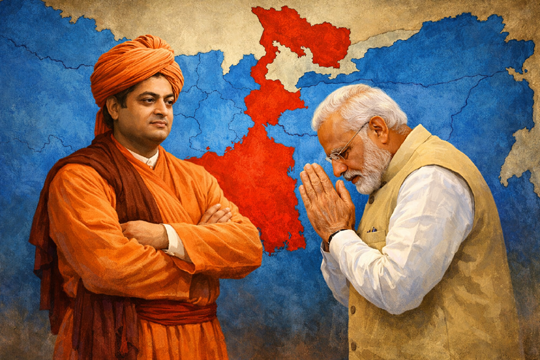
It is against this backdrop that recent announcements by the Union Government acquire historic significance. Prime Minister Narendra Modi, whose name Narendra recalls Narendra Nath Dutta, the original name of Swami Vivekananda, has increasingly emphasised infrastructure-led development as the foundation of economic transformation. The philosophy behind this approach is straightforward. Regions do not become prosperous merely because they possess resources or population. They become prosperous when infrastructure allows those resources and people to connect efficiently with markets, capital and global trade networks.
The latest maritime and logistics investment plans indicate that West Bengal may be entering a transformative period comparable to what Gujarat experienced during the early years of its port-led development strategy. The Ministry of Ports, Shipping and Waterways has announced investments worth approximately ₹19,000 crore over the next five years. These investments encompass port modernisation, inland waterways expansion, shipbuilding development, logistics strengthening and industrial growth initiatives across the eastern corridor.
The scale of the proposal is significant not simply because of the amount involved but because of the sectors it targets. Modern economies depend on efficient logistics. Every manufacturing centre, agricultural hub and industrial cluster requires reliable transportation systems to remain competitive. When logistics costs are high, industries lose competitiveness. When transportation becomes faster and cheaper, investment follows. The proposed investments therefore have implications extending far beyond ports themselves. They have the potential to influence manufacturing, warehousing, exports, employment generation and regional development throughout eastern India.
For decades, discussions about Bengal’s economic revival often focused on what had been lost. The current developments instead focus on what can be built. The shift from nostalgia to infrastructure represents a fundamental change in approach. Rather than debating historical decline, policymakers are attempting to create the physical foundations required for future growth.
The significance of these developments becomes even clearer when viewed in the broader context of India’s rise as a major economic power. As global supply chains diversify and companies seek alternatives to traditional manufacturing centres, infrastructure quality increasingly determines investment decisions. States that can provide efficient ports, reliable transportation and integrated logistics systems gain substantial advantages. West Bengal now appears positioned to participate in that competition in a way that was difficult to imagine only a decade ago.
The strategic importance of the Tajpur deep-sea port
Among all the announced projects, none carries greater transformative potential than the proposed deep-sea port project. Infrastructure projects often fail not because they lack economic viability but because they become trapped in administrative delays, legal disputes and land acquisition challenges. India has witnessed numerous examples of promising projects becoming casualties of procedural complications.
The Tajpur port proposal appeared destined to suffer a similar fate. For years, the project remained stalled due to difficulties associated with land acquisition, uncertainty regarding implementation and various political and administrative obstacles. Supporters viewed it as a potentially transformative project for eastern India, while critics increasingly regarded it as another ambitious plan unlikely to materialise.
Recent developments, however, have altered that outlook dramatically. Authorities have identified an alternative site at Dadanpatrabar, approximately eleven kilometres from the original location. The new site includes more than 1,700 acres of state-owned land. This detail may appear technical, but it addresses the single greatest challenge that had threatened the project’s future.
Infrastructure projects frequently encounter resistance when large-scale private land acquisition becomes necessary. Compensation disputes, legal challenges and social concerns can delay implementation for years. By utilising state-owned land, authorities eliminate many of these complications. The new location provides a cleaner pathway toward execution and significantly improves the project’s prospects.
The importance of a deep-sea port lies in capabilities that conventional ports often lack. Existing major ports in West Bengal, particularly Kolkata and Haldia, have served the region for decades. However, both face limitations associated with draft depth and vessel size. Modern global shipping increasingly depends on larger vessels that require deeper channels and more advanced facilities.
When ports cannot accommodate these vessels, shipping companies choose alternative destinations. Cargo that might naturally flow through eastern India instead travels to ports elsewhere. This increases transportation costs, extends delivery times and reduces regional competitiveness.
A fully operational deep-sea port would change this equation. Larger vessels could dock directly. Shipping routes that currently bypass Bengal could become viable. Exporters and importers throughout eastern India would gain access to more efficient maritime options. Industries that depend heavily on logistics would benefit from reduced transportation expenses and improved connectivity.
The potential impact extends beyond cargo movement. Ports function as economic ecosystems. Around major ports emerge industrial parks, warehouses, logistics centres, ship repair facilities, transportation hubs and supporting service industries. Each component generates employment and stimulates additional investment.
The experience of successful port-led economies demonstrates this pattern repeatedly. Ports become magnets for economic activity because businesses prefer locations where transportation infrastructure reduces operational costs. Manufacturers establish facilities near efficient ports. Logistics companies expand operations. Export-oriented industries gain competitiveness.
For West Bengal, the establishment of a modern deep-sea port would represent more than a maritime project. It would signify the creation of a new economic growth pole capable of attracting investment from sectors ranging from manufacturing and logistics to engineering and services.
Furthermore, the project aligns with broader national objectives concerning maritime development. India has increasingly emphasised the importance of the blue economy, coastal infrastructure and international trade connectivity. A modern deep-sea port on the eastern coast strengthens India’s overall maritime capabilities while simultaneously benefiting one of its historically important economic regions.
The symbolism is equally noteworthy. For generations, Bengalis have spoken about restoring the state’s economic vitality. The creation of infrastructure capable of competing with the best ports in the country would represent a tangible step toward that objective. It would demonstrate that Bengal’s future is being shaped not merely through rhetoric but through investments designed to alter economic realities.
Geography, logistics and the advantage Bengal always possessed
Economic history repeatedly demonstrates that geography remains one of the most enduring determinants of prosperity. Nations and regions can overcome many disadvantages through policy, technology and innovation, but strategic geography continues to provide unique opportunities. West Bengal’s location has always been among its greatest strengths.
The state occupies a position that few regions in India can match. It serves as the primary gateway connecting mainland India with the Northeast. It provides maritime access for vast inland territories stretching across Bihar, Jharkhand and portions of northern India. It sits close to international markets in Southeast Asia while maintaining connectivity with East Asian and Russian maritime routes.
Despite these advantages, infrastructure limitations have prevented the state from fully capitalising on its position. Goods produced in eastern and northeastern India frequently travel long distances to western ports before reaching international markets. This increases costs, creates inefficiencies and reduces competitiveness.
The proposed investments seek to address precisely this challenge. By strengthening ports, inland waterways and logistics networks simultaneously, policymakers are attempting to create an integrated transportation ecosystem. Such integration is crucial because modern supply chains depend on seamless movement across multiple transportation modes.
Inland waterways deserve particular attention. Eastern India possesses extensive river systems that historically served as major transportation arteries. Before the dominance of railways and highways, rivers carried enormous volumes of trade throughout the region. Revitalising waterways can reduce transportation costs while easing pressure on roads and rail networks.
When connected effectively with ports, waterways create highly efficient logistics corridors. Agricultural products, industrial goods and raw materials can move more economically from inland production centres to maritime gateways. This not only benefits exporters but also improves domestic distribution networks.
The implications for Bihar, Jharkhand and the Northeast are substantial. These regions possess significant economic potential but often face logistical disadvantages due to distance from major ports. Improved access through Bengal could lower transportation expenses and encourage greater industrial development.
The relationship between logistics and economic growth is frequently underestimated. Investors evaluate transportation costs carefully when selecting locations for factories and distribution centres. Even modest reductions in logistics expenses can significantly influence profitability. Consequently, regions with superior transportation infrastructure often attract disproportionate shares of investment.
West Bengal’s geography gives it the potential to become the logistical heart of eastern India. If transportation networks function efficiently, the state could emerge as the preferred gateway for goods entering and leaving a vast portion of the country. This role would generate economic activity far beyond the port sector itself.
Another critical factor is international connectivity. India’s Act East policy emphasises stronger engagement with Southeast Asia. Bengal’s location naturally complements this strategy. Enhanced maritime infrastructure would strengthen commercial links with countries across the Bay of Bengal and beyond.
As global trade patterns evolve, regions capable of connecting domestic markets with international shipping routes gain increasing importance. West Bengal possesses the geographical foundations required for such a role. The challenge has always been translating geographical potential into economic reality. The current investment programme represents an effort to bridge that gap.
Learning from Gujarat’s transformation
Comparisons between West Bengal’s emerging infrastructure strategy and Gujarat’s earlier development trajectory are both inevitable and instructive. Gujarat’s rise as India’s leading port-driven economy did not occur suddenly. It resulted from sustained investment, strategic planning and consistent execution over many years.
Before Gujarat became synonymous with industrial growth and logistics excellence, it too faced challenges associated with infrastructure development and economic transformation. What distinguished the state was its commitment to leveraging geographic advantages through large-scale investment in ports, transportation networks and industrial corridors.
Today Gujarat handles a substantial share of India’s maritime trade. Its ports attract investment, support manufacturing growth and facilitate exports across numerous industries. The state’s experience demonstrates how infrastructure can reshape economic geography and create self-reinforcing cycles of growth.
West Bengal now possesses an opportunity to follow a similar path, though under different circumstances and with its own unique characteristics. The objective is not to replicate Gujarat exactly. Every region has distinct strengths, challenges and historical contexts. Rather, the lesson lies in recognising how infrastructure can unlock latent potential.
The proposed ₹19,000 crore investment pipeline suggests recognition of this principle at the national level. Infrastructure development requires patience because benefits often emerge gradually. Ports must be built. Transportation networks must be integrated. Businesses require time to adjust supply chains and investment strategies.
However, once critical infrastructure reaches operational maturity, economic impacts can accelerate rapidly. Reduced logistics costs attract investment. Increased investment generates employment. Higher economic activity produces additional demand for infrastructure. The process becomes mutually reinforcing.
For Bengal, the stakes are especially significant because the state already possesses many ingredients necessary for success. It has a large and skilled workforce. It has educational institutions, industrial traditions and strategic geography. What has often been lacking is infrastructure capable of integrating these advantages into modern economic networks.
Prime Minister Narendra Modi’s emphasis on large-scale infrastructure projects reflects a broader development philosophy that views connectivity as the foundation of economic expansion. Roads, railways, airports, waterways and ports are treated not merely as public works projects but as instruments of national transformation.
Whether West Bengal ultimately experiences a Gujarat-style resurgence will depend on execution. Announcements create expectations, but implementation determines outcomes. Infrastructure projects must be completed on schedule. Supporting industries must be encouraged. Regulatory frameworks must facilitate investment.
Yet the opportunity is unmistakable. The blueprint exists. The geographical advantages exist. The financial commitments have been announced. If execution remains consistent over the coming decade, eastern India could witness a significant shift in its economic centre of gravity.
Such a transformation would not benefit Bengal alone. It would influence development patterns across a vast region encompassing millions of people. Improved connectivity, reduced logistics costs and expanded industrial opportunities would generate benefits extending far beyond state boundaries.
The story of Bengal’s economic future is therefore larger than any single port or infrastructure project. It concerns the re-emergence of eastern India as a major participant in national and global commerce. It concerns restoring connections between geography and economic opportunity that once made Bengal one of the world’s most prosperous regions.
For generations, observers have recognised Bengal’s potential. The debate was never about whether the state possessed advantages. Those advantages remained evident in its location, population and historical legacy. The real question was whether sufficient infrastructure would ever be built to unlock them.
The answer now appears increasingly positive. If the announced investments are implemented effectively, West Bengal may be on the threshold of a new era. The revival of ports, waterways and logistics networks could restore the state’s role as the commercial gateway of eastern India and a major maritime hub of the Eastern Hemisphere.
History does not repeat itself exactly, but it often rewards regions that recognise and utilise their enduring strengths. Bengal’s geography has always been one of those strengths. With the infrastructure finally beginning to match the opportunity, the state may be preparing to reclaim a position of economic significance that many believed belonged only to its past.