
Radio was intimate in a way that modern media often struggles to be. The human voice, unaccompanied by visuals, fostered a deep connection between broadcaster and listener. This intimacy created trust, a sense that the speaker was addressing you personally. In losing radio’s prominence, we may have lost some of that emotional immediacy
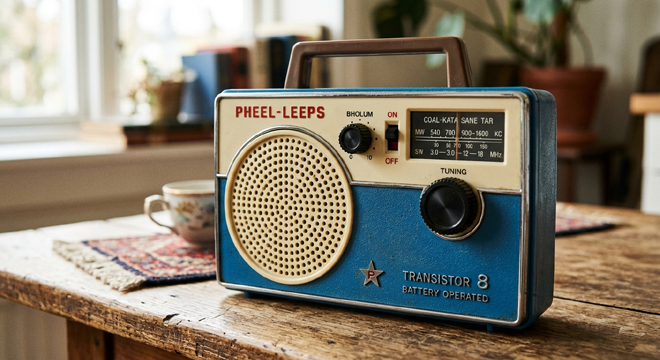
There was a time when radio was a constant presence, an invisible companion that lived in homes, workplaces, and even in the pockets of people who carried small transistor sets. Its gradual fading from everyday centrality has not been marked by a dramatic farewell but by a slow, almost unnoticed withdrawal. Yet, the loss of radio as a dominant medium has fundamentally reshaped how people experience information, entertainment, and even each other.
Radio once created a shared auditory world. Families gathered around it, not unlike how earlier generations might have gathered around a hearth. The experience was communal. News bulletins, music programs, dramas, and talk shows were consumed together, often sparking discussions that extended long after the broadcast ended. Today, media consumption is deeply individualized. Streaming platforms, podcasts, and algorithm-driven feeds have replaced the collective rhythm of scheduled programming.
This shift has fragmented attention and community. Where once millions listened to the same program at the same time, now audiences are scattered across countless options. There is freedom in this diversity, but also a loss of shared cultural moments. The disappearance of radio’s centrality has meant fewer instances where entire societies pause together to listen, reflect, and react.
Radio also shaped daily routines. Morning news bulletins, afternoon music shows, and evening dramas created a structure to the day. These temporal anchors are largely gone, replaced by on-demand consumption. While convenience has increased, the sense of anticipation has diminished. Waiting for a favorite show or song created a unique emotional investment that is difficult to replicate in an age of instant access.
Perhaps most importantly, radio was intimate in a way that modern media often struggles to be. The human voice, unaccompanied by visuals, fostered a deep connection between broadcaster and listener. This intimacy created trust, a sense that the speaker was addressing you personally. In losing radio’s prominence, we may have lost some of that emotional immediacy.
The golden strengths of a purely auditory medium
One of radio’s greatest strengths lay in its simplicity. It required no screen, no visual attention, and no complex interface. It could accompany other activities seamlessly, cooking, driving, working, or simply resting. This made it uniquely versatile. Unlike television or digital media, radio did not demand full engagement; it enriched the background of life without overwhelming it.
Accessibility was another defining advantage. Radio reached places where other forms of media could not. Remote villages, areas with limited electricity, and populations with low literacy levels all benefited from radio’s broad reach. It democratized information in a way that few technologies have matched. A cheap receiver could connect individuals to national and global events, educational content, and cultural programming.
Radio also excelled in immediacy. Breaking news could be broadcast instantly, without the need for visual production or editing. This made it a critical medium during emergencies. Natural disasters, political upheavals, and public health crises were often communicated first through radio, which could operate even when other infrastructure failed.
Creatively, radio encouraged imagination. Without visuals, listeners had to construct their own mental images. Radio dramas, for instance, were powerful precisely because they engaged the listener’s mind in an active way. The absence of imagery was not a limitation but a strength, allowing stories to unfold uniquely in each listener’s imagination.
Moreover, radio fostered a sense of locality. Regional stations reflected local cultures, languages, and concerns. They gave a voice to communities that might otherwise be overlooked by national or global media. This localization created a strong sense of identity and belonging.
Economically, radio was efficient. Production costs were relatively low compared to television or film. This allowed for a wide range of programming, including experimental formats and niche content. It also made it easier for smaller players to enter the broadcasting space, promoting diversity in voices and perspectives.
The subtle weaknesses that shaped its decline
Despite its many strengths, radio was not without its limitations. One of its most significant weaknesses was the lack of visual content. As audiences became accustomed to television and later digital media, the absence of visuals made radio seem less engaging, especially for younger generations raised in a screen-dominated environment.
Radio also struggled with measurement and monetization. Unlike digital platforms, which can track user behavior with precision, radio relied on less accurate methods to estimate audience size and engagement. This made it less attractive to advertisers, who increasingly preferred platforms that offered detailed analytics and targeted advertising.
Another limitation was its linear nature. Programs were broadcast at specific times, and if a listener missed them, they were often gone. While this created anticipation, it also reduced convenience. The rise of on-demand media exposed this weakness, as audiences began to expect control over what they consumed and when.
Content diversity, while a strength in some respects, could also be a limitation. Radio stations often catered to broad audiences, leading to generalized programming that might not fully satisfy niche interests. In contrast, digital platforms can cater to highly specific tastes, offering personalized content that radio could not easily match.
Radio’s dependence on signal quality was another issue. Interference, limited range, and technical disruptions could affect the listening experience. While these issues were often minor, they contributed to a perception of radio as less reliable compared to newer technologies.
Perhaps more subtly, radio lacked interactivity. While call-in shows and listener requests provided some level of engagement, the medium was largely one-way. In an era where audiences expect to comment, share, and participate actively, this limitation became increasingly significant.
The transformation of listening habits in a digital age
The decline of radio’s dominance has coincided with the rise of digital audio formats, particularly podcasts and streaming services. These new forms have inherited some of radio’s strengths while addressing many of its weaknesses. They offer on-demand access, personalized recommendations, and global reach, all while maintaining the intimacy of the spoken voice.
However, this transformation has also changed how people listen. Listening is no longer a passive, ambient activity but often a deliberate choice. People select specific podcasts or playlists, often with a particular purpose in mind, learning, entertainment, or relaxation. This intentionality contrasts with the serendipitous discovery that radio once provided.
The loss of serendipity is significant. Radio exposed listeners to a wide range of content, often beyond their usual preferences. A listener might tune in for music and stay for a news segment, or discover a new genre or artist unexpectedly. Algorithm-driven platforms, while efficient, tend to reinforce existing preferences, limiting exposure to the unfamiliar.
Another change is the fragmentation of audiences. Where radio created shared experiences, digital platforms create individualized ones. Two people may listen to entirely different content, even if they share similar interests. This fragmentation can reduce the sense of cultural cohesion that radio once fostered.
At the same time, the democratization of content creation has expanded dramatically. Anyone can now create and distribute audio content, leading to an explosion of voices and perspectives. This is a positive development, but it also creates challenges in terms of quality control and discoverability.
The role of the broadcaster has also evolved. Radio presenters were often trusted figures, known for their personalities and expertise. In the digital age, the line between professional and amateur has blurred. While this can make content more relatable, it can also reduce the perceived authority of the medium.
What we have lost, and what we have gained
The loss of radio’s central role is not simply a story of decline but one of transformation. We have gained unprecedented access to content, greater control over our listening experiences, and a diversity of voices that was unimaginable in the era of traditional broadcasting. Yet, these gains come with trade-offs.
We have lost a shared cultural space where people could come together, even if only through the act of listening. We have lost the simplicity of a medium that required little effort to engage with and offered a sense of companionship without demanding attention. We have lost the magic of waiting, the thrill of discovery, and the intimacy of a voice that felt like it was speaking directly to you.
At the same time, the spirit of radio lives on in new forms. Podcasts, live streams, and even voice-based social platforms carry forward the essence of audio storytelling and communication. They build on radio’s legacy while adapting to the expectations of a digital world.
The challenge for the future is to retain what was valuable about radio, its intimacy, accessibility, and ability to create shared experiences, while embracing the possibilities of new technologies. This may involve rethinking how audio content is produced, distributed, and consumed, with an emphasis on community and connection.
Ultimately, the story of radio is a reminder that technology is not just about functionality but about human experience. The tools we use shape how we connect with each other, how we understand the world, and how we spend our time. As radio fades into the background, its lessons remain relevant, offering insights into what we value and what we might strive to preserve in an ever-changing media landscape.