
The fascination with sunroofs in India is therefore less about enjoying open-air driving and more about aspirational signalling. Marketing research cited by the Federation of Automobile Dealers Associations shows that many buyers rarely open the sunroof during actual driving conditions. Dust pollution deters use of sun-roofs and existence of convertibles in India
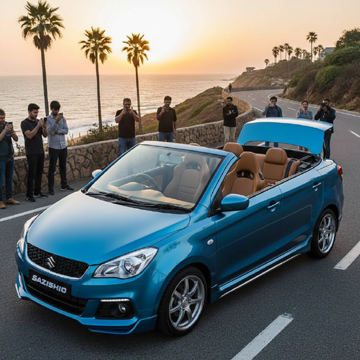
Walk into any automobile showroom in India today and you will find sales executives enthusiastically promoting cars with panoramic sunroofs. From compact SUVs to premium sedans, the sunroof has become a near-mandatory aspirational feature. Buyers associate it with luxury, status, and global automotive trends. Yet there is a striking contradiction: while sunroofs are booming, fully convertible cars — vehicles designed to be driven with the roof completely open — remain almost nonexistent in the Indian market. The reasons are neither technological nor cultural alone. They lie in a complex mix of environmental realities, urban crime patterns, infrastructure limitations, consumer psychology, and economics. Dust pollution and vehicle theft risk — two persistent characteristics of India’s mobility ecosystem — have quietly shaped the trajectory of automotive design and demand in the country.
Trade bodies, automobile engineers, and consumer associations consistently point to structural factors that prevent convertibles from scaling beyond niche luxury ownership. According to industry observers from the Society of Indian Automobile Manufacturers, the Indian passenger vehicle market is dominated by value-conscious buyers who prioritise practicality, durability, and resale value over lifestyle features that may compromise usability. A sunroof offers perceived luxury without sacrificing structural integrity or security, whereas a convertible fundamentally alters the vehicle’s engineering and cost profile. That distinction matters immensely in a price-sensitive market.
The fascination with sunroofs in India is therefore less about enjoying open-air driving and more about aspirational signalling. Marketing research cited by the Federation of Automobile Dealers Associations shows that many buyers rarely open the sunroof during actual driving conditions. Instead, it is used occasionally for novelty or parked photographs. The psychological appeal of “having” a premium feature often outweighs functional utility. Convertibles, on the other hand, cannot rely on symbolic value alone. They require real-world usability — something India’s environment often undermines.
Dust, pollution and climate: The open-air barrier
India’s environmental conditions are among the biggest obstacles to convertible adoption. Open-top driving is enjoyable only when air quality, temperature, and road conditions are comfortable. In many Indian cities, these variables rarely align. Urban air pollution levels frequently exceed international safety standards, and seasonal dust storms in northern regions can make open-air driving unpleasant or even hazardous.
Automotive engineering professors at the Indian Institute of Technology Delhi have highlighted that convertibles are particularly vulnerable to particulate intrusion compared with closed-body vehicles. Cabin filtration systems are designed assuming windows remain mostly shut. When the roof is removed, passengers are exposed directly to airborne pollutants. Professor-level research in vehicle environmental ergonomics suggests that prolonged exposure to urban particulate matter during open-roof driving can significantly increase respiratory discomfort, especially in high-traffic corridors.
Consumer surveys by the Automobile Association of Upper India indicate that a majority of Indian drivers consider dust accumulation inside the cabin a major inconvenience even in regular vehicles. With convertibles, cleaning frequency and upholstery maintenance costs would multiply. For middle-class buyers already concerned about maintenance expenses, this becomes a deterrent.
Climate also plays a decisive role. India’s long summers with temperatures exceeding 40°C in many regions make open-roof driving impractical for much of the year. Monsoon rains add another constraint, with sudden downpours posing operational challenges. Convertibles flourish in regions with mild weather and predictable seasons. India’s climatic extremes reduce the window of comfortable usage, weakening the value proposition.
Security anxiety and the psychology of ownership
Perhaps the most underestimated factor limiting convertibles in India is security perception. Vehicle theft, vandalism, and petty crime remain concerns in many urban and semi-urban areas. Even where actual theft rates may be declining due to improved immobiliser technologies, consumer perception of risk remains strong. A soft-top convertible, which can be cut open, triggers psychological discomfort among potential buyers.
Industry analysts from the Confederation of Indian Industry note that Indian consumers place unusually high emphasis on physical security features compared with buyers in many developed markets. The car is not merely transportation; it is a major financial asset often purchased through loans. Protecting that asset becomes paramount. Hard-roof vehicles with reinforced doors, alarms, and central locking systems provide reassurance. Convertibles challenge that sense of protection.
Customer advocacy groups such as the Consumer VOICE have reported that owners in metropolitan areas already invest heavily in parking security, CCTV surveillance, and anti-theft devices. Introducing a vehicle perceived as easier to break into would add stress rather than convenience. Even luxury buyers often avoid convertibles unless they have secure private parking — a limitation in densely populated Indian cities.
The psychology extends beyond theft to social exposure. Open-roof driving increases visibility of occupants, which some consumers perceive as attracting unwanted attention. Privacy remains a valued element of personal mobility in India, particularly for families.
Infrastructure realities and road conditions
Road infrastructure has improved significantly in India over the past two decades, yet uneven surfaces, potholes, and unpredictable traffic patterns persist in many areas. Convertibles typically have lower structural rigidity than fixed-roof cars unless reinforced with expensive materials. That reinforcement increases weight and cost.
Automotive engineering experts from the Automotive Research Association of India have pointed out that convertibles require stronger chassis construction to compensate for the absence of a permanent roof. In markets with rough road conditions, maintaining structural integrity over time becomes more challenging. Noise, vibration, and harshness (NVH) levels can increase faster compared with conventional vehicles, affecting long-term durability.
From a consumer standpoint, buyers expect cars to handle poor roads without rattles or leaks. Convertible roofs — whether fabric or retractable metal — introduce additional mechanical complexity. Concerns about water leakage during monsoons or dust entering through seals further discourage adoption.
Economics and taxation barriers
Price sensitivity remains one of the defining characteristics of the Indian automobile market. Convertibles are inherently more expensive to manufacture due to additional engineering, reinforcement, and roof mechanisms. Import duties compound the problem because most convertibles sold in India are imported as completely built units.
Industry estimates cited by the Society of Indian Automobile Manufacturers suggest that taxes and duties can nearly double the retail price of imported luxury vehicles. This limits convertibles to a small niche of high-net-worth buyers. Without volume demand, local manufacturing becomes economically unviable, creating a self-reinforcing cycle of scarcity.
Business chambers such as the Federation of Indian Chambers of Commerce and Industry have repeatedly emphasised that India’s automotive growth has historically been driven by mass-market affordability rather than niche luxury innovation. Manufacturers allocate investment to segments with high demand potential, such as compact SUVs and electric vehicles, rather than low-volume lifestyle categories.
Cultural patterns and usage behaviour
Automobile usage in India is strongly influenced by family needs. Cars are often shared among multiple household members, including elderly parents and children. Practical considerations such as seating capacity, luggage space, and air-conditioned comfort dominate purchase decisions. Convertibles, typically offering limited rear seating and reduced boot space, conflict with these priorities.
Sociological studies referenced by professors at the Indian Institute of Management Ahmedabad indicate that Indian consumers view car ownership as a functional milestone rather than purely recreational. Even affluent buyers frequently prefer luxury SUVs because they combine status with practicality. Convertibles are seen as indulgent rather than essential.
Sunroofs, by contrast, offer a compromise. They provide a sense of openness without sacrificing usability, security, or resale value. Manufacturers have successfully positioned them as aspirational yet practical features, aligning with consumer psychology.
Dust economy and maintenance burdens
The maintenance ecosystem surrounding vehicles in India also influences consumer decisions. Dust accumulation, frequent washing, and interior cleaning are routine concerns for car owners. Convertible interiors would require significantly higher maintenance standards to prevent damage to upholstery and electronics.
Automotive service associations affiliated with the All India Motor Transport Congress note that environmental wear and tear is already a major cost factor for vehicle ownership in India. Exposure to sun, pollution, and humidity accelerates material degradation. Convertible roofs — especially fabric ones — would face faster aging in harsh climatic conditions, increasing replacement costs.
For buyers evaluating long-term ownership expenses, this additional burden becomes a deterrent. The resale market would also penalise vehicles showing cosmetic wear, reducing financial attractiveness.
Insurance, financing and risk perception
Financial institutions and insurers also shape market outcomes. Vehicles purchased through loans require insurance coverage that reflects risk exposure. Convertibles, perceived as more vulnerable to damage and theft, could attract higher premiums.
Insurance analysts associated with the General Insurance Council have observed that risk assessment models incorporate repair costs and theft probabilities. Replacement of convertible roof mechanisms can be expensive, raising claim values. Higher insurance costs further discourage potential buyers.
Banks financing car purchases evaluate resale value stability. Since convertibles have limited secondary market demand in India, lenders may consider them higher-risk assets. This influences loan availability and interest rates.
The urban parking challenge
Parking conditions in Indian cities present another practical barrier. Many vehicles are parked on streets rather than in covered garages. Exposure to weather, pollution, and potential vandalism is already a concern for regular cars. For convertibles, especially soft-top variants, street parking increases vulnerability.
Urban planning experts cited by the National Institute of Urban Affairs highlight that Indian cities face chronic parking shortages. Secure multi-level parking infrastructure is still developing. Without guaranteed safe parking, consumers are unlikely to invest in vehicles perceived as fragile or high-risk.
Why sunroofs succeed despite the same environment
The popularity of sunroofs may appear contradictory given the challenges facing convertibles. However, the engineering and consumer perception differences are significant. A sunroof is an optional aperture within a structurally complete vehicle. When closed, it behaves like a normal roof. Security, durability, and weather protection remain largely unaffected.
Marketing has also played a powerful role. Automakers have promoted sunroofs as symbols of luxury and modernity. Social media imagery of passengers standing through sunroofs — despite safety concerns — has amplified aspirational appeal. The feature has become a visual status marker rather than a functional necessity.
Trade analysts from the Federation of Automobile Dealers Associations report that many buyers specifically request sunroof variants even when they increase vehicle cost significantly. Manufacturers respond by offering sunroofs across multiple price segments, reinforcing demand.
Convertibles lack this scalable marketing advantage. They require entirely different vehicle platforms rather than optional features, limiting their commercial viability.
The luxury niche that will remain
Convertibles will not disappear entirely from India. They will continue to exist as niche luxury products purchased by enthusiasts, celebrities, and collectors. Premium brands occasionally introduce models to maintain brand image and showcase engineering capabilities. However, volume expansion remains unlikely.
Luxury automotive consultants working with the Confederation of Indian Industry suggest that India’s luxury car market itself remains small relative to global markets. Within that limited segment, SUVs dominate due to road conditions and practicality. Convertibles occupy an even narrower space.
Electric vehicles and future possibilities
Some analysts speculate whether electric vehicle platforms could change the equation. Electric architectures often allow flexible body design, and urban environmental regulations may gradually improve air quality. Yet core challenges — climate, dust, security perception, and consumer priorities — are unlikely to disappear quickly.
Engineering researchers at the Indian Institute of Technology Bombay note that battery placement in electric vehicles can improve chassis rigidity, potentially making convertible designs easier. However, cost considerations and limited demand remain obstacles.
Unless broader environmental and infrastructural improvements occur, convertibles will remain impractical for mass adoption.
Consumer aspiration versus ground reality
The Indian automobile story often reflects a tension between aspiration and reality. Consumers desire global lifestyle symbols but adapt them to local conditions. The sunroof phenomenon illustrates this perfectly — a feature inspired by Western markets but reinterpreted for Indian preferences.
Customer feedback compiled by the Consumer VOICE shows that buyers prioritise reliability, fuel efficiency, and service network quality above lifestyle features. Convertibles struggle to compete on these parameters.
Ultimately, cars in India are tools of mobility, family convenience, and financial investment rather than purely recreational objects. Features that compromise practicality face resistance.
The dominance of practicality in India’s auto industry
India’s automotive evolution has always been shaped by constraints — economic, environmental, and infrastructural. Manufacturers succeed when they design vehicles suited to local realities rather than importing global trends without adaptation. Compact cars, multi-utility vehicles, and now compact SUVs have thrived because they align with consumer needs.
Convertibles, despite their glamour, conflict with multiple structural factors: dust pollution, extreme climate, security concerns, cost sensitivity, parking limitations, and family-centric usage patterns. Sunroofs succeed because they deliver aspirational value without sacrificing practicality.
As long as these underlying conditions persist, convertibles will remain rare sights on Indian roads — admired but impractical, aspirational but unsuited to everyday life. The Indian auto industry will continue to prioritise features that balance prestige with durability, proving that in this market, practicality ultimately rules over romance.

