
In Europe, Jewish communities endured centuries of discrimination culminating in genocide under Nazi Germany. Yet in India, Jewish communities such as the Bene Israel, Cochin Jews, and Baghdadi Jews lived for centuries with minimal persecution, often becoming culturally indistinguishable from surrounding populations while maintaining religious identity
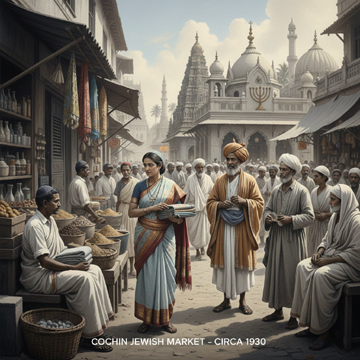
Diasporas, survival, and the paradox of visibility: The story of small communities surviving inside larger civilisations is one of the oldest themes in human history. From Armenians scattered across continents to Jewish communities navigating centuries of persecution in Europe, and occupational guild groups such as bakers embedded deeply into Indian society, the question of visibility versus influence has repeatedly surfaced. Why do some minorities become targets of hostility while others integrate so seamlessly that they become almost invisible? And what does this say about the civilisational character of the societies they inhabit? These questions are not merely sociological curiosities; they connect to deeper political ideas about democracy, pluralism, and the cultural DNA of nations. When observers describe India as the “original democracy,” they are often pointing to its historical capacity to absorb diversity without erasing identity.
Consider the Armenians, whose homeland lies in the region of Armenia. Over centuries, waves of migration produced diasporas stretching from the Middle East to Europe and the United States. Many Armenians became merchants, traders, and artisans. Their success sometimes provoked suspicion, a pattern familiar in diaspora history. Meanwhile, in the United States, organised crime networks popularly described as the “mafia” gained notoriety, particularly during the 20th century. Yet the same American society also produced countless immigrant success stories where ethnic communities became pillars of local economies, including food trades like baking and catering. India presents a contrasting phenomenon: occupational communities such as bakers or traders have often been integrated into local social structures without attracting systemic hostility on the scale seen elsewhere.
The comparison becomes sharper when examining Jewish experiences. In Europe, Jewish communities endured centuries of discrimination culminating in genocide under Nazi Germany. Yet in India, Jewish communities such as the Bene Israel, Cochin Jews, and Baghdadi Jews lived for centuries with minimal persecution, often becoming culturally indistinguishable from surrounding populations while maintaining religious identity. This contrast raises a provocative thesis: that the Indian civilisational framework historically fostered coexistence in ways resembling democratic pluralism long before modern constitutional democracy emerged.
Historical precedents of pluralism in the Indian subcontinent
To understand claims that India represents an original democracy, one must look beyond modern parliamentary systems into ancient political traditions. The republican clans of ancient India, known as ganas or sanghas, operated through assemblies and councils. The region around Vaishali is frequently cited by historians as home to one of the world’s earliest republics. Political theorist Kautilya, also known as Chanakya, described governance structures in the Arthashastra that included consultation, local administration, and welfare responsibilities of rulers. Although these systems were not democracies in the modern universal-suffrage sense, they embodied participatory governance and rule-bound authority.
Military strategists across cultures recognised that stable societies depend on legitimacy. Chinese strategist Sun Tzu wrote that the moral bond between ruler and people determines victory more than weapons. Prussian theorist Carl von Clausewitz similarly argued that war is an extension of politics, meaning political legitimacy is central to state power. Indian traditions emphasised dharma — moral order — as the foundation of governance. Emperor Ashoka famously issued edicts promoting tolerance among religions after the Kalinga war, demonstrating an early state endorsement of pluralism.
These traditions created a social environment where communities could coexist without requiring uniformity. Unlike Europe, where religious identity often determined political allegiance, Indian society historically accommodated multiple belief systems simultaneously. This cultural habit may explain why minorities such as Jews found relative safety in India compared to Europe.
Minority success and suspicion: the Armenian and Jewish parallels
History shows a recurring pattern: minorities who achieve economic success often face suspicion or hostility from majority populations. Armenians in the Ottoman Empire, Jews in medieval Europe, Chinese traders in Southeast Asia, and Indians in East Africa all experienced variations of this phenomenon. Sociologists call it the “middleman minority” dynamic — groups that specialise in trade or finance become economically visible yet socially vulnerable.
The Armenian genocide of the early 20th century demonstrates how geopolitical tensions can transform economic jealousy into violence. Similarly, anti-Jewish pogroms in Europe were often justified by conspiracy theories about financial control. These episodes contrast sharply with the Indian experience, where occupational communities could prosper without widespread scapegoating.
Indian leaders often highlighted this distinction. Mahatma Gandhi emphasised religious coexistence as a moral principle, arguing that civilisation is judged by how it treats minorities. B. R. Ambedkar embedded protections for minority rights within the Constitution, reflecting a belief that pluralism was intrinsic to India’s identity. Jawaharlal Nehru described India as a civilisation rather than merely a nation-state, highlighting its long tradition of absorbing diverse cultures.
Occupational communities and invisible integration
The reference to bakers in India illustrates another sociological pattern: when minority groups are tied to everyday economic functions rather than elite finance or politics, they often integrate more smoothly. Food trades, crafts, and local services create daily interactions that reduce social distance. Over generations, occupational identity can overshadow ethnic difference, making communities “invisible” in social conflict narratives.
This phenomenon is not unique to India, but the scale is notable. Indian cities historically contained neighbourhoods where multiple religions coexisted within walking distance — temples, mosques, churches, and synagogues sharing marketplaces. Anthropologists argue that dense interdependence reduces the likelihood of sustained hostility because economic survival depends on cooperation.
Military thinkers also recognise this dynamic. Clausewitz’s concept of the “remarkable trinity” — people, army, and government — suggests that societal cohesion strengthens national resilience. A society accustomed to diversity may therefore possess strategic advantages, particularly in maintaining internal stability during crises.
Democracy before democracy: philosophical foundations
The claim that India is the original democracy should be understood philosophically rather than institutionally. Modern democracy is typically traced to ancient Athens, but participatory traditions existed elsewhere. Indian political philosophy emphasised consultation, decentralisation, and moral legitimacy centuries before European enlightenment thinkers articulated similar ideas.
Village councils, or panchayats, operated as local decision-making bodies for centuries. These institutions handled disputes, resource allocation, and social regulation through collective deliberation. Although imperfect and often shaped by hierarchy, they reflected participatory governance embedded in cultural practice rather than imposed by constitutional design.
Ambedkar viewed democracy not merely as a system of elections but as a “mode of associated living.” In this sense, India’s pluralistic social fabric could be interpreted as democratic long before independence. The coexistence of multiple religions without enforced homogenisation aligns with democratic values of tolerance and individual freedom.
Violence, tolerance, and historical contradictions
It would be inaccurate to portray India as entirely free from conflict. Communal violence, caste discrimination, and regional tensions have occurred throughout history. However, the broader pattern still differs from regions where minorities faced systematic state-sponsored persecution. Jewish communities in India, for example, never experienced state-driven expulsions comparable to those in medieval Europe.
Historians often explain this difference through the absence of religious absolutism in Indian traditions. Hindu philosophical frameworks typically allowed multiple paths to truth, reducing incentives for doctrinal conflict. Even when political conflicts occurred, they were often driven by power struggles rather than theological exclusivity.
Military historian John Keegan observed that cultures with flexible identities tend to produce more adaptive societies. India’s civilisational flexibility — its capacity to incorporate foreign influences from Greeks to Persians to Central Asians — may have contributed to long-term stability despite invasions.
Diaspora influence and power perception
The mention of mafia networks in the United States introduces another dimension: how minority communities are perceived when associated with crime or power. Italian-American organised crime became globally famous through media portrayals, overshadowing the majority of law-abiding immigrants. Similarly, stereotypes about Jewish financial influence emerged from a combination of historical restrictions and conspiracy narratives.
Perception often matters more than reality. Political scientists note that fear of minority influence can mobilise majorities even without factual basis. This dynamic contributed to European antisemitism and anti-Armenian sentiments. In contrast, Indian social structures historically distributed economic roles across multiple communities, preventing concentration of power in a single minority group and reducing perceived threats.
Strategic culture and pluralism as strength
From a strategic perspective, pluralism can enhance national resilience. Sun Tzu emphasised the importance of unity between ruler and people; societies that respect diversity may achieve stronger internal cohesion because citizens feel included. Clausewitz’s insights similarly suggest that political legitimacy strengthens military capability.
Modern India’s diversity — linguistic, religious, and cultural — often appears chaotic, yet it also reflects adaptive capacity. Multiple identities coexist within a shared civilisational framework, allowing flexibility in diplomacy and global engagement. Indian leaders frequently present this diversity as a strategic advantage rather than a weakness.
Lessons from Jewish experience in India
Jewish communities provide one of the clearest examples of India’s pluralistic environment. The Cochin Jews integrated into Kerala’s society while maintaining religious practices; Bene Israel communities became part of Maharashtra’s cultural landscape; Baghdadi Jews contributed to trade and industry in cities like Mumbai and Kolkata. Unlike Europe, where Jews were often segregated into ghettos, Indian Jewish communities interacted freely with surrounding populations.
Historians argue that this acceptance stemmed partly from India’s lack of theological rivalry with Judaism. Without competition for religious dominance, coexistence was easier. The lesson extends beyond Jewish history: societies that avoid zero-sum identity conflicts tend to foster stability.
India’s democratic identity in the modern era
Modern India’s constitutional democracy draws on both Western political models and indigenous traditions. Universal adult franchise, parliamentary governance, and judicial review align with global democratic norms, while local self-government institutions echo historical practices. Leaders from Gandhi to Ambedkar emphasised that democracy must be rooted in social equality to succeed.
India’s continued challenges — economic inequality, social tensions, and political polarisation — demonstrate that democracy is an ongoing process rather than a completed achievement. Yet the country’s ability to maintain electoral continuity across decades in a population exceeding a billion people remains historically significant.
Civilisation, coexistence, and the meaning of democracy
The comparisons among Armenians, Jewish communities, occupational groups like bakers, and diaspora experiences in different regions highlight a central insight: societies vary dramatically in how they treat minorities. Europe’s history includes severe persecution alongside enlightenment ideals; the United States combines immigrant opportunity with episodes of discrimination; India presents a long tradition of coexistence alongside its own contradictions.
Describing India as the original democracy is less about institutional chronology and more about civilisational ethos. Ancient participatory traditions, philosophical tolerance, and social interdependence created conditions where diversity could persist without constant conflict. Military theorists remind us that legitimacy and cohesion are foundations of power, and India’s pluralistic heritage contributes to both. Ultimately, the survival and integration of minorities — whether Armenians, Jews, or occupational communities — reveal the character of the societies they inhabit. A civilisation that allows identities to coexist without erasure approaches the democratic ideal, even before ballots and parliaments emerge. In that sense, India’s historical experience offers a compelling case for democracy as a cultural inheritance rather than merely a political system.