
Oil, blood and paper money: How well does the Indian UPI payment system fare against the SWIFT and the Dollar? Does it need to become the global reserve currency to make India the next superpower? Will India ever occupy that position or will it forever rule a niche just like Switzerland?
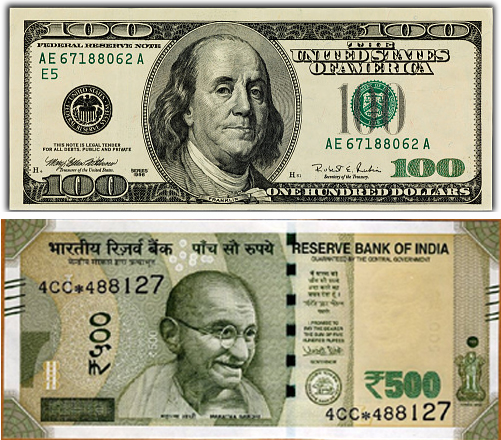
In the year 2000, Saddam Hussein made an announcement that barely registered outside a handful of financial and intelligence circles. Iraq, he said, would begin selling its oil in euros instead of U.S. dollars. There were no press conferences filled with outrage. No emergency summits. Just a quiet policy shift by a regime already branded a pariah. Three years later, the United States invaded Iraq. Weapons of mass destruction, we were told, justified the war. None were ever found. But something else happened just as quietly as Saddam’s original announcement. Iraqi oil was re-priced in dollars. The euro experiment ended. The petrodollar system was restored. Most people call that coincidence. History suggests otherwise.
This was not the first time that a currency had challenged power, nor the last. Empires do not fall merely because armies lose battles. They fall when their money loses meaning.
The Dollar after gold: A promise backed by force
In 1971, President Richard Nixon took the United States dollar off the gold standard. For the first time in modern history, the world’s dominant currency was backed by nothing tangible—only trust. By every classical economic model, the dollar should have collapsed. It didn’t. The reason lay not in economics, but in geopolitics.
Three years later, Henry Kissinger brokered a deal with Saudi Arabia that changed the global financial system. The arrangement was brutally simple: Saudi oil would be sold exclusively in U.S. dollars, and in return, the U.S. military would guarantee the security of the Saudi regime.
From that moment onward, every country on earth needed dollars—not because the dollar was superior money, but because energy was non-negotiable. Oil was life. Dollars became its bloodstream.
This was not free-market capitalism. It was force-backed monetary policy. Or, more honestly, a protection racket that happened to work exceptionally well. Currency funded the military. The military protected the currency. This is how empires function.
What happens when the system is challenged
Once you see the pattern, it is not subtle. In 2009, Muammar Gaddafi proposed a gold-backed African currency—the gold dinar. The idea was radical, but its implications were terrifying to the existing order. African nations could buy oil without dollars. Trade could occur outside Western financial rails.
In 2011, NATO intervened in Libya for “humanitarian reasons.” Gaddafi was killed. The gold dinar vanished. Libyan oil returned to dollar pricing. Another coincidence.
Russia demanded rubles for natural gas exports. Sanctions followed. Escalation intensified. Financial warfare became as important as military posturing. Iran attempted to sell oil outside the dollar system. Decades of sanctions strangled its economy. Syria discussed pipeline routes that bypassed dollar-centric energy corridors. Civil war followed. Pipelines never materialised. The governments involved differ wildly in ideology and morality. That is not the point. The point is consistency. Challenge the monetary backbone of the global system, and consequences follow—economic first, military later if required.
SWIFT, the global payment messaging system, is often described as neutral infrastructure. It is not. It is a weapon. Get cut off from SWIFT and you are effectively exiled from global trade. Russia, Iran, Cuba, Venezuela—different politics, identical financial fate. These realities are not taught in school because they complicate the moral narrative. We are told wars are fought for freedom, democracy, and values. The policy documents speak a different language: “maintaining dollar liquidity in global energy markets.”
This does not mean soldiers fight for banks. It means empires justify sacrifice using ideals while protecting structures that sustain power.
The empire cycle: From Dutch Guilders to Dollars
There is nothing uniquely American about this pattern. History repeats with mechanical precision.
The Dutch guilder once dominated global trade. Then Britain rose, and the pound sterling ruled for nearly two centuries. After World War II, Britain lost reserve currency status. Within two decades, the British Empire collapsed.
Reserve currency loss does not merely weaken an economy—it shrinks strategic reach. Without reserve status, printing money has consequences. Debt becomes painful. Military projection becomes expensive. Influence contracts.
Ray Dalio has warned about this repeatedly. Late-stage empire looks like this: rising debt, military overextension, currency debasement, and rivals building alternatives. China’s Belt and Road Initiative is not charity. It is the construction of debt relationships denominated in yuan. BRICS is not a friendship club; it is an insurance policy against dollar dependence.
This does not mean the dollar collapses tomorrow. It means the system is being hedged against.
De-dollarisation: Reality versus rhetoric
Despite breathless headlines, de-dollarisation is more slogan than substance.
The dollar still accounts for roughly 58 percent of global reserves, around 80 percent of trade invoicing, and nearly 88 percent of foreign exchange transactions. No alternative comes close.
What is happening is diversification, not displacement. Countries want options, not revolutions. The dollar refuses to die because it offers scale under stress. In every major crisis—the 2008 financial crash, the 2020 pandemic panic, the Ukraine war—capital fled toward dollars, not away from them.
Reserve currencies prove themselves when systems break, not when speeches are made.
The United States also offers something less discussed but crucial: legal predictability. Foreign capital trusts American courts more than most governments. Trust matters more than GDP.
Alternatives struggle for structural reasons. The euro lacks fiscal union and political cohesion. The yuan remains constrained by capital controls and state intervention. The rupee faces its own reality, which is often misunderstood.
The Indian Rupee: Aspirational, not imperial
The Indian rupee is not a global reserve currency—yet. More importantly, it may not need to be.
Its share in global reserves is negligible. Capital accounts remain partially controlled. Trade invoicing is overwhelmingly dollar-based. Foreign participation in Indian bond markets is capped.
This is not weakness. It is choice.
India is the world’s fifth-largest economy by nominal GDP and among the top three by purchasing power parity. Its domestic market is vast and diversified. Political institutions, while noisy, are stable. The Reserve Bank of India has built credibility, particularly since navigating the 2013 taper tantrum without collapse.
India has begun cautious internationalisation: rupee trade settlement mechanisms, vostro accounts, selective oil invoicing experiments, and inclusion of government bonds in global indices. These are not grand gestures. They are controlled tests.
Reserve currencies are not declared. They are surrendered to by the world. And the world does not surrender easily.
Structural constraints India cannot ignore
For all its strengths, India faces hard constraints.
Capital controls remain necessary because India imports energy, fertilisers, and electronics. It runs structural trade deficits and remains vulnerable to oil price shocks. Reserve currencies are issued by net capital exporters, not chronic importers.
Indian bond markets, while improving, do not yet offer the depth and liquidity global reserves demand. Global capital does not seek growth stories for reserves—it seeks parking spaces.
India also prefers a managed currency. Export competitiveness matters. RBI intervention is a feature, not a flaw. Reserve currencies must tolerate appreciation even when exporters protest. India is not ready for that trade-off.
Comparisons with China are instructive. Despite manufacturing dominance and trade scale, the yuan accounts for only around 3 percent of global reserves. If China struggles to internationalise fully, India faces an even steeper climb.
The hidden costs of reserve currency glory
What is rarely discussed is that reserve currency status is not an unambiguous blessing.
Reserve currencies tend to be overvalued, hollowing out manufacturing. The U.S. middle class paid the price for dollar dominance through deindustrialisation. Germany benefits from a structurally undervalued euro. Japan tolerated decades of stagnation.
Reserve issuers lose monetary autonomy. Policy decisions ripple globally. Domestic needs are subordinated to international stability. Financialisation accelerates, drawing talent and capital away from production toward speculation.
India needs factories, infrastructure, and employment—not Wall Street pathologies.
What India should actually aim for
A three-tier currency strategy makes sense.
First, a strong domestic rupee: low inflation, RBI credibility, stable purchasing power. This matters more than international prestige.
Second, regional and bilateral utility: rupee settlement with neighbours, selective commodity invoicing, incremental insulation from dollar shocks.
Third, an optional international role: gradual bond market deepening, controlled liberalisation, no rush, no slogans.
Let the rupee be used because it is useful, not because it is announced.
The honest conclusion
Empires rise and fall with their currencies. Wars are not fought only for territory or ideology, but for systems that allow money to be printed without consequence. This is uncomfortable, but it is history.
India does not need to repeat that cycle. Chasing reserve currency status prematurely is not ambition—it is risk. Stability beats spectacle. Growth beats prestige.
The rupee does not need to rule the world. It needs to serve India well.
And history suggests that nations that focus on production first, not monetary glory, often end up with strong currencies anyway—without needing to enforce them at gunpoint. That may not make for dramatic slogans. But it makes for durable power.