Or: When Urban Stress Becomes a Civic Bonding Strategy
In an unprecedented act of global irony, the mayors of Gaza City and Islamabad have jointly declared their cities to be officially malnourished and distressed sister cities. This bold civic partnership was announced last Tuesday during a Zoom call that featured spotty video quality, mysterious echoing background noises, and what may or may not have been someone microwaving popcorn.
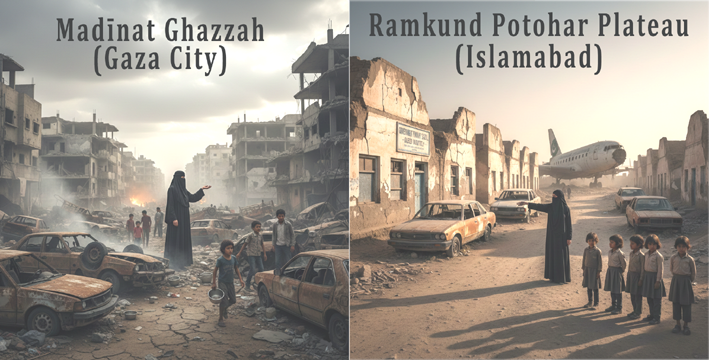
At first glance, this sounds like the kind of tagline a struggling restaurant might slap on its menu (“World-Famous Malnourished and Distressed Tandoori!”), but in fact this is municipal geopolitics — modern, bold, and slightly bewildering. Let’s unpack this brave new urban phenomenon.
What does “Malnourished and Distressed Sister Cities” even mean?
Traditionally, sister cities exchange culture, food, and goodwill. Think:
- San Francisco & Osaka exchange jazz festivals.
- Paris & Rome swap fashion weeks.
- Somewhere, Tbilisi’s mayor sends free khachapuri to Lyon’s city hall.
But Gaza City and Islamabad have taken this to the next level with their official title:
“Certified Malnourished and Distressed Twin Urban Souls.”
It’s like regular sister cities… but with extra stress and fewer snacks.
Official definitions (According to someone’s PowerPoint)
- Malnourished: A city that is constantly ravenous — not necessarily for food — maybe for good road infrastructure, stable Wi-Fi, or affordable coffee.
- Distressed: A place that gives ‘restless energy’ a whole new meaning: potholes, delayed flights, budget meetings, sighs during power outages, and citizens who have perfected That Look when the water stops for the third time in a day.
Thus, in a symbolic act of solidarity, both cities have embraced their shared fate: frequent hunger, abundant confusion, and emotional wear-and-tear.
The origins: A love story written in shared struggles
The genesis of this sisterhood was less diplomatic formalities and more two city officials venting on social media.
It started with an Islamabad traffic planner tweeting:
“Delayed by 2 hours because someone parked in the median. Also out of samosas. Send help. #CityLife”
Moments later, a Gaza City public works officer replied from an abandoned roundabout:
“I feel this in my potholes. Also hungry. Also lost Wi-Fi. Sad emojis. #Relatable.”
Within minutes, #MalnourishedAndDistressed was trending on three continents. The rest, as they say, was municipal history.
Comparing the cities: a dialogue in dysfunction
Traffic
- Islamabad: Known for orderly roundabouts that sometimes transform into spontaneous chaos when one car forgets the rules of physics.
- Gaza City: Has traffic that functions on a deep, existential level — like chess played by philosophers with nowhere to rush.
Both cities’ drivers use the universal horn language: short bursts for hello, long honks for urgency, and existential dread for rush hour.
Food
- Islamabad: Has delicious biryani, chai, and all the street food your heart desires — if your heart is lined up behind 14 cars waiting for parking.
- Gaza City: Offers resilient cuisine with unpredictable schedules, sometimes served with a side of “Will it be available today? Nobody knows.”
Citizens jokingly compare their hunger games:
Islamabad: Wait 20 minutes in line.
Gaza City: Wait 20 minutes for electricity.
Conclusion: Everybody’s hungry — for food, power, patience, and air-conditioned stability.
The declaration ceremony: A masterclass in diplomatic humor
The virtual ceremony included:
- A slideshow titled “Shared Distress: A Graph” which looked suspiciously like a heartbeat monitor during a caffeine overdose.
- A moment of silence for all the city buses that never ran on schedule.
- A symbolic exchange of malnourished snacks — instant noodles and half-crushed samosas.
One official proudly said:
“Today, we stand together in vulnerability. Tomorrow, we hope to stand together at a fully functioning buffet.”
This brought tears — mostly from the panelists whose microphones were set to record instead of mute.
Why this partnership is actually genius (in a wry, coffee-deprived sort of way)
1. Shared humor builds resilience
If you can make light of:
- Broken escalators
- Daily brownouts
- Traffic that tests the patience of saints
… then you might survive anything.
This sisterhood is therapeutic humor disguised as municipal branding. It’s like group therapy, but with more bureaucracy and fewer cookies.
2. They might actually get food subsidies
International aid agencies reportedly asked:
“Wait — do you want actual food or is this satire?”
The cities replied:
“Both.”
It turns out that calling yourselves malnourished is a good way to get attention — in the press, on social media, and possibly from someone willing to donate emergency snacks.
3. It’s a magnet for memes
Ever since the announcement:
- Islamabad’s night skyline now features the hashtag #SendSamosas
- Gaza City’s mural scene exploded with stylized caricatures of hollow eyes and spaghetti
- TikTokers everywhere are reenacting traffic jams with dramatic music
Urban humor has never been so internationally coordinated.
A day in the life of a malnourished and distressed citizen
Let’s take a fictional journey with two characters:
Ayesha (Islamabad) and Youssef (Gaza City).
Morning commute
- Ayesha: Checks Google Maps. It says “Too late. Don’t bother.”
She sighs, drinks chai, and declares breakfast the main event of the day. - Youssef: Steps outside. Traffic moves in hexagonal patterns that defy geometry. Somewhere, a tuk-tuk plays “Eye of the Tiger.” His coffee is lukewarm and feels judged.
Lunch plans
- Ayesha: Wants biryani. Finds out her favorite spot closes at lunch. Settles for samosa soup.
- Youssef: Plans shawarma. Shawarma vendor says “Back in an hour.” The hour becomes eight. He invents Shawarma Water (it’s just water, but in shawarma-shaped glasses).
Evening
- Ayesha: Waits for electricity to return. Recites poetry about generators.
- Youssef: Re-enacts traffic roundabouts on his balcony with toy cars.
Both conclude:
“Tomorrow will be… another memorabilia of endurance.”
Critics weigh in
Some armchair commentators online said:
“This is exploitation of suffering for giggles!”
The cities responded:
“If suffering happens and no one makes a joke about it, did it even happen?”
Another wrote:
“Why not call yourselves Resilient and Awesome Cities?”
To which the mayors replied:
“Because that would require snacks.”
What the world is saying (Mostly internet voices)
Users tweet
- “Finally! A sister city bond that understands the soul of a delayed lunch.”
- “I’m pitching my hometown as a distressed twin to get free pizza.”
- “Can I be honorary malnourished? Asking for my emotional support brownies.”
Memes
- Side-by-side images:
Islamabad’s traffic jam vs Gaza City’s traffic jam captioned “Different continents, same existential potholes.” - Cartoon of two cities high-fiving, both with empty plates and puzzled birds perched on streetlamps.
- A mashup song titled “If You’re Hungry and You Know It, Honk Your Horn.”
The economic impact (Yes, even a joke has Economics)
Some economists joked:
“This sisterhood might crash the snack markets.”
Imagine Islamabad exporting samosas while Gaza City sends artisan falafel — driven by poetic existential synergy. Global snack futures might spike.
International aid agencies are reportedly curious if they should:
- Send fortified biscuits
- Sponsor a Malnourished & Distressed Food Expo
- Or simply invest in “Sarcastic Resilience Training” for city officials
Either way, this partnership is good for awareness and excellent for clickbait.
The cultural exchange program (Coming Soon)
Announced events include:
1. “Traffic meditation retreats”
Drivers from Islamabad and Gaza City will sit in traffic for 48 hours to meditate and find inner peace.
Tickets sold separately. No refunds for honking.
2. Samoas and Shawarma Summit
Chefs from both cities will attempt to forge a hybrid dish — Samawarma. Preliminary photos show it looks like joy shaped into street food.
3. Joint poetry night
Themes:
- “Ode to Empty Plates”
- “Sonnet for Lost Wi-Fi”
- “Villanelle for Road Cones Left Out Overnight”
The best poem wins a coupon for a free samosa or shawarma — both subject to availability.
The human touch: What citizens really feel
Despite all the humor, there’s a subtle undertone of real aspiration here:
These cities laugh because they endure. They bond because they care. And while no one wants to actually be malnourished or distressed, they are taking what life gives them and turning it into shared resilience — wrapped in satire and served with spice.
One Islamabad resident tweeted:
“We laugh so we don’t cry. Also, we really need better parking.”
One Gaza City resident replied:
“We laugh because laughter burns calories, right? Calories we don’t have.”
It’s tragicomedy in modern urban life — and the citizens know it best.
Final thoughts: What this says about urban life today
In an age where:
- Cities compete to be smart,
- Leaders chase innovation awards,
- And people judge each other’s brunch photos…
Gaza City and Islamabad have taken a radical step:
They embraced their imperfections.
They made a club out of their chaos.
They turned distress into a dialogue and hunger into humor.
So if you’re feeling stressed, anxious, or snack-deprived — don’t worry:
You might not have an official sister city title yet,
but you’re definitely in good company.