If Trump is fishing for a new war, it is because the system rewards those who cast that line. Since the first musket was stamped “Made in America,” the US republic has understood one brutal truth: war is the only export for which there is never a shortage of buyers. The tragedy is that America has never seriously tried to imagine an economy that does not depend on it
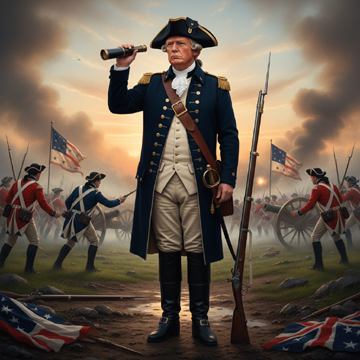
Every empire eventually discovers its most dependable product. For Rome, it was conquest itself. For Britain, it was trade enforced by cannon. For the United States, from the moment the first musket was fired at Lexington, it has been war—and the industrial ecosystem that feeds on it.
President Donald Trump did not invent this system. He merely spoke its language more crudely, practiced it more openly, and signaled its intentions with less diplomatic varnish. When Trump rattled sabres, withdrew from treaties, baited adversaries, or spoke admiringly of “beautiful” weapons systems, he was not deviating from American history. He was returning to its most consistent economic logic: when America fights, America sells.
Today, as Trump once again circles the presidency—threatening, teasing, and testing the waters for confrontation—the pattern is unmistakable. A new war, or even the credible threat of one, does not require boots on the ground anymore. It merely requires fear, alliances under stress, and procurement budgets suddenly declared “urgent.” Fighter planes, tanks, missiles, rifles, pistols, radar systems, drones, ammunition, spare parts, software upgrades—war does not have to be fought to be profitable. It only has to be believable.
The permanent war economy
The myth that the United States is a civilian economy reluctantly dragged into war by moral necessity collapses under the weight of history. From the American Revolution itself, war was not just a political act—it was an economic catalyst.
The colonies did not merely fight Britain; they learned to manufacture arms, uniforms, ships, and gunpowder at scale. The Revolution birthed America’s first industrial supply chains. The Civil War accelerated them. World War I globalized them. World War II perfected them. The Cold War institutionalized them. The War on Terror privatized them.
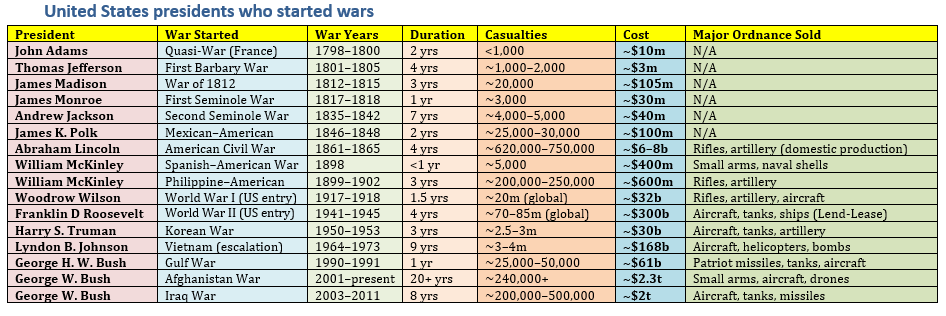
At no point since 1776 has the United States demobilized in any meaningful sense.
President Eisenhower warned of the “military-industrial complex,” but by the time he named it, it had already become the backbone of American manufacturing. Entire states—Texas, California, Virginia, Connecticut, Arizona—are economically married to defense contracts. Millions of jobs depend not on peace, but on preparation for war. This is not a conspiracy. It is an openly declared budgetary reality.
Trump and the language of salesmanship
What made Trump different was not policy, but tone. Previous presidents cloaked arms exports in humanitarian rhetoric— “defending democracy,” “protecting allies,” “rules-based order.” Trump dispensed with the poetry. He talked like a salesman because, fundamentally, that is what the presidency had become.
When Trump pushed NATO allies to “pay up,” he was not merely demanding burden-sharing. He was pressuring them to buy American hardware. When he praised Saudi Arabia’s purchases, he did not mention human rights. He mentioned dollar figures. When he threatened Iran, he did so in tandem with record arms sales to the Gulf. When he withdrew from arms control agreements, he freed markets, not morality.
Under Trump, arms exports were not an unfortunate side effect of foreign policy. They were the policy. A new war—or the credible approach of one—supercharges this logic. Fighter aircraft programs suddenly gain urgency. Missile defense systems become “non-negotiable.” Aging fleets require “modernization.” Fear unlocks appropriations faster than any speech.
You don’t need to fight to profit
Modern American war is optimized for sales, not victory.
The United States no longer seeks decisive wars that end quickly and conclusively. Those are bad for business. What the system prefers are managed conflicts, frozen hostilities, proxy wars, and endless “security dilemmas.” Ukraine does not need to be resolved; it needs to be sustained. Taiwan does not need independence declared; it needs tension maintained. The Middle East does not need peace; it needs instability calibrated just below catastrophe.
Every unresolved conflict is a catalog
F-35s for allies who fear their neighbors. Patriot missiles for countries suddenly “exposed.” Tanks for armies that may never use them. Rifles and pistols for internal security forces. Surveillance systems, cyber tools, training contracts, logistics support, spare parts, upgrades—war never ends because maintenance never ends.
Trump understands this instinctively. He does not speak of victory. He speaks of leverage. Of deals. Of pressure. Of strength displayed, not necessarily exercised.
The revolutionary roots of the arms economy
Those who imagine that this is a modern corruption misunderstand American history.
The American Revolution was financed by arms manufacturing and foreign weapons purchases. The Founding Fathers were not pacifists; they were men who understood that sovereignty requires force, and force requires industry. The Second Amendment itself was written in a society where private arms production was both common and economically vital.
The War of 1812, the Indian Wars, the Mexican–American War—all expanded territory and enriched suppliers. The Civil War turned America into an industrial giant precisely because it required mass production of weapons, railways, iron, and logistics.
By the time America entered World War II, war had become its most effective industrial accelerator. The factories that produced bombers and tanks later produced cars and appliances, but they never stopped being able to switch back. The infrastructure of war became the infrastructure of growth.
This dual-use logic—civilian prosperity riding on military capacity—never disappeared. It merely became more technologically sophisticated.
Why Trump needs tension
A peaceful world is bad for Trump’s political economy.
Trump’s base thrives on strength narratives, threat perceptions, and civilizational conflict. His donors thrive on defense contracts. His foreign policy instincts align neatly with an economy that cannot afford to stop selling weapons without destabilizing entire regions of domestic employment.
A new war—or the careful orchestration of one just short of ignition—solves multiple problems at once: It distracts from domestic economic inequality. It rallies nationalist sentiment. It justifies defense spending. It stimulates manufacturing. It locks allies into dependence.
Trump does not need Congress to declare war. He only needs to create uncertainty. Markets respond faster than legislatures.
The moral cost nobody prices in
What never appears in the glossy brochures or procurement announcements are the externalized costs.
Civilian deaths do not appear on balance sheets. Refugees are not deducted from GDP. Destroyed societies are someone else’s problem. Veterans’ trauma is deferred. Debt is normalized. Future generations inherit interest payments, not profits.
The United States sells ordnance as if it were selling tractors. But weapons are unique commodities: they require enemies to justify their existence. A world at peace is not merely undesirable—it is economically destabilizing.
This is the great unspoken contradiction of American power. The country that claims to defend global stability depends on perpetual instability to sustain its economic engine.
Trump as symptom, not cause
To focus solely on Trump is to miss the point.
Trump is not the architect of America’s war economy. He is its most honest salesman. He removed the moral pretenses and exposed the transactional core. Where others spoke of values, he spoke of volume. Where others spoke of alliances, he spoke of invoices.
If Trump is fishing for a new war, it is because the system rewards those who cast that line. And if he does not catch one, someone else will eventually try.
Because since the first musket was stamped “Made in America,” the republic has understood one brutal truth: war is the only export for which there is never a shortage of buyers. The tragedy is not that Trump understands this. The tragedy is that America has never seriously tried to imagine an economy that does not depend on it.