
USA needed another petroleum source for the world run by USA and transacted in US dollars, so that everyone in the world uses dollar again. Venezuela is nothing but another ploy to put the dollar on top above BRICS currencies. Sadly, the world has now moved on towards solar, ethanol and ocean currents as energy sources and India’s UPI is now set to engulf the world’s banking system in the next 20 years
For nearly half a century, the United States’ global economic and political influence has rested heavily on three intertwined pillars: the U.S. dollar as the world’s dominant reserve currency; the international pricing of oil in U.S. dollars (the “petrodollar” system); and American military and strategic engagement in oil-rich regions. This architecture enabled the United States to finance large deficits, maintain extraordinary global leverage, and enforce sanctions regimes with broad reach.
However, recent geopolitical upheavals, particularly the United States’ military action in Venezuela in early 2026, have reignited debates about the petrodollar’s future, currency sovereignty, and the global transition to alternative economic systems. At the same time, technological innovations like India’s Unified Payments Interface (UPI) and the growing use of national currencies in bilateral trade point to seismic shifts in how value and power are transacted internationally.
This article examines the complex interplay of these forces—from historical origins and recent military interventions to emerging alternatives and new global currency dynamics.
The Petrodollar system: Origins in 1970s and purpose. The Petrodollar, Venezuela, and the shifting global financial order: From oil warfare to digital currency and UPI diplomacy
The modern petrodollar system emerged in the early 1970s following the collapse of the Bretton Woods fixed-exchange-rate system, which had tied the U.S. dollar to gold. After the United States decoupled the dollar from gold in 1971, policymakers sought a mechanism to sustain global demand for dollars and stabilize the U.S. financial position. The solution was found in a strategic pact with Saudi Arabia.
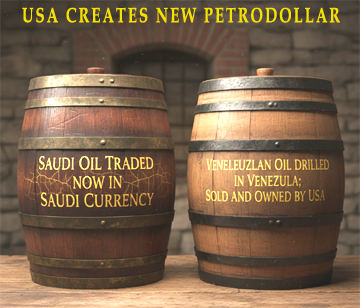
In 1974, under U.S. Secretary of State Henry Kissinger, Saudi Arabia agreed—in effect—to price its oil sales exclusively in U.S. dollars in exchange for American military protection and security guarantees. This arrangement quickly became a de facto global standard: oil producers would trade crude in dollars, and many would reinvest surplus dollars into U.S. Treasury bonds and financial assets.
How the Petrodollar worked
Oil-importing countries needed U.S. dollars to buy energy, maintaining broad global demand for the currency.
Oil-exporting nations recycled dollars into U.S. bond markets or held dollar reserves.
The United States could run persistent fiscal deficits with less economic pressure than other nations (a phenomenon sometimes called “exorbitant privilege”).
Economists and historians argue that the system transformed the dollar into the key energy currency of the world, supporting American economic hegemony.
Venezuela: Oil wealth, currency choices, and USA strategy
Venezuela sits atop the largest proven oil reserves on Earth—far exceeding those of Saudi Arabia. Throughout much of the 20th century, U.S. oil majors—such as Exxon and Gulf Oil—helped develop Venezuelan fields and dominated exports to the United States. However, beginning in the 1970s and accelerating under Presidents Hugo Chávez and Nicolás Maduro, Venezuela progressively nationalized its industry (via state oil company PDVSA) and reduced the influence of foreign firms.
Challenging the dollar system
In the 2010s, Venezuela began experimenting with pricing oil in currencies other than the dollar, including yuan and euros, and even explored barter mechanisms and the controversial “Petro” cryptocurrency—though the latter failed as a genuine currency.
These moves were seen in Washington as a challenge to the petrodollar order—even though the practical market share of such swaps remained limited. Critics in the United States argued that Venezuela’s currency flexibility and efforts to sidestep dollar-based banking systems undermined U.S. economic leverage.
U.S. military action and oil control
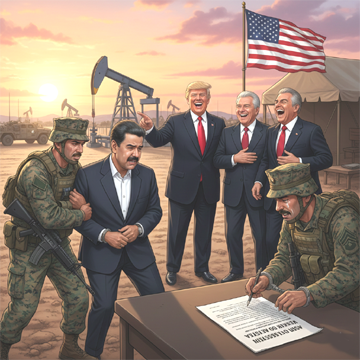
In January 2026, the U.S. military launched a major operation in Venezuela, capturing President Maduro and installing an interim government. Official U.S. statements framed the action as part of a fight against narcotrafficking and terrorism. However, analysts widely interpreted the intervention as motivated principally by the desire to regain control of Venezuela’s vast oil reserves and supply and to reassert U.S. dominance in the global oil market.
Following the intervention:
- The United States has moved to control Venezuelan oil exports indefinitely, channeling crude to U.S. refineries.
- Chinese purchases of Venezuelan crude—once a significant market—may be curtailed.
- U.S. companies like Chevron are expected to restore production, but full recovery will take years.
This strategic turn effectively puts Venezuela’s oil industry under U.S. influence without formal treaties with a foreign government, sparking debates about sovereignty and international law.
The Petrodollar under strain: New realities in 2026
The environment that sustained the petrodollar for decades has changed:
- U.S. oil production surged in the 2010s due to shale, making the country a net exporter.
- Global oil markets have diversified, with Russia, China, and others seeking oil transactions outside the dollar.
- Saudi Arabia and other Gulf states have explored pricing oil in other currencies, though dollars remain dominant.
Analysts note that while the petrodollar system is not dead, it is more fragile and contested than in its heyday.
The rise of BRICS and de-dollarization
The BRICS bloc (Brazil, Russia, India, China, South Africa) has pushed for greater use of alternative settlement systems and local currencies in trade.
- Russia and India now conduct over 90% of their bilateral trade using the rouble and rupee, bypassing the U.S. dollar for most transactions.
- Many countries have opened rupee accounts to facilitate trade settlements, signaling de-dollarization momentum.
This trend does not immediately dethrone the dollar, but it dilutes its absolute dominance, particularly in Eurasia and South Asia.
UPI: A digital payments revolution
India’s Unified Payments Interface (UPI) has become one of the most successful digital payment systems in the world:
- UPI now processes about 85% of all digital transactions in India, a testament to its ubiquity.
- Transaction volumes have soared, with billions of transactions per month and continued growth in both domestic and international use.
- UPI’s cross-border adoption has expanded, with the system live in countries such as UAE, Singapore, Nepal, Sri Lanka, Mauritius, France, and Bhutan.
In FY 2025-26, UPI’s international transactions surged sharply, demonstrating rising global acceptance for Indian payment protocols—a potential alternative to traditional SWIFT-based systems reliant on Western infrastructure.
India’s bilateral trade and currency strategy
India’s foreign economic outreach extends beyond payments technology:
- India signed a Comprehensive Economic Partnership Agreement with Oman in December 2025, boosting bilateral trade and strategic links near the Strait of Hormuz, a key oil route.
- Oman is a significant trading partner, with bilateral trade exceeding $10 billion and thousands of joint ventures supporting mutual investment flows.
Additionally, India’s push to settle trade in its own currency has gained traction:
- Russia and India’s pivot to rupee-rouble trade helps circumvent dollar reliance, streamline transactions, and strengthen economic ties.
The combined effect of UPI and rupee-based trade systems positions India as a key node of alternative financial infrastructure that could erode the historical dominance of dollar-centric systems over time.
Beyond oil: Renewable energies and diversification
While oil remains crucial to the global economy, its centrality is declining as renewable energy sources grow:
- Solar, wind, biofuels (such as ethanol), and emerging technologies like ocean current and green hydrogen are reshaping energy markets.
- Many nations are shifting investment toward sustainable energy, reducing long-term dependence on fossil fuels—and by extension, on oil-linked currency arrangements.
This diversification means the world does not rely on oil pricing dynamics as heavily as during the petrodollar’s peak years.
Digital finance and currency multipolarity
Technological advancements in payments, digital currencies, and cross-border settlement are creating multipolar financial ecosystems:
- UPI’s global expansion demonstrates how digital public infrastructure can enhance cross-border commerce and reduce reliance on Western financial railways.
- Emerging systems within BRICS and bilateral trade arrangements further reduce the necessity for a single dominant reserve currency.
These trends suggest that global commerce will likely become more diversified, decentralized, and innovatively interconnected—a stark contrast to the relatively centralized petrodollar era of the 1970s and 1980s.
Changing financial order
The 2026 U.S. intervention in Venezuela, framed by some as a strategy to preserve U.S. access to oil and maintain the petrodollar system, unfolds against a backdrop of broader global realignments. While oil and the dollar both remain powerful forces, they are no longer unchallenged pillars of global finance.
Emerging trends—such as de-dollarization in Eurasia, the rise of digital payment platforms like UPI, and India’s strategic economic diplomacy—illustrate a multipolar financial future. Nations are increasingly pursuing alternatives to traditional dollar-based systems, reshaping the fundamentals of international trade, investment, and currency use. In this evolving order, the world may not witness the disappearance of the U.S. dollar overnight—but its role as the singular linchpin of global economic power is unquestionably under pressure from both technological innovation and geopolitical diversification.