
Once elected on November 14, 2025, Prashant Kishor’s Jan Suraaj Party to develop task force and gameplan to improve Bihar Police’s abysmal performance and perception
Prashant Kishor, the founder of the Jan Suraaj Party, has vowed a rigorous campaign against corruption in Bihar if his party gains power. Kishor, in an exclusive conversation with PTI, highlighted the extensive corruption in government he claims, that exists under the current NDA government, despite its cleaner image compared to Lalu Prasad’s RJD leadership.
He outlined a plan to identify and prosecute 100 of the most corrupt politicians and bureaucrats within a month of forming a government. Kishor also promised policy changes such as the abolition of the ‘farzi’ prohibition policy to tackle the state’s issues with mafia operations.
Addressing the corruption allegations involving key political figures from various parties, Kishor expressed frustration with the ongoing plight of Bihar, attributing it partly to national parties like BJP and Congress, who support inefficient local leaders for electoral gains.
Public perception and various reports indicate that the Bihar Police force is widely perceived as having significant issues with corruption and inefficiency. Citizens commonly report experiencing or witnessing bribery requests for routine services, and the Bihar Police force has fared poorly in national “Smart Policing” indices.
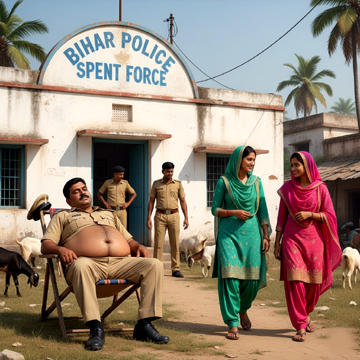
Key aspects regarding corruption in Bihar Police:
Public Perception: There is a deeply entrenched public belief that corruption is widespread within the police, with some citizens commenting that a police job is often seen as a license to take bribes. A 2019 survey found that 29% of Bihar citizens who paid a bribe gave it to the police, making it one of the most common departments for bribery after property registration/land issues.
Inefficiency and Lack of Faith: Reports suggest the police force is often viewed as inefficient, leading many people to lose faith in the system and avoid reporting cases. Bribery can influence everything from registering a case to the outcome of investigations.
Political Connections: The police and the criminal justice system in Bihar are often described as having complex connections with political figures and local strongmen, which can hinder impartial functioning and fuel corruption.
Government Action: The state government has stated a “zero-tolerance” policy on corruption and has taken action against numerous police officers and personnel in recent years. However, major corruption cases involving high-ranking officials (both police and IAS officers) continue to surface, often requiring intervention from national agencies like the Enforcement Directorate (ED) and Special Vigilance Units.
Comparison to Other States: While corruption exists across India, the Bihar Police has consistently ranked poorly in national comparisons regarding public friendliness and efficiency.
In essence, while the government has made efforts to tackle the issue, public perception and various reports suggest that corruption remains a significant problem within the Bihar Police force.