
Bengal’s politics has been shaped by freebies, laziness, excuse of culture, and regional identity rather than overt religious polarization. However, the BJP has over the last two decades has made the Hindu component of Bengal conscious of their distinct identity. Kartik Maharaj, also known as Swami Pradiptananda, is associated with the Bharat Sevashram Sangha, a socio-religious institution with a long history of service in education, healthcare, and disaster relief
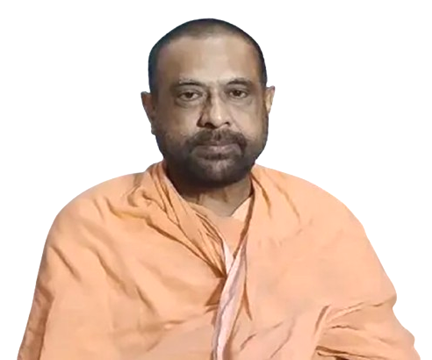
The question of whether Kartik Maharaj could become the Chief Minister of West Bengal if the Bharatiya Janata Party were to win power is, at first glance, speculative. Yet, it is a speculation grounded in a rapidly evolving political landscape where religious figures are no longer confined to spiritual domains but are increasingly stepping into the arena of electoral politics.
What if Suvendu Adhikari and Samik Bhattacharya get sidelined just as Keshav Prasad Maurya and Dinesh Sharma had been offered alternative posts when Yogi Adityanath was anointed Chief Minister of Uttar Pradesh on March 19, 2017?
India has witnessed such transitions before, most notably in the case of Yogi Adityanath, whose journey from a saffron-clad monk to the head of India’s most populous state reshaped the discourse on religion and governance. The idea of a similar trajectory emerging in Bengal is therefore not implausible—it is a reflection of deeper structural shifts in Indian politics.
The rise of a political monk in Bengal
Kartik Maharaj, also known as Swami Pradiptananda, is associated with the Bharat Sevashram Sangha, a socio-religious institution with a long history of service in education, healthcare, and disaster relief. Traditionally, such organizations have operated outside direct political engagement, focusing instead on humanitarian and spiritual work. However, the boundaries between social service and political mobilization have increasingly blurred in recent years. Kartik Maharaj has emerged as a prominent figure in this transition. His growing visibility, especially during politically sensitive periods such as elections, has positioned him not merely as a religious leader but as a voice in the political discourse of Bengal.
Conflict with the state government
His rise has not been without controversy. Mamata Banerjee and her party, the All India Trinamool Congress, have accused him of engaging in political activities that could potentially inflame communal tensions. Kartik Maharaj has denied these allegations, maintaining that his work is rooted in social service and the protection of cultural identity. This clash of narratives reflects a broader ideological battle within the state. On one side is the ruling establishment, which positions itself as a defender of secular governance. On the other are voices that argue that the concerns of the Hindu majority are being overlooked or suppressed. This confrontation has elevated Kartik Maharaj’s profile, transforming him from a regional religious figure into a symbol of resistance for certain sections of society.
The broader political context in Bengal
West Bengal has long been a unique political ecosystem. From decades of Left rule to the rise of the Trinamool Congress, the state’s politics has traditionally been shaped by class, culture, and regional identity rather than overt religious polarization. However, the entry of the Bharatiya Janata Party as a major political force has altered this dynamic. The BJP’s emphasis on Hindutva has introduced a new axis of political contestation. In this context, figures like Kartik Maharaj play a strategic role. They operate at the grassroots level, mobilizing support, shaping narratives, and creating networks that can be leveraged during elections. Their influence is particularly significant in areas with complex demographic compositions, where identity politics can have a decisive impact.
Drawing parallels with Yogi Adityanath
Any discussion of a monk entering mainstream politics inevitably brings comparisons with Yogi Adityanath. Yogi Adityanath’s journey is instructive. As the head of the Gorakhnath Math and a long-serving Member of Parliament, he built a strong political base before being appointed Chief Minister of Uttar Pradesh. His tenure has been marked by assertive governance, strong ideological positioning, and policies that have attracted both praise and criticism. The comparison with Kartik Maharaj, however, must be approached with nuance. While both are saffron-clad monks aligned with Hindutva ideology, their trajectories and contexts differ significantly.
Similarities in ideology and approach
Both Kartik Maharaj and Yogi Adityanath represent a strand of Hindu leadership that is unapologetically assertive. Their rhetoric emphasizes cultural identity, religious pride, and the protection of Hindu interests. They are often described as “political monks,” a term that captures the blending of spiritual authority with political engagement. Both have also been subjects of intense criticism from opposition parties, which accuse them of promoting divisive politics. At the same time, they enjoy strong support among their followers, who view them as defenders of tradition and identity. Their ability to mobilize large sections of the population, particularly at the grassroots level, is a key factor in their political relevance.
Differences in scale and experience
Despite these similarities, the differences between the two are substantial. Yogi Adityanath operates at a national scale. As the Chief Minister of Uttar Pradesh, he oversees a vast administrative apparatus and plays a significant role in national politics. In contrast, Kartik Maharaj is primarily a regional figure. His influence, while growing, remains concentrated within West Bengal. Experience is another key differentiator. Yogi Adityanath spent two decades as a parliamentarian, gaining deep insights into legislative processes and governance. Kartik Maharaj, by comparison, is relatively new to direct political engagement. His recognition, including the Padma Shri, has brought him into the national spotlight, but he does not yet have a comparable political track record.
Constitutional authority versus moral authority
One of the most critical distinctions lies in the nature of authority. A Chief Minister wields constitutional power. This includes control over the police, administration, and policy-making apparatus of the state. Yogi Adityanath exercises this authority directly, shaping governance through executive decisions. Kartik Maharaj, on the other hand, operates through moral and social influence. His authority is derived from his position within a religious organization and his engagement with communities. Transitioning from moral authority to constitutional authority is not merely a change in role—it is a transformation that requires a different set of skills, responsibilities, and accountability mechanisms.
Could he realistically become chief minister?
For Kartik Maharaj to become Chief Minister, several conditions would need to align. First, the Bharatiya Janata Party would need to secure a decisive victory in West Bengal. This itself is a significant challenge, given the entrenched position of the All India Trinamool Congress. Second, within the BJP, there would need to be a consensus around his leadership. Political parties often prefer leaders with administrative experience and broad acceptability. Third, Kartik Maharaj would need to transition from a socio-religious role to a full-time political role, engaging in electoral contests and legislative processes. While not impossible, this path is complex and uncertain.
The appeal of outsider leadership
Despite these challenges, the idea of a non-traditional leader can have significant appeal. In times of political dissatisfaction, voters often look for alternatives to established politicians. Religious leaders, with their perceived integrity and grassroots connections, can emerge as attractive options. Kartik Maharaj’s image as a social worker and his association with charitable activities could enhance his appeal among certain sections of the electorate. However, this appeal must be balanced against concerns about governance, inclusivity, and administrative capability.
Risks and concerns
The prospect of a religious figure becoming Chief Minister also raises important questions. One concern is the potential for increased polarization. Critics argue that the blending of religion and politics can deepen social divisions. Another concern is governance. Running a state requires expertise in areas such as economics, infrastructure, law enforcement, and public administration. There is also the question of institutional balance. India’s constitutional framework is built on the principle of secularism, which requires the state to maintain neutrality in matters of religion. Any deviation from this principle could have far-reaching implications.
Supporters’ perspective
Supporters of Kartik Maharaj present a different narrative. They argue that his involvement in politics is a response to perceived injustices and that he represents a corrective force. From this perspective, his leadership could bring a stronger focus on cultural identity, law and order, and grassroots development. They also point to the example of Yogi Adityanath as evidence that a monk can successfully govern a state.
The role of symbolism in politics
Beyond practical considerations, the idea of Kartik Maharaj as Chief Minister carries symbolic weight. It represents the rise of a new political archetype—the monk-politician who blends spirituality with governance. Such symbolism can be powerful, shaping narratives and influencing voter perceptions. In Bengal, a state with a rich cultural and intellectual tradition, this symbolism would interact with existing identities in complex ways.
The road ahead for Bengal politics
West Bengal’s political future remains uncertain. The contest between the All India Trinamool Congress and the Bharatiya Janata Party is likely to intensify. In this evolving landscape, figures like Kartik Maharaj will continue to play a significant role, whether or not they hold formal political office. Their influence lies not just in electoral outcomes but in shaping the discourse and direction of politics in the state.
Possibility, probability, and perception
The question of whether Kartik Maharaj could become Chief Minister of West Bengal is ultimately a question of possibility rather than probability. It is possible, given the precedents and the changing nature of Indian politics. However, it is not yet probable, given the structural and political challenges involved. More importantly, the question itself reveals the extent to which Indian politics is evolving. The boundaries between religion and politics, between social service and governance, are becoming increasingly fluid. Whether or not Kartik Maharaj ever occupies the Chief Minister’s office, his rise signals a shift in the political imagination of the country. And in that sense, the question is not just about one individual—it is about the future direction of politics in India.