We routinely overpay for unclean, badly cooked meals in restaurants. At the same time, we hesitate to buy fresh vegetables, whole grains, natural oils, and spices from local markets and cook at home. We buy flats offering arthritis for millions but will not form a collective to buy land
Walk through any modern city and you will see a strange paradox unfolding in plain sight. People complain endlessly about rising costs, shrinking quality, adulteration, and the erosion of craftsmanship—yet the same people line up daily to overpay for products that deliver less substance than their cheaper, older, or more honest alternatives. This contradiction is not accidental. It is cultivated, polished, and monetised. It is the quiet triumph of marketing over judgement.
We live in an era where persuasion has become more valuable than production, where packaging routinely eclipses content, and where branding can turn mediocrity into aspiration. Marketing no longer merely informs; it instructs us how to desire, what to dismiss, and—most importantly—what to overpay for without protest.
The waxed paper cup and the death of real taste
Consider the modern beverage habit. We willingly pay exorbitant prices for syrupy liquids served in waxed paper cups—drinks that are often burnt, diluted, over-sweetened, and nutritionally empty. We sip them under fluorescent lights, in plastic chairs, amid questionable hygiene, while congratulating ourselves for participating in “café culture.”
Yet we rarely seek out establishments serving rich, properly brewed, milky beverages in clean porcelain cups—places where ingredients matter more than logos. Why? Because marketing has taught us to associate authenticity with minimalism, quality with inconvenience, and value with English names written in cursive fonts on disposable cups.
Porcelain cups do not travel well on Instagram. Waxed paper does. A frothy heart pattern on synthetic foam photographs better than the deep aroma of real milk and coffee. The triumph here is not culinary; it is visual and psychological. We are not paying for taste—we are paying for the illusion of lifestyle.
Paying to be poisoned, eating what we would never cook
The same logic governs food. We routinely overpay for unclean, badly cooked meals in restaurants—food we would instantly reject if prepared in our own kitchens. Oil reused until it turns black, vegetables stored carelessly, spices masked to hide poor quality—none of this deters us if the menu uses fashionable words like “artisan,” “fusion,” or “authentic.”
At the same time, we hesitate to buy fresh vegetables, whole grains, natural oils, and spices from local markets and cook at home. The cost of nutritious ingredients feels high, while the cost of junk food feels justified. This inversion is extraordinary when examined honestly.
Marketing has convinced us that cooking is drudgery, that time spent preparing food is wasted, and that outsourcing nutrition is a mark of modernity. Convenience has been elevated to virtue, and ignorance to status. We are not paying for food; we are paying to avoid thinking about it.
Furniture that looks good until you sit on it
Now step into the modern home. Flat-packed furniture made of compressed wood pulp, thin-gauge steel, and plastic veneers fills our living spaces. It looks sleek for a few months, sags within a year, and becomes landfill shortly after. Yet we overpay for it, delighted by showroom lighting and foreign brand names.
In contrast, natural wood furniture made by skilled carpenters—durable, repairable, and beautiful—feels “expensive” even when it costs less over its lifetime. Why? Because marketing has replaced permanence with fashion. Furniture is no longer meant to last decades; it is meant to survive one rental agreement.
Craftsmanship demands patience, conversation, and involvement. Flat-pack demands only a credit card. Marketing has taught us to value speed over skill, uniformity over uniqueness, and disposability over pride of ownership. We pay more for less because less arrives faster and asks fewer questions of us.
Drinking the label, not the liquid
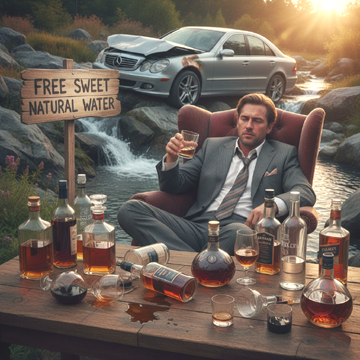
Perhaps nowhere is the power of marketing more naked than in alcohol. We willingly overpay for a bottle that is, in chemical reality, 50% ethyl alcohol and 50% water—essentially a refined fuel. If the same liquid were sold without branding, ageing myths, and romantic storytelling, we would recoil at the price.
But add a Scottish name, a dark bottle, an amber glow, and a tale of barrels and heritage, and suddenly we are connoisseurs. The alcohol remains unchanged; only the narrative improves. We are not drinking whisky, rum, or vodka—we are drinking advertising.
The genius here lies in how marketing converts a potentially dangerous substance into a symbol of success, masculinity, sophistication, or rebellion. The hangover is real; the distinction is not. We pay for a story strong enough to dull both conscience and common sense.
The shrinking home and the expanding lie
Housing offers an even starker example. We overpay for pigeonhole-sized flats in crowded cities, convincing ourselves that proximity equals progress. Tiny balconies become “urban views,” shared walls become “community living,” and lack of space becomes “minimalism.”
At the same time, we dismiss the idea of buying land collectively in remote or semi-rural areas—places where prices are still reasonable, air is cleaner, and children can run freely. Building larger homes there seems risky, inconvenient, or unfashionable.
Marketing has sold us the fear of distance and the fetish of density. The city is branded as opportunity, regardless of how unliveable it becomes. Space, silence, and self-sufficiency do not advertise well. So we mortgage our lives for less room, calling it ambition.

Status on wheels: The second-hand luxury trap
Cars complete the picture. Many people overpay for second-hand luxury vehicles—not for performance or durability, but for perceived status. These vehicles often come with high maintenance costs, fragile components, and expensive repairs. Yet they signal arrival, success, and belonging.
Meanwhile, sturdier new cars—reliable, efficient, and economical—are dismissed as ordinary. Enhancing them with better tyres, suspension, safety features, or interiors seems unglamorous. Why build quality when you can borrow prestige?
Marketing has trained us to buy symbols instead of solutions. A logo on the steering wheel matters more than the integrity of the engine. We are not driving cars; we are driving opinions.
Why marketing wins every time
Marketing succeeds not because people are foolish, but because it is relentless. It exploits insecurities, amplifies aspirations, and rewires preferences from childhood. It teaches us what to desire before we have learned how to evaluate.
It also thrives on fragmentation. We no longer see systems; we see products. We do not calculate long-term value; we react to short-term impressions. Marketing thrives in this fog, guiding us gently toward choices that benefit sellers far more than buyers.
The greatest achievement of marketing is not selling bad products—it is making good alternatives appear inconvenient, unfashionable, or inferior.
Relearning how to choose
Escaping this trap does not require austerity or rejection of comfort. It requires awareness. It requires asking simple, unfashionable questions: What is this made of? How long will it last? Would I buy this without the brand? Am I paying for substance or for reassurance?
True luxury is space, durability, nourishment, craftsmanship, and peace of mind. These rarely come wrapped in waxed paper or advertised on billboards. They come quietly, without slogans.
Marketing will not disappear. But neither should judgement. The moment we stop mistaking persuasion for value, the spell weakens. Until then, we will continue to overpay for less—happily, habitually, and on schedule.
That, after all, is the greatest success of marketing.
____________________________
The Price of Persuasion / The Success of Marketing
We overpay for swill or syrup in a waxed paper cup but never seek out a restaurant selling rich, milky beverages served in clean porcelain. The success of marketing.
We overpay for unclean and badly cooked food we would have rejected at home but shy of buying natural ingredients from the market to cook nutritious and tasteful meals. The success of marketing.
We overpay for stubbly and fragile furniture made out of sub-standard thin gauge steel and wood pulp but will not pay less for natural wood and get a skilled carpenter to create beautiful works of art for us. The success of marketing.
We overpay for a bottle of 50% ethyl alcohol and 50% water if it is sold under attractive brand names of attractively coloured liquor named whisky, rum or vodka, while it is nothing but car fuel chemically. The success of marketing.
We overpay for pigeon hole sized flats but will not pay less to buy land in a collective in remote areas where the prices are still cheap and then build large houses for our children to play in. The success of marketing.
We overpay for second hand luxury cars to retain status in society but will not pay less for a sturdier new car and pay to embellish it with better and stronger parts. The success of marketing.