
The partner who once seemed unwavering may reveal fragility. The one who appeared chaotic may grow into steadiness. Expectation and outcome rarely coincide
Life announces itself as a sequence of choices—some loud and public, others soft and private—but none more consequential than the partner we choose to walk beside us. Careers can be switched, cities abandoned, ideologies refined; partnerships, once formed, press their weight into every corridor of existence. They shape the hours we wake to, the tone of our evenings, the confidence with which we step into the world, and the resilience we summon when the world pushes back. Yet, for all the filters we deploy—education, values, temperament, ambition, culture—no choice in partnership ever arrives as a perfect answer. It arrives as a question, and the rest of life is the attempt to respond.
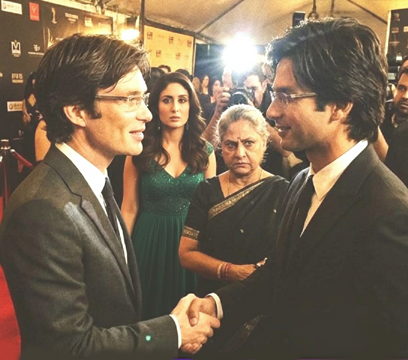
Consider the composite image—Cillian Murphy’s introspective intensity, Shahid Kapoor’s restless vulnerability, Jaya Bhaduri Bachchan’s grounded resolve, and Kareena Kapoor Khan’s luminous self-assurance. These faces, drawn from different eras and sensibilities, evoke a spectrum of human traits we recognize not just on screen but at home: ambition and doubt, discipline and impulsiveness, patience and fire. They remind us that partnerships are not about finding a flawless specimen but about encountering a full human being—someone capable of grace and error, growth and stagnation, tenderness and fatigue. What we make of that encounter determines far more than the initial spark ever could.
Choice as a starting line, not a finish
The modern imagination often treats choice as a verdict: choose well and happiness follows; choose poorly and regret ensues. This is a comforting fiction. Choice is a starting line. Even the most carefully vetted partnership—shared values, aligned goals, compatible families—enters a world of uncertainty. Careers bend, health falters, parents age, children arrive (or don’t), economies wobble, and inner landscapes change without notice. Filters can narrow risk; they cannot abolish it.
This is why even the most rational chooser discovers, sooner or later, that expectation and outcome rarely coincide. The partner who once seemed unwavering may reveal fragility. The one who appeared chaotic may grow into steadiness. The work of partnership is not to demand that life honor our initial projections but to respond intelligently and kindly to what actually unfolds.
Good partners don’t eliminate struggle—they reframe it
A good partner does not remove hardship; they alter how hardship is metabolized. With the right companion, setbacks become lessons rather than verdicts, and successes feel shared rather than solitary. This reframing is subtle but transformative. It changes how we show up professionally—more confident, less brittle—because emotional security frees cognitive bandwidth. It changes how we show up as human beings—more patient, more curious—because being seen reduces the impulse to perform.
Think of the quiet discipline suggested by Murphy’s screen persona: inward, methodical, reflective. Paired with someone grounded and patient, such intensity can produce depth and precision. Without that balance, it can spiral into isolation. Kapoor’s kinetic energy, by contrast, thrives when met with steadiness rather than suppression. Bachchan’s calm authority speaks to the power of emotional literacy accumulated over time—knowing when to yield and when to stand firm. Kareena Kapoor Khan’s confidence illustrates another truth: self-assurance in one partner can invite growth in the other, provided it is met without envy and with mutual respect.
These are not archetypes to be copied but mirrors to be consulted. They underscore a principle: compatibility is not sameness. It is a dynamic fit—how two sets of strengths and weaknesses interlock under pressure.
No one is good or bad in totality
We err when we divide people into saints and saboteurs. Every human being carries both capacities. The same trait that attracts us can later irritate us. Ambition fuels success and neglect. Sensitivity deepens connection and heightens hurt. Independence inspires respect and breeds distance. There is no trait without a shadow.
Mature partnership begins when we stop moralizing these shadows and start managing them. This does not mean tolerating harm or excusing cruelty. It means distinguishing between character and behavior, between fixable friction and non-negotiable values. A partner who forgets anniversaries but shows up during illness may require systems, not sermons. A partner who listens beautifully but avoids responsibility requires boundaries, not blame. The work is diagnostic before it is judgmental.
Marriage: The imperfect institution we perfect daily
Marriage, for all its ceremony, is an imperfect instrument designed for imperfect people. To expect perfection from it is to misunderstand its purpose. It is less a promise of perpetual harmony and more a commitment to sustained repair. In that sense, marriage is not the reward for having chosen well; it is the arena in which choosing well must be practiced repeatedly.
The phrase “making the best of a bad job” sounds cynical, but there is wisdom beneath it. Every marriage encounters periods that feel like a bad job: seasons of misalignment, exhaustion, resentment, or quiet loneliness. What differentiates durable marriages is not the absence of these seasons but the skills partners bring to them—communication without contempt, accountability without humiliation, humor without dismissal, patience without passivity.
This is where time becomes the silent collaborator. Time reveals patterns, softens edges, and, if allowed, converts mistakes into mastery. It also exposes the cost of avoidance. What we refuse to address does not disappear; it compounds.
Professional growth is personal growth in disguise
The spillover between partnership and profession is unavoidable. A relationship that rewards honesty makes risk-taking at work less terrifying. A home that practices fairness trains us for ethical leadership. Conversely, unresolved domestic conflict drains focus, dulls creativity, and erodes confidence. We do not leave our personal lives at the office door; we carry them in our posture, our patience, our capacity to collaborate.
Good partners act as reality checks and cheerleaders. They puncture grandiosity without shaming and bolster confidence without flattery. They help us interpret failure accurately—neither as proof of inadequacy nor as an excuse for denial. Over time, this calibration produces professionals who are resilient rather than reactive, ambitious rather than anxious.
The myth of the final filter
There is a seductive belief that if we refine our filters—background checks of values, habits, family dynamics—we can arrive at certainty. Filters are necessary, but they are not sufficient. People evolve. Contexts shift. What matters is not the finality of the filter but the adaptability of the partnership.
This is why some relationships that begin with modest compatibility outgrow those that start with fireworks. Learning capacity beats initial alignment. Couples who can learn together—about each other, about themselves, about the changing world—outpace those who merely matched well at the outset.
Making things work across domains
To make a partnership work emotionally is to practice empathy without erasing oneself. Personally, it is to maintain identity without weaponizing independence. Familially, it is to honor roots without letting them strangle the present. Professionally, it is to support ambition without demanding sacrifice that breeds resentment. These balances are not solved once; they are renegotiated as life rearranges the furniture.
The image of our four cinematic figures lingers here as a reminder of range. Youth and experience, intensity and ease, inwardness and sparkle—life asks us to integrate these qualities, not idolize one at the expense of others. A partnership that allows such integration does not guarantee happiness, but it enlarges the odds of meaning.
Only time tells—and time rewards the willing
In the end, time is the only honest narrator. It will tell whether patience was cowardice or wisdom, whether compromise was generosity or self-betrayal, whether persistence was love or fear. We cannot rush this verdict. We can only participate in it with integrity.
Choosing a partner is an act of hope. Living with that choice is an act of courage. Between the two lies the daily craft of attention, repair, and growth. There are no perfect outcomes, only better processes. And when those processes are guided by kindness, accountability, and curiosity, they tend to make us—not flawless—but fuller: better professionals, better human beings, and, more often than not, happier ones. The faces we admire on screen fade when the lights go up. What remains is the work at hand—the quiet, imperfect, necessary work of choosing each other again, and again, as life reveals who we are becoming.