
Indian bureaucrats in Rail Bhawan and Baroda House have always taken the excuse of outsourcing and cited it as an example of progressive privatisation of the Indian Railways. That’s a lie. Outsourcing is not privatisation. Railways needs strategic structuring and equity infusion
Indian Railways occupies a unique position in India’s economic and social architecture. It is simultaneously a transportation system, a political instrument, a welfare mechanism, a logistics network, a real estate owner, an engineering organization, and one of the largest employers in the world. Yet despite this extraordinary scale and strategic importance, the organization continues to function largely as a lumbering government department trapped inside an outdated administrative culture. The result is visible everywhere, poor customer experience, chronic inefficiency, weak accountability, procurement leakages, encroached railway land, underperforming freight systems, deteriorating passenger amenities, and modernization efforts that are more cosmetic than transformational.
Till the Government of India fundamentally restructures Indian Railways into multiple independent companies with professional boards, transparent balance sheets, and public market accountability, genuine reform will remain elusive. The system may continue unveiling newer trains, redeveloping stations, and issuing ambitious press releases, but the underlying culture of bureaucratic complacency will remain intact. Any improvement under the current structure will continue to be reluctant, procedural, and bookish rather than customer-oriented.
India’s railway reform debate has for too long revolved around superficial modernization, faster trains, imported technology, station beautification, and digital ticketing platforms. While these improvements have value, they do not address the structural problem. The problem is that Indian Railways is trying to run a 21st century transportation ecosystem through a 19th century bureaucratic governance model.
No large commercial transport enterprise in the world can sustainably function with centralized control over tracks, freight, passenger operations, catering, station management, procurement, rolling stock, land management, and hospitality under one giant ministry-driven structure. Such concentration inevitably breeds inefficiency and diffused accountability. When everyone is responsible, no one is truly accountable.
The Government of India should therefore break Indian Railways into multiple corporate entities. Each railway division should become an independent company with operational autonomy and financial responsibility. One specialized company should own and maintain tracks and signaling infrastructure. Another should manage freight and cargo operations. Passenger rail operations should be separated regionally or division-wise into different companies. Station redevelopment and railway land monetization could be managed by dedicated real estate and infrastructure subsidiaries.
Most importantly, at least 22 percent shares of these entities should be released into the stock market. This single step could fundamentally alter the culture of Indian Railways. Publicly listed companies cannot hide inefficiency indefinitely behind bureaucracy. Shareholders demand performance. Investors scrutinize balance sheets. Independent directors ask uncomfortable questions. Institutional investors examine procurement practices, customer satisfaction, operational leakages, asset productivity, and management quality.
Today, railway officers primarily answer upward to ministries and departmental hierarchies. In a listed structure, they would also answer outward to shareholders, financial analysts, public investors, pension funds, auditors, and market regulators. That changes organizational behavior profoundly.
A railway company accountable to markets would care deeply about customer complaints, service quality, operational leakages, land monetization, and brand perception because all of these factors directly affect valuation, profitability, and investor confidence. Under the present structure, however, inefficiency often carries few institutional consequences.
Vande Bharat Sleeper exposes deeper systemic flaws
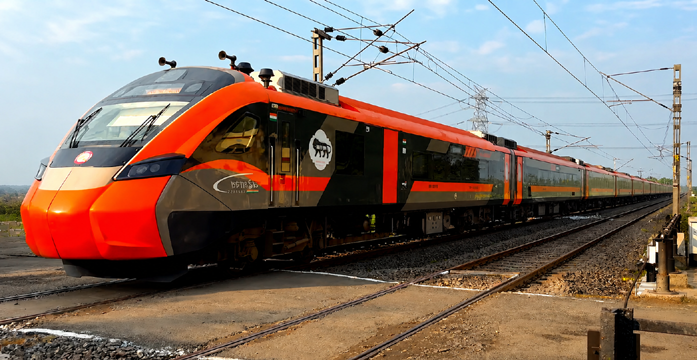
The recently introduced sleeper variant of the Vande Bharat Express offers a powerful example of how Indian Railways continues to prioritize optics over customer experience. The Vande Bharat brand was projected as the symbol of a new Indian Railways, technologically modern, globally competitive, and passenger friendly. The sleek exteriors, aerodynamic design, and publicity campaigns generated substantial excitement. Yet the operational realities reveal the limitations of bureaucratic modernization.
Multiple concerns have emerged around the preparedness of sleeper Vande Bharat services. Questions have been raised regarding onboard amenities, storage design, maintenance readiness, pantry quality, berth ergonomics, washroom upkeep, linen management, and overall long-distance passenger comfort. Some passengers and railway observers have pointed out that the trains appear engineered more for visual branding and inauguration ceremonies than for sustained overnight passenger convenience.
This problem reflects a deeper institutional mindset. In bureaucratic systems, announcements frequently receive greater attention than lifecycle management. Launches matter more than maintenance. Publicity takes precedence over user testing. The system rewards visible projects rather than invisible reliability.
A customer-centric railway company operating under shareholder scrutiny would approach train design differently. Before launching a sleeper train, extensive field testing would likely be conducted focusing on berth comfort, passenger movement, luggage space, noise levels, climate control, toilet durability, pantry logistics, and maintenance turnaround cycles. Customer satisfaction data would influence operational decisions because dissatisfied passengers affect revenues and investor confidence.
Under the current structure, however, there is insufficient commercial pressure to perfect the passenger experience. Railway modernization often becomes an engineering exercise rather than a hospitality-oriented transportation service.
The contrast becomes even sharper when one compares rail travel expectations globally. Modern premium trains are expected to function as integrated hospitality ecosystems. Passengers today evaluate not only speed but also cleanliness, food quality, bedding comfort, digital connectivity, punctuality, privacy, air quality, lighting, and staff behavior. Indian Railways still frequently treats these issues as secondary administrative matters.
Even simple consumables expose systemic weaknesses. Complaints regarding poor quality blankets, unwashed linens, missing pillows, torn towels, stained sheets, and irregular pantry supplies are routine across many railway routes. These are not isolated inconveniences. They indicate procurement failures, inventory leakages, contractor collusion, weak auditing, and lack of operational accountability.
In many trains, blankets disappear mysteriously from inventory chains. Towels and pillows are under-supplied or recycled beyond acceptable hygiene standards. Linen washing contracts often attract allegations of poor supervision and inflated billing. Pantry operations in numerous routes continue to suffer from pilferage, food wastage, inconsistent quality control, and supply-chain manipulation.
The railway catering ecosystem itself has long been associated with leakages. Consumables procured centrally may not always fully reach passengers in intended quantity or quality. Water bottles, packaged food items, milk products, tea ingredients, cutlery, and disposable supplies often disappear across the chain through petty corruption and operational laxity. Such leakage may appear small individually, but across a gigantic network like Indian Railways, the cumulative financial losses become enormous.
These inefficiencies persist because the present structure lacks rigorous commercial accountability. In a listed railway corporation, procurement leakages would directly affect quarterly financial performance. Shareholders would demand tighter inventory systems, digital tracking, forensic audits, automated procurement analytics, and stricter contractor management.
Railway land encroachment: Collapse of institutional accountability
Another major issue demonstrating the need for corporatization is the enormous volume of railway land encroachment across India. Indian Railways owns one of the largest land banks in the country, including strategically valuable urban land near stations, yards, tracks, freight corridors, and metropolitan growth zones. Yet vast portions of this land remain illegally occupied, politically protected, or commercially underutilized.
In many cities, railway land has effectively been held hostage for decades by illegal encroachments, unauthorized settlements, refugee colonies, politically protected squatters, and organized land mafias. In several instances, politicians across party lines have treated railway land as an informal vote-bank resource, resisting eviction drives for electoral considerations.
This would be far less likely if railway divisions functioned as publicly listed companies answerable to shareholders and independent directors.
A listed infrastructure company cannot casually tolerate large-scale illegal occupation of commercially valuable assets without facing severe scrutiny from investors and auditors. Questions would immediately arise regarding asset impairment, revenue losses, legal liabilities, insurance exposure, and management failure.
Today, however, railway land management remains trapped inside bureaucratic and political inertia. Encroachments often continue for decades because no individual manager bears direct commercial responsibility for unlocking asset value. Political calculations override institutional efficiency.
If railway divisions were corporatized, land assets could become major revenue generators. Station redevelopment zones could attract commercial projects, hotels, logistics parks, retail hubs, office complexes, warehousing clusters, and transit-oriented real estate developments. Professional railway land companies could unlock enormous economic value from dormant assets.
Japan offers useful lessons in this regard. Several Japanese railway companies derive substantial revenues not merely from transportation but from real estate, retail, hospitality, and urban development integrated around stations. Railway stations become commercial ecosystems. Land monetization supports infrastructure investment.
Indian Railways has immense unrealized potential in this domain. Prime railway land in cities such as Delhi, Mumbai, Kolkata, Chennai, Bengaluru, Hyderabad, Ahmedabad, Lucknow, and Pune could generate enormous long-term returns if professionally managed.
Yet bureaucratic structures rarely maximize asset productivity because incentives remain weak. A government department thinks administratively. A listed corporation thinks economically.
Encroachments also create serious operational and safety risks. Illegal settlements along tracks contribute to accidents, theft, vandalism, and infrastructure degradation. Electrification corridors become vulnerable. Signaling systems face tampering risks. Waste accumulation damages drainage systems near tracks. Yet enforcement remains inconsistent because railway administration often lacks political backing and commercial urgency.
A corporatized structure with independent boards and investor oversight would likely pursue aggressive legal, technological, and commercial strategies for protecting railway land. GIS mapping, digital surveillance, legal enforcement units, and structured redevelopment plans would become standard practice because land protection would directly affect shareholder value.
Furthermore, professional boards would bring external expertise into railway governance. Directors from logistics, finance, infrastructure, hospitality, engineering, technology, urban planning, and retail sectors could introduce managerial sophistication often absent in rigid bureaucratic systems.
The freight business and supply chains need entrepreneurial management
One of the greatest missed opportunities within Indian Railways lies in freight and logistics. India aspires to become a global manufacturing hub and export powerhouse. Such ambitions require efficient, reliable, low-cost logistics infrastructure. Railways should be central to that strategy. Instead, freight customers often continue complaining about unpredictability, bureaucratic complexity, slow turnaround times, and operational inefficiency.
The current integrated railway structure weakens freight competitiveness because freight operations are frequently subordinated to broader bureaucratic priorities. Dedicated freight corporations operating independently with commercial autonomy could transform the situation dramatically.
A specialized cargo railway company could aggressively pursue containerization, cold-chain logistics, automobile transport, industrial corridors, e-commerce logistics, port connectivity, and integrated warehousing solutions. It could recruit logistics professionals from the private sector, implement AI-based scheduling systems, optimize rake utilization, and create industry-specific freight products.
Today, however, freight operations remain entangled within administrative processes designed for a government department rather than a competitive logistics enterprise.
The same applies to railway supply chains. The procurement ecosystem for railway consumables, blankets, pillows, bedrolls, towels, packaged water, pantry supplies, cleaning materials, spare parts, upholstery, soaps, paper products, catering ingredients, electrical fittings, and maintenance items, represents an enormous national supply network. Wherever such massive procurement systems exist without robust market accountability, leakages and inefficiencies inevitably proliferate.
Pilferage in railway supply chains has been discussed for decades. Linen disappears before reaching trains. Pantry inventories shrink mysteriously. Cleaning materials get diluted or substituted. Inferior quality products sometimes replace approved supplies. Contractors frequently prioritize compliance paperwork over actual service quality.
Passengers encounter the consequences directly. Blankets smell unwashed. Towels appear overused. Pillows arrive missing. Toilets lack basic supplies. Pantry food varies wildly in quality. Water availability becomes inconsistent. These daily failures collectively shape public perception of Indian Railways far more than ceremonial announcements.
A publicly listed railway company would likely deploy far stricter procurement oversight mechanisms. Digital inventory tracking, QR-coded linen management, automated stock reconciliation, GPS-monitored supply chains, vendor scorecards, predictive analytics, and independent audits could dramatically reduce leakages.
Private investors and institutional shareholders do not tolerate chronic operational wastage indefinitely. If recurring procurement losses damaged profitability, managements would face market pressure and board scrutiny.
The current railway culture, by contrast, often normalizes inefficiency. Losses are absorbed into the broader bureaucratic system. Accountability becomes diffused across departments, contractors, and administrative layers.
Another major advantage of corporatization would be managerial specialization. Presently, railway officers are frequently rotated across unrelated functions. An official may move from signaling to catering to freight to personnel management over the course of a career. While administrative flexibility has value, modern transportation ecosystems increasingly require deep specialization.
Corporatized railway companies could recruit domain experts directly from industry. Hospitality professionals could improve onboard services. Logistics experts could optimize freight. Real estate specialists could monetize land assets. Technology executives could modernize digital infrastructure. Data scientists could improve scheduling and predictive maintenance.
Such talent integration rarely flourishes within rigid bureaucratic frameworks dominated by seniority structures and departmental hierarchies.
Choice between political control and operational excellence
Ultimately, the debate over railway reform is not merely administrative. It is philosophical. India must decide whether it wants Indian Railways to remain primarily a politically managed government department or evolve into a modern transportation enterprise accountable to customers, investors, and performance metrics.
The existing structure encourages political interference. New trains are often announced based on electoral considerations rather than commercial logic. Station projects become symbolic political showcases. Fare policies get distorted by populist pressures. Land management decisions become politicized. Operational priorities frequently shift according to political visibility rather than customer need.
Corporatization and partial public ownership would not eliminate government influence entirely, nor should they. Railways remain strategically important national infrastructure. The Government of India can and should retain majority ownership. But operational autonomy combined with market accountability can create healthier institutional incentives.
The transformation of Indian aviation offers useful parallels. Indian airports once symbolized inefficiency and bureaucratic decay. Professional management models and corporatized structures transformed several major airports into globally competitive assets. Passenger experience improved because operators now possessed financial and reputational incentives aligned with customer satisfaction.
Railways require a similar transition
India today possesses the engineering capability, financial capital, technological talent, and entrepreneurial energy needed to build world-class railway systems. What it lacks is the governance architecture capable of converting these strengths into sustained operational excellence.
The sleeper Vande Bharat experience, railway land encroachments, procurement leakages, pantry pilferages, linen mismanagement, and chronic passenger dissatisfaction are not isolated problems. They are symptoms of a deeper institutional failure, the failure of monopoly bureaucracy to deliver customer-oriented services at scale.
As long as Indian Railways remains insulated from market scrutiny and shareholder accountability, reforms will continue to be hesitant and administrative rather than transformational. Cosmetic modernization will coexist with operational decay. Announcements will outpace execution. Branding will exceed customer satisfaction.
Breaking Indian Railways into multiple specialized companies, separating tracks from operations, corporatizing freight, creating independent passenger rail entities, monetizing land professionally, and releasing at least 22 percent equity into public markets could fundamentally reshape incentives across the system.
A listed railway company cannot indefinitely ignore customer complaints, tolerate massive land encroachments, overlook procurement leakages, or normalize operational inefficiency. Investors, auditors, analysts, and independent directors would demand accountability continuously.
India deserves railways that function not merely as a government-controlled transport network but as professionally managed national enterprises. The country deserves railways where passengers are treated as customers rather than administrative burdens, where assets are protected rather than encroached upon, where procurement systems prioritize efficiency rather than leakage, and where modernization means operational excellence rather than ceremonial launches.
Until such structural reform occurs, Indian Railways may continue changing the appearance of trains and stations, but the deeper experience of the passenger is unlikely to change meaningfully. Real transformation requires changing not merely the trains, but the institutional DNA of the organization itself.