
Walking into The Lalit is always accompanied by a sense of expectation. The hotel has long positioned itself as one of Delhi’s stalwarts of fine hospitality. The undisputed star of the afternoon was the mutton biryani—an offering that alone justifies the buffet’s reputation
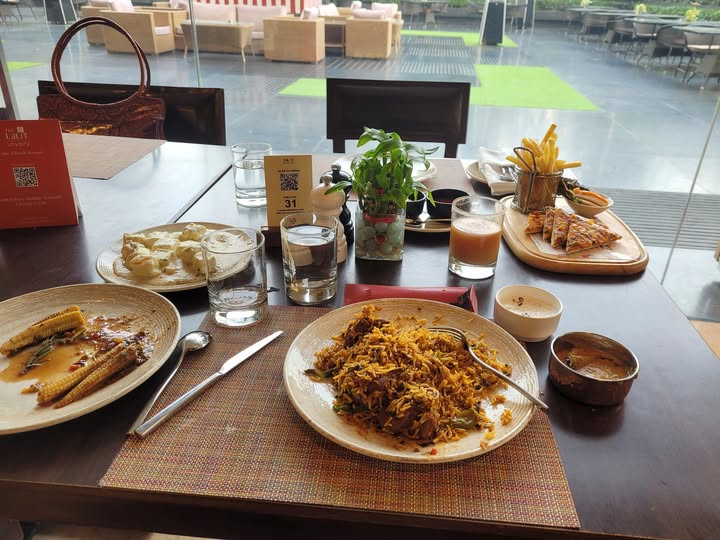
In an age where luxury dining often becomes more about spectacle than substance, the buffet experience at The Lalit Hotel, New Delhi, comes as a reassuring reminder that true hospitality still rests on generosity of flavour, honesty of ingredients, and an unspoken respect for the guest. What unfolded during our recent visit was not merely a meal but a carefully orchestrated experience of warmth, abundance and culinary confidence—one that deserves appreciation, recognition and heartfelt congratulations.
Walking into The Lalit is always accompanied by a sense of expectation. The hotel has long positioned itself as one of Delhi’s stalwarts of fine hospitality, and yet expectations can be dangerous things, especially when it comes to buffets. Too often, lavish spreads sacrifice depth for width, resulting in food that looks impressive but tastes forgettable. The buffet at The Lalit defies this tired pattern. It does not try to overwhelm; it aims to satisfy, and it succeeds with quiet authority.
The undisputed star of the afternoon was the mutton biryani—an offering that alone justifies the buffet’s reputation. In a city where biryani is debated with near-religious fervour, serving an exceptional version is no small achievement. The Lalit’s mutton biryani stands tall because it understands the soul of the dish. This was not rice perfumed lightly with spices and dotted sparingly with meat. This was a biryani that celebrated mutton unapologetically. Generous pieces of well-cooked meat, tender yet substantial, were woven seamlessly into long, fragrant grains of rice that had clearly absorbed the depth of the spices over time rather than through haste.
Each spoonful carried the warmth of whole spices—cloves, cardamom, bay leaf—balanced expertly so that none screamed for attention. The masala was robust without being aggressive, aromatic without being overpowering. The mutton itself was cooked to a point that spoke of patience: succulent, yielding, and deeply flavoured, not merely boiled into submission but coaxed gently into tenderness. This is the kind of biryani that reminds you why the dish occupies such an exalted place in Indian culinary culture. It was indulgent, comforting and celebratory all at once.
Equally impressive, though in an entirely different register, was the paneer soufflé. In a buffet environment where vegetarian dishes are often treated as obligatory fillers rather than centrepieces, this offering stood out for its restraint and finesse. Soft to the point of near weightlessness, the soufflé had a delicate structure that held together just long enough before melting on the palate. Its flavour profile was subtle, not timid—a nuanced interplay of dairy richness and gentle seasoning that respected the ingredient rather than masking it.
What made the paneer soufflé truly admirable was its confidence. It did not rely on excess butter, overwhelming spices or heavy sauces. Instead, it trusted texture and balance, allowing the paneer to express itself fully. This kind of culinary maturity is rare in large-format dining and speaks volumes about the kitchen’s standards and training.
The mutton roulades were another highlight that deserves special mention. Rolled, layered and cooked with precision, they offered a different interpretation of mutton—structured, elegant and deeply satisfying. Each slice revealed careful preparation, with the meat retaining its juiciness while being infused with flavour throughout. The roulades were rich without being cloying, and substantial without being heavy, making them a perfect companion to the more traditional biryani.
Beyond individual dishes, what elevated the experience was the sense of abundance without excess. The buffet did not feel hurried or depleted, even though we arrived at 2:30 PM, with the service scheduled to end at 3:00 PM. On the contrary, the spread remained generous, fresh and fully available. There was no visible attempt to scale back offerings or subtly signal that time was running out. This alone reflects a philosophy of hospitality that places the guest’s experience above operational convenience.
Then came a gesture that transformed a good experience into a memorable one. Without being prompted, without negotiation or expectation, the staff offered massive discounts simply because my wife and I had arrived close to closing time. This was not announced loudly or framed as a favour; it was done quietly, graciously, as though it were the most natural thing in the world. In an industry increasingly obsessed with rigid policies and scripted interactions, this spontaneous generosity felt almost radical.
It sent a powerful message: that the guest is not merely a transaction but a person whose presence is valued regardless of timing. Such gestures linger far longer in memory than any decorative flourish or marketing slogan. They create loyalty organically, not through points or programmes but through genuine goodwill.
The service throughout the meal was exemplary—attentive without being intrusive, courteous without being mechanical. Plates were cleared promptly, queries were answered with warmth, and there was a noticeable absence of that subtle impatience that often creeps in as closing time approaches. Instead, the staff made us feel unhurried and welcome, as though our enjoyment of the meal was reason enough to extend their energy and care.
Taken together, these elements—the outstanding mutton biryani, the refined paneer soufflé, the expertly prepared mutton roulades, the impeccable service, and the unexpected generosity—form a cohesive narrative of what hospitality should aspire to be. The Lalit Hotel’s buffet is not merely about feeding guests; it is about honouring them.
In a city like New Delhi, where diners are spoilt for choice and competition is fierce, maintaining such standards consistently is no small feat. It requires leadership that values quality over shortcuts, chefs who respect tradition while embracing refinement, and service staff empowered to act with empathy rather than constraint. The Lalit deserves congratulations for nurturing such an ecosystem.
This experience also serves as a quiet rebuttal to the cynicism that often surrounds luxury hospitality—that it is expensive without being personal, polished without being warm. Here, luxury was expressed through generosity, not pretence; through flavour, not flash. The food spoke for itself, and the service amplified it with kindness.
As we left, there was no sense of having “caught the buffet at the end.” Instead, there was gratitude—for the meal, for the thoughtfulness, and for the reminder that excellence often reveals itself most clearly in small, unscripted moments. The Lalit Hotel, New Delhi, has every reason to take pride in this buffet experience. It is a testament to what can be achieved when culinary skill, operational discipline and human decency converge.
For that, the team behind this buffet deserves sincere appreciation and applause. In offering us not just a meal but a moment of genuine pleasure and respect, they reaffirmed why The Lalit remains a benchmark in Indian hospitality.