
The number of diseases is proportional to the number of rooms in your flat. Forests heal. Flats afflict. Selling and buying multi-crore worth of flats may be the stupid and semi-literate millionaire’s dream but that is not the desirably social status model. Read the full article to understand why
In Indian cities, the middle-class dream is wrapped in steel, cement, and glass — a flat, preferably in a gated society, with elevators, air-conditioned halls, and parking. But behind these walls of comfort may lie silent killers: poor air quality, dampness, noise, and toxic materials. The irony of India’s urban aspiration is that the number of diseases seems directly proportional to the number of rooms in one’s flat.
Recent research across the world — from the World Health Organization (WHO), the International Journal of Environmental Research and Public Health, and India’s National Environmental Engineering Research Institute (NEERI) — paints a grim picture: our built environments are now among the biggest determinants of our health.
1. The Invisible Poison Inside Flats
Unlike traditional homes that “breathe,” modern flats are airtight boxes. Shared walls and centralized ventilation systems mean that air — and everything in it — travels from one apartment to another. This is not just about odors or smoke; it’s about microscopic pollutants.
A 2023 WHO report on Housing and Health Guidelines found that indoor air pollution contributes to around 3.8 million premature deaths annually, largely due to poor ventilation and pollutants like PM2.5, asbestos, and lead-based materials in old buildings. In India’s dense urban clusters, particularly in high-rises with shared ducts, the risk multiplies.
A 2021 study published in Environmental Health Perspectives found that residents of multi-unit dwellings had 25% higher exposure to PM2.5 compared to those in detached homes. Many Indian flats, especially older ones, were built when asbestos-laden plaster, lead-based paints, and low-grade cement were common — materials now globally recognized as toxic.
Flat builders, driven by profit rather than permanence, often cut corners. “Flat builders build to sell; homeowners build to live,” as one urban planner in Delhi bluntly puts it. Developers often use badarpur dust (fine silica powder) instead of proper river sand, low-grade steel, and cheaper paints — materials that not only degrade faster but also release harmful compounds over time. These flats, in the long run, become poisonous dens.
2. Crowded Cities, Crowded Diseases
High-density living has always carried epidemiological risks, but the COVID-19 pandemic exposed how fragile these environments truly are. Apartments with shared elevators, corridors, and ventilation systems became efficient conduits for viral spread.
A 2022 study by the Lancet Planetary Health journal found that infection rates were significantly higher in multi-story housing blocks than in low-rise or detached homes. Crowding also increases exposure to other communicable diseases such as tuberculosis — still a major concern in India, which accounts for one in four global TB cases, according to WHO’s 2024 Global TB Report.
Cramped flats also amplify the psychological cost of crowding. Research by the American Psychological Association shows that chronic crowding contributes to elevated cortisol levels, disrupted sleep, and diminished cognitive function — all of which degrade immune health and productivity.
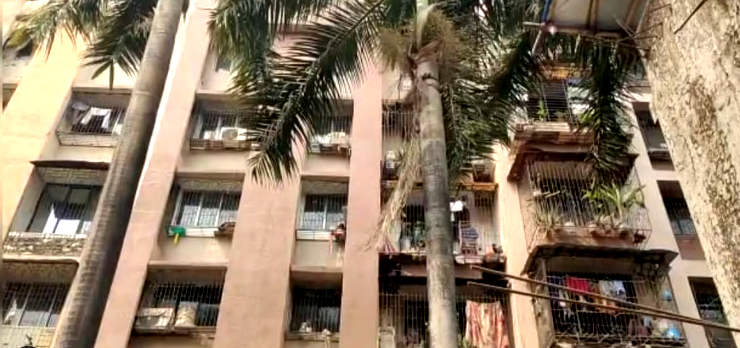
3. Noise, Stress, and the Erosion of Privacy
Noise is one of the least discussed pollutants in Indian cities, yet among the most harmful. In 2023, the Central Pollution Control Board (CPCB) identified over 90% of Indian metropolitan areas as exceeding safe noise levels — largely from traffic, construction, and high-density residential clusters.
Noise exposure isn’t merely an annoyance; it’s a health hazard. The European Heart Journal (2021) linked long-term exposure to urban noise with increased risks of hypertension, heart attack, and stroke. Chronic sleep deprivation caused by noise also correlates with anxiety and depression.
In most apartment complexes, privacy is scarce and walls are thin. The constant hum of neighbors’ televisions, footsteps, and voices becomes inescapable. Over time, this sensory invasion wears down mental resilience. Psychologists call it “crowded loneliness” — being surrounded by people yet feeling completely alienated.
4. The Mold in the Walls
Dampness and mold infestations are rampant in Indian flats — a consequence of cheap construction and poor maintenance. According to a 2023 systematic review using the PRISMA protocol, which analyzed 360 studies on housing-related respiratory risks, inadequate ventilation and moisture were the top contributors to asthma and allergic diseases. The review identified 19 major risk factors — from poor insulation to structural degradation — that collectively worsen respiratory health.
The findings echo what Indian doctors have long observed. The Indian Chest Society notes that urban asthma cases have surged by 20–25% over the past decade, particularly among children growing up in damp, low-ventilation flats. Poor indoor air, often worsened by cooking emissions and traffic pollution entering through open windows, adds to the toxic load.
5. The Mental Health Cost of the Box
Living in flats affects not just physical but also mental health. A 2022 Royal Society for Public Health (UK) study concluded that access to natural light and private outdoor space directly influences happiness and mental stability. Apartments without balconies or gardens deprive residents of this crucial “restorative exposure” to nature.
The World Green Building Council (2023) also reported that daylight exposure in homes improves mental health, reduces absenteeism, and enhances cognitive performance. In contrast, dark, cramped flats are linked with increased rates of depression and anxiety.
Psychiatric research from India’s National Institute of Mental Health and Neurosciences (NIMHANS) has confirmed that “unventilated, low-light dwellings” significantly increase the risk of mood disorders, especially in urban women managing both home and work stress.
6. The Social Paradox
While flats can foster community — shared amenities, playgrounds, resident associations — they can also breed anonymity. High turnover and the “locked-door” culture of urban living can make residents feel isolated.
A 2022 Harvard School of Public Health study on urban loneliness found that people living in high-rise apartments were 30% more likely to report loneliness than those in low-rise or detached homes, even after accounting for income levels.
Social engagement and well-being are intertwined. Research published in Social Science & Medicine shows that neighborhoods with more community participation and open green spaces experience lower rates of depression, better cardiovascular health, and higher longevity.
7. The Forest Connection: What We Lost to the Flat
Behind the proliferation of urban flats lies a darker truth — forests are being razed to build them. As of March 2024, over 1.3 million hectares (13,056 sq km) of forest area across 25 Indian states and union territories were under encroachment, according to the Ministry of Environment, Forest and Climate Change (MoEFCC). Assam, Karnataka, and Maharashtra top the list.
Encroachment and deforestation not only erode ecosystems but also deprive people of one of humanity’s greatest health allies: the forest itself. Scientific evidence consistently shows that living near forests or green spaces reduces rates of heart disease, diabetes, obesity, and mental illness. A landmark 2019 meta-analysis in Nature Scientific Reports concluded that 120 minutes of exposure to green space per week significantly boosts health and well-being.
Conversely, losing green cover increases city heat, air pollution, and water stress — all directly linked to rising respiratory and cardiovascular diseases. According to The Lancet Planetary Health (2023), Indian cities with less than 10% green cover record 20–30% higher rates of heat-related illnesses during summer months.
8. How Flats Eat Forests
Illegal land conversion for housing has become a nationwide racket. In 2025, the Supreme Court of India ordered the demolition of over 6,700 illegal structures built on 780 acres of deemed forest land in the Aravalis, Haryana. Similar cases emerged in Delhi Ridge, Pune, Navi Mumbai, and Bengaluru — all revealing a nexus of builders, officials, and forged records.
Developers exploit legal ambiguities between “recorded forest” and “deemed forest” lands, use fake clearances, or bribe revenue officials to falsify ownership papers. A Central Empowered Committee (CEC) report submitted to the Supreme Court in 2025 detailed how a public sector company sold 165 acres of forest land to private builders in Karnataka.
The environmental cost of these crimes is profound. The Indian Institute of Forest Management (2024) estimated that each hectare of forest lost to construction removes ecosystem services worth ₹7.5 lakh annually — including air purification, groundwater recharge, and carbon sequestration.
9. Forests Heal; Flats Sicken
Scientific evidence increasingly supports the idea that forests heal — physically and mentally. Studies in Japan on shinrin-yoku or “forest bathing” have shown that a two-hour walk in a forest reduces cortisol levels by 15%, lowers blood pressure, and increases immune-boosting natural killer (NK) cells (Frontiers in Psychology, 2020).
A long-term European study published in The Lancet Public Health (2022) found that proximity to green areas was associated with a 16% reduction in premature mortality. The air purification, noise buffering, and psychological restoration offered by trees cannot be replicated by air purifiers or luxury amenities.
But India’s rapid urbanization — with over 600,000 new housing units built annually — continues to displace forests. Ironically, while developers market “forest-view apartments”, the very forests providing that view are being cut down to make way for towers.
10. When Real Estate Becomes a Public Health Issue
Urban housing has become not just a real estate problem but a public health emergency. The World Bank’s 2023 Urban Health Report warned that poor housing and air quality in South Asian cities cost the region an estimated 2.5% of GDP annually through lost productivity and healthcare costs.
The Indian Council of Medical Research (ICMR) estimated in 2024 that over 1.2 million premature deaths annually in India are linked to indoor and outdoor air pollution — much of it aggravated by urban construction dust, poor ventilation, and energy-inefficient housing designs.
Meanwhile, the very act of building flats degrades ecosystems that naturally regulate air and water — creating a vicious cycle: we destroy forests to build homes that make us sick.
11. The Way Forward: Building Healthy Homes
The solution is not to abandon flats but to rethink how we design, build, and maintain them. Research consistently emphasizes three pillars of healthy housing: air quality, ventilation, and access to nature.
- Ventilation and Materials:
The Public Health England Housing Guidelines (2021) recommend mechanical ventilation with heat recovery (MVHR) systems in dense housing to ensure fresh air circulation. India’s building codes rarely enforce such standards. Mandatory use of non-toxic materials and filters in centralized systems can drastically reduce pollutants. - Green Integration:
The World Green Building Council and TERI (The Energy and Resources Institute) advocate for green rooftops, vertical gardens, and tree belts around residential complexes — features proven to reduce ambient temperature and PM2.5 levels. - Regulatory Vigilance:
Implementation of the Forest (Conservation) Act (1980) and stronger penalties for encroachment are crucial. The Supreme Court’s insistence on periodic forest audits and citizen vigilance committees is a step in the right direction. - Citizen Awareness:
Homebuyers must demand transparency. Developers should disclose materials used, ventilation ratings, and environmental clearances. Governments can introduce a “Healthy Housing Rating” similar to the energy efficiency labels used for appliances. - Reclaiming Urban Nature:
The UN Environment Programme (2024) stresses the creation of urban biodiversity zones — mini-forests, lakes, and open green corridors — to reintroduce ecological balance in cities.
12. From Concrete to Consciousness
In the race for upward mobility, India has built upward — but not always wisely. The modern apartment is not inherently unhealthy, but the way it’s built, maintained, and situated often makes it so.
We have substituted sunlight for LED light, fresh air for recirculated air, and living forests for concrete facades painted green. The cost isn’t just environmental; it’s deeply personal — measured in every asthma attack, every sleepless night, every silent stressor behind closed doors.
To buy a flat today is not merely to purchase a piece of property; it’s to enter a biological experiment — where the outcome depends on what we value more: short-term convenience or long-term health.
References
- World Health Organization (2023). Housing and Health Guidelines.
- The Lancet Planetary Health (2022). Urban Density and Disease Transmission.
- Environmental Health Perspectives (2021). Indoor Air Quality in Multi-Unit Housing.
- Central Pollution Control Board (2023). Noise Pollution in Indian Cities.
- Royal Society for Public Health (2022). Built Environment and Mental Health.
- Indian Council of Medical Research (2024). Air Pollution and Premature Mortality in India.
- MoEFCC (2024). Forest Encroachment Data Report.
- Nature Scientific Reports (2019). Green Space Exposure and Health Outcomes.
- Frontiers in Psychology (2020). Physiological Effects of Forest Bathing.
- World Bank (2023). Urban Health and Economic Impact in South Asia.
- Public Health England (2021). Housing Health Standards and Indoor Environment.