
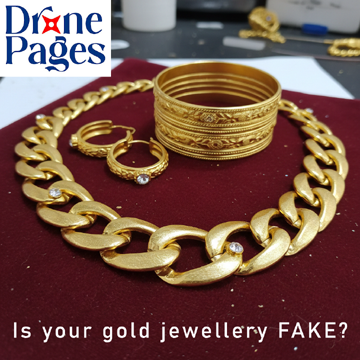
Unscrupulous manufacturers and criminal syndicates insert themselves with the promise of 18-carat or 22-carat gold jewellery as powerful lure. That promise could be hollow. Beneath the sheen lies brass, copper, or mixed base metals, coated with a thin layer of gold just thick enough to fool the eye and often, basic testing
Gold has always occupied a peculiar place in human civilisation. It is not merely a metal but a cultural constant, a financial refuge, and a psychological anchor in times of uncertainty. Among the Chinese, Thais, and Indians—three of the world’s most gold-centric societies—gold is not just purchased; it is trusted. It is gifted at weddings, hoarded across generations, pledged in emergencies, and worshipped in rituals. When currencies wobble and governments falter, gold steps into the void as something solid, timeless, and reassuring.
This cultural trust has taken on renewed intensity as the global financial order shows signs of strain. As central banks and institutional investors quietly reduce exposure to U.S. Treasury bonds, gold prices have surged repeatedly. The metal has reasserted itself as a hedge against inflation, geopolitical instability, and currency debasement. For ordinary households, this macroeconomic shift translates into something simpler: buy gold before it becomes even more expensive.
But soaring demand creates fertile ground for deception. Where belief is strong and scrutiny weak, fraud flourishes.
When demand outruns doubt
The modern gold rush is not taking place in mines but in marketplaces—showrooms, pawn shops, tourist bazaars, WhatsApp groups, and back-alley exchanges. As prices climb, buyers fear missing out. That fear dulls caution. Questions go unasked. Verifications are rushed. Trust is extended where it should not be.
This is precisely where unscrupulous manufacturers and criminal syndicates insert themselves. The promise of 18-carat or 22-carat gold jewellery becomes a powerful lure. In many cases, that promise is hollow. Beneath the sheen lies brass, copper, or mixed base metals, coated with a thin layer of gold just thick enough to fool the eye—and often, basic testing.
The tragedy is not that gold fraud exists. It always has. The tragedy is that the scale, sophistication, and audacity of such cheating have exploded alongside demand.
The illusion of 18K: When Hallmarks lie
For decades, hallmarking was supposed to be the consumer’s shield. In India, the BIS hallmark became synonymous with authenticity. In theory, it guarantees purity, traceability, and accountability. In practice, it has become another tool in the fraudster’s arsenal.
Fake BIS logos are now routinely stamped onto brass-based jewellery. Fonts are copied, symbols replicated, and serial numbers invented. To an untrained eye—and even to some trained ones—the mark looks legitimate. The buyer relaxes. The transaction proceeds.
What few realise is that hallmarking verifies the surface composition, not the soul of the object. A sufficiently thick gold plating can pass superficial tests. Only destructive testing—cutting, drilling, or melting—reveals the truth. By then, the fraudster is long gone.
From street hustles to corporate-scale crime
Gold cheating today spans a spectrum—from petty confidence tricks to organised interstate operations targeting professional jewellers themselves. The popular imagination still associates fake gold with naïve individuals being duped in shady alleys. That image is outdated.
In reality, some of the most sophisticated scams are aimed squarely at jewellers, refiners, and traders—people who believe they cannot be fooled.
The brass biscuit gangs
In 2025, Mumbai police uncovered what came to be known as the “brass biscuits” scam. An organised gang posed as legitimate traders offering to exchange old gold ornaments for newly designed jewellery. They built trust over repeated visits, small transactions, and familiar faces. Once confidence was established, they executed the swap—replacing genuine gold with brass blocks polished and weighted to match the originals.
By the time discrepancies were discovered, entire inventories had been compromised. Losses ran into crores. What shocked investigators was not just the brazenness of the scheme, but its execution discipline. These were not amateurs. They understood jewellers’ workflows, trust patterns, and vulnerabilities.
The interstate couple that fooled 56 cities
Even more astonishing was the case of an interstate couple arrested for cheating jewellers in 56 cities across 15 Indian states. Their method was elegant and devastating. They carried jewellery made from mixed base metals, expertly coated with gold and engineered to pass basic laboratory tests.
To sweeten the deal, they often provided small, genuine gold samples upfront. Jewellers tested these, found them pure, and assumed the bulk consignment was identical. Only when the items were melted—sometimes weeks later—did the deception emerge. By then, tracking the culprits was nearly impossible.
This case shattered a comforting myth: that professional jewellers are immune to fraud. They are not. They are merely higher-value targets.
The modern Bunty-Babli archetype
In Kalyan, a city synonymous with gold trade, a “Bunty-Babli” style couple ran a scam that exploited both trust and technology. Using gold-plated base metal jewellery stamped with fake BIS hallmarks, they pawned items across multiple shops. Each transaction was small enough to avoid suspicion. Cumulatively, the damage was immense.
Their success relied not on aggression but on normalcy. They dressed respectably, spoke knowledgeably, and behaved like any other customer. In a market driven by volume and speed, few shopkeepers took the time to question what appeared routine.
The romance of “unearthed” gold
If organised gangs target professionals, another genre of scam preys on ordinary individuals through storytelling. The narrative is always seductive: accidental discovery, hidden treasure, and the chance to buy gold at a fraction of market price.
These stories exploit a deep psychological weakness—the belief that fortune favours the lucky and the bold.
The Bhopal farmer fraud
In 2025, a 62-year-old farmer in Bhopal was approached by three men claiming to have unearthed gold jewellery while digging. To establish credibility, they handed him a small piece of genuine gold, which tested positive. Convinced, the farmer paid ₹4.5 lakh for a bulk package. The contents were brass, polished and chemically treated to resemble gold.
By the time the truth surfaced, the scammers had vanished. The farmer’s loss was not just financial but emotional—trust betrayed by a story he wanted to believe.
Chandigarh and the myth of discounted treasure
A similar scam unfolded in Chandigarh years earlier. Fraudsters claimed to have found 2 kilograms of gold during digging work in Uttar Pradesh. The offer was framed as urgent and discreet—gold at a discount, no paperwork, quick cash. The pieces were pure brass, but the promise of easy profit overwhelmed scepticism.
These scams persist because they appeal to greed while disguising it as opportunity.
When retirement savings turn to brass
In Nagpur in 2025, a retired man lost ₹35 lakh after being promised gold at a throwaway price. As in many cases, he was first given real samples. Once trust was secured, the bulk delivery consisted of brass bars. Years of savings evaporated in a single transaction.
Such cases highlight the cruel irony of gold fraud: it often strikes those seeking security, not extravagance.
Tourists: The perfect prey
Tourists occupy a special category in the gold scam ecosystem. They are unfamiliar with local standards, dazzled by cultural narratives, and often eager to buy souvenirs with “investment value.”
The infamous “out of gas” fake ring scam operates worldwide. Well-dressed individuals in cars claim to be stranded and offer gold jewellery as collateral for cash. The rings are almost always gilded brass or bronze. The performance is rehearsed, the urgency convincing.
In Jaipur, a case reached almost absurd proportions when a U.S. tourist paid nearly $700,000 for jewellery later appraised at just $4. The pieces were gold-plated silver and base metal, marketed as high-carat heirlooms. The scale of the fraud stunned even seasoned investigators.
How the deception works
Despite variations, most gold scams rely on a familiar toolkit.
Surface-Level Chemistry
Thin gold layers, often enhanced with potash chemicals, can fool acid tests. The surface reacts like gold; the core remains hidden.
Fake Hallmarks
Counterfeit BIS logos and serial numbers lend legitimacy. Many buyers assume hallmark equals authenticity, without understanding its limitations.
The Sample Trap
Perhaps the most effective tactic is the “sample strategy.” Scammers provide a small piece of real gold for testing. Once trust is secured, the bulk transaction switches to brass.
Psychological Pressure
Urgency is key. Limited-time offers, fear of missing out, and appeals to secrecy short-circuit rational analysis.
Cheating goes unnoticed
Gold cheating thrives because detection is inconvenient. Melting jewellery destroys its form and resale value. Advanced testing equipment is expensive. Legal recourse is slow and uncertain. Many victims choose silence over stigma.
Moreover, in a booming market, losses are often absorbed quietly. Jewellers write them off as business risks. Individuals blame themselves. The system learns nothing, and the cycle repeats.
Cultural trust as a vulnerability
In gold-loving societies, trust in the metal often overrides trust in institutions. People believe in gold even when they distrust banks or governments. Fraudsters exploit this asymmetry. They do not need to convince buyers of gold’s value—only of their own honesty.
As global financial uncertainty continues and gold prices climb further, this vulnerability will deepen.
The coming decade: More gold, more fraud
If the dumping of U.S. Treasury bonds continues and geopolitical tensions persist, gold’s appeal will only grow. With it will grow the incentive to cheat. Without widespread education, stricter enforcement, and better testing infrastructure, fake gold will increasingly circulate alongside real gold—indistinguishable until it is too late.
Trust maybe, but verify relentlessly baby
Gold has survived empires, wars, and monetary experiments because it commands trust. That trust is now being weaponised by criminals who understand both chemistry and human psychology. In an age where even hallmarks can be forged and samples can lie, belief is no longer enough. Gold buyers—whether individuals or institutions—must relearn an old lesson: value demands verification. Without it, the ancient promise of gold risks being reduced, quite literally, to polished brass.