Hormuz. Such concentration of economic power in a single geographic bottleneck naturally raises a strategic question: why haven’t the oil-rich Arab states not bypassed the strait altogether decades ago? Why was more infrastructure not built decades ago to avoid the risks posed by geopolitical tensions in the region? The question becomes even more urgent whenever military conflict threatens to disrupt shipping
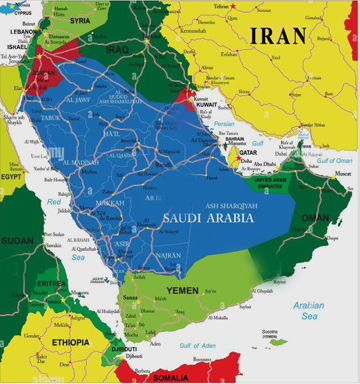
The global energy system depends on a handful of narrow maritime passages known as chokepoints. Among them, none is more strategically important than the Strait of Hormuz. Every day, millions of barrels of oil and gas pass through this narrow corridor connecting the Persian Gulf to the open waters of the Arabian Sea. The geography of the region is unforgiving: a narrow sea channel bounded by Iran to the north and Oman and the United Arab Emirates to the south.
At its narrowest navigable point, the channel is only a few dozen kilometres wide. Yet this tiny corridor carries around 20–21 million barrels of oil every day—roughly one fifth of the global petroleum trade. That translates to energy flow worth hundreds of billions of dollars each year.
Such concentration of economic power in a single geographic bottleneck naturally raises a strategic question: why haven’t the oil-rich Arab states not bypassed the strait altogether decades ago? Why was more infrastructure not built decades ago to avoid the risks posed by geopolitical tensions in the region? The question becomes even more urgent whenever military conflict threatens to disrupt shipping.
When war erupts in the Gulf region, the Strait of Hormuz becomes the world’s most fragile economic artery. Tankers hesitate to sail, insurance costs skyrocket, and global oil prices surge. In recent years analysts have repeatedly warned that the longer the uncertainty persists, the higher the price of energy will climb.
The apparent simplicity of building alternative routes—perhaps across deserts or via pipelines to the Red Sea—conceals an extremely complex web of geographic, engineering, financial and political constraints. Understanding why the strait remains central to global oil flows requires examining not only geography but also the economic logic that shaped the Middle East’s petroleum infrastructure over the past half century.
Geography dictates the oil trade
The countries surrounding the Persian Gulf—particularly Saudi Arabia, Iraq, Kuwait, Qatar and the United Arab Emirates—sit on some of the largest oil reserves in the world. Most of these reserves lie geographically inside the Gulf basin itself. The simplest and cheapest method of exporting crude oil has historically been to ship it directly from terminals inside the Gulf through the Strait of Hormuz and into the wider Indian Ocean.
The geography effectively funnels production toward that narrow exit. Ports such as Ras Tanura in Saudi Arabia, Mina Al-Ahmadi in Kuwait, and terminals in southern Iraq are all oriented toward the Gulf. For decades, shipping companies and governments assumed that the maritime route would remain open under international law.
The economics also favored tanker shipping. A single supertanker can carry two million barrels of crude oil. Loading oil directly onto such vessels and sending them through the strait is far cheaper than transporting the same volume across land.
This geographic and economic reality shaped decades of infrastructure investment. Refineries, export terminals and pipeline networks were designed with the Strait of Hormuz as the primary gateway to global markets. Once billions of dollars had been invested in these systems, changing the entire logistical architecture became extraordinarily expensive.
Thus the dependence on Hormuz was not merely an oversight or lack of foresight. It was a rational economic decision based on the assumption that international maritime trade routes would remain open.
Why the Red Sea alternative was not fully developed
Observers often ask why oil-rich states did not simply build pipelines or shipping ports on the Red Sea or the southern coasts of the Arabian Peninsula. After all, such routes would bypass the Strait of Hormuz entirely and connect directly to global shipping lanes.
In reality, some attempts were made. Saudi Arabia built the East–West pipeline that runs across the Arabian Peninsula to ports on the Red Sea. This pipeline can transport roughly five million barrels of crude per day. However, even this large system can handle only a fraction of the oil currently passing through Hormuz.
Constructing such infrastructure across thousands of kilometres of desert is extremely expensive. Pipelines must cross harsh terrain, remote areas and politically sensitive regions. Maintenance costs in desert environments are high because of sandstorms, temperature extremes and corrosion.
Furthermore, pipelines require pumping stations, security infrastructure and terminal facilities. Building an entire export ecosystem on the Red Sea side would have required tens of billions of dollars decades ago, at a time when governments were uncertain about future demand.
Another obstacle was geopolitical risk. The Red Sea itself borders multiple countries with varying levels of political stability. Conflicts in regions like Yemen have repeatedly threatened infrastructure projects. Oil companies and governments therefore calculated that the risks of massive alternative infrastructure might outweigh the benefits.
Thus while some bypass routes were developed, none were large enough to fully replace the Strait of Hormuz.
The idea of transporting oil by truck
Occasionally analysts propose a seemingly simple solution: move oil across land using tanker trucks from the northern side of the Gulf to ports on the Arabian Sea. In theory this could allow exporters to bypass the Strait of Hormuz entirely.
However, the numbers quickly reveal why this idea is impractical. One standard oil tanker truck carries roughly 200 barrels of crude oil. To replace the 20 million barrels that move through the strait each day would require around 100,000 truck journeys daily.
The logistical challenges would be enormous. Roads capable of handling such traffic would need to be built across deserts and mountains. Border crossings would need to process thousands of vehicles per hour. Fuel, maintenance and labour costs would be astronomical.
Even if the infrastructure existed, moving oil by truck would be far more expensive than transporting it by pipeline or tanker. The cost per barrel would skyrocket, dramatically increasing global oil prices.
The terrain itself presents further obstacles. Northern Oman and parts of the Arabian Peninsula contain rugged mountains and harsh desert landscapes. Building highways capable of supporting massive tanker fleets would require enormous engineering projects.
Security risks would also remain. In times of war or regional tension, truck convoys would become easy targets for drones, missiles or sabotage. Protecting thousands of vehicles moving through remote terrain would require a large military presence.
For these reasons, transporting oil by truck is not considered a viable solution for large-scale energy trade.
The military dimension of the chokepoint
Control of the Strait of Hormuz carries enormous strategic value. Because such a large portion of the world’s energy passes through the corridor, any disruption immediately affects global markets.
Iran has repeatedly stated that it could block or threaten shipping through the strait during times of conflict. Its military forces possess fast attack boats, anti-ship missiles and submarines capable of harassing tanker traffic.
Another method involves deploying naval mines. Even a small number of mines can force shipping companies to halt operations until the area is cleared. Mines are difficult to detect and can cripple commercial vessels.
Because the strait lies partly within Iranian territorial waters, international navigation rights become complicated. According to maritime law, countries can exercise control up to 12 nautical miles from their coastline. At the strait’s narrowest point, shipping lanes pass within these territorial zones.
This geographic reality gives Iran significant leverage. It does not need to physically close the strait; merely threatening ships can make insurance prohibitively expensive. Tanker operators may simply refuse to sail through the area.
During earlier conflicts, including the tanker war of the 1980s during the Iran–Iraq War, similar tactics disrupted shipping. At that time the United States Navy intervened by escorting tankers through the Gulf, demonstrating the enormous military resources required to keep the route open.
Economic shockwaves of a blocked strait
Whenever tensions escalate in the region, global energy markets react immediately. Oil prices surge as traders anticipate potential supply disruptions.
A prolonged closure of the Strait of Hormuz would remove a huge portion of global supply from the market. Even if alternative pipelines operate at full capacity, analysts estimate that between eight and ten million barrels per day could still be lost.
Such a supply shock would ripple through the entire global economy. Transport costs would rise, manufacturing expenses would increase, and inflation would accelerate.
Shipping costs themselves have already demonstrated how sensitive the market is to risk. The price of hiring a supertanker for routes from the Middle East to Asia can double or even triple during periods of conflict. Insurance premiums skyrocket when ships face missile or drone threats.
Energy markets are therefore extremely sensitive to geopolitical events around the Strait of Hormuz. Even rumours of attacks can trigger massive price swings.
The impact on Asia
The countries most vulnerable to disruptions in the Strait of Hormuz are located in Asia. Economies such as China, India, Japan and South Korea import enormous volumes of Middle Eastern oil.
Historically more than 80 percent of the crude leaving the strait has been destined for Asian markets. China alone purchases the vast majority of Iran’s oil exports.
Because these countries rely heavily on imported energy, disruptions in the Gulf can quickly affect their industrial output. Higher fuel costs translate into higher prices for manufactured goods and consumer products.
For the global economy this creates a chain reaction. Many of the goods produced in Asian factories are exported to Europe and North America. Rising energy costs therefore ripple through international supply chains.
Thus the security of the Strait of Hormuz is not merely a regional issue. It is a global economic concern.
Alternative pipelines and their limitations
Despite the overwhelming reliance on the Strait of Hormuz, several countries have attempted to develop alternative routes. Saudi Arabia’s East–West pipeline is the most significant example.
This massive infrastructure project stretches across the Arabian Peninsula from the Gulf to the Red Sea. By connecting inland oil fields to western ports, it allows some exports to bypass the strait entirely.
Similarly, the United Arab Emirates constructed a pipeline linking its oil fields to the port of Fujairah on the Gulf of Oman. This route avoids the narrowest portion of the strait but still relies on regional maritime routes.
However, even when operating at maximum capacity these systems cannot handle the entire volume currently flowing through Hormuz. The combined capacity of all bypass routes is far smaller than the total Gulf production.
Building additional pipelines would require enormous investment and years of construction. Political instability in some parts of the region further complicates such projects.
As a result, the Strait of Hormuz remains the central artery of the global oil trade despite decades of attempts to reduce dependence on it.
Who benefits from oil price shocks
Wars and geopolitical crises rarely produce only losers. In many cases certain countries benefit economically from the disruption of supply chains.
One of the biggest beneficiaries of higher oil prices is Russia. Even when sanctions limit its access to Western markets, rising global prices increase the value of its energy exports. Oil revenues form a large portion of the Russian federal budget, meaning price spikes provide a significant financial boost.
The United States experiences a more complicated effect. American shale producers profit from higher prices, while consumers face higher gasoline costs. The country simultaneously benefits from energy exports and suffers from domestic inflation.
Another country navigating this complex landscape is India. As the world’s third-largest oil importer, India faces rising import bills when prices climb. Yet it also possesses a large refining sector capable of turning crude oil into high-value petroleum products.
By purchasing discounted crude—particularly from Russia—and refining it for export, India can capture large profit margins when global fuel prices are high. This strategy allows the country to transform geopolitical turmoil into economic opportunity.
Diplomacy and strategic balancing
Energy crises often reshape diplomatic relationships. Countries that maintain ties with multiple rival powers can gain significant leverage.
India, for instance, maintains working relationships with the United States, Russia, Israel and Iran simultaneously. This diplomatic balancing act allows it to act as an informal bridge between competing geopolitical blocs.
Such positioning can provide economic benefits as well. Access to multiple suppliers allows India to diversify its energy sources and negotiate better deals.
In an era of geopolitical fragmentation, countries capable of navigating between rival alliances often gain strategic advantages.
Why the Strait of Hormuz will remain critical
Despite decades of discussion about alternatives, the Strait of Hormuz remains irreplaceable for the foreseeable future. Geography, economics and existing infrastructure all reinforce its importance.
Building entirely new export systems across deserts and mountains would require immense investment and decades of construction. Even then, the capacity might still fall short of the massive volumes currently moving through the strait.
Moreover, global oil demand remains high. As long as the world relies heavily on petroleum for transportation, manufacturing and electricity generation, the Gulf region will remain a central supplier.
For this reason, the security of the Strait of Hormuz will continue to shape global politics. Military alliances, naval deployments and diplomatic negotiations will all revolve around keeping this narrow waterway open.
The chokepoint illustrates a broader truth about the global energy system: modern civilization depends on fragile logistical networks. A single narrow channel between two coastlines can influence the price of fuel, the stability of economies and the outcome of geopolitical rivalries.
The deeper lesson of global energy chokepoints
The continuing centrality of the Strait of Hormuz highlights how geography often determines geopolitical reality. Nations may spend vast sums on technology, diplomacy and military power, yet natural geography still constrains their choices.
The oil wealth of the Persian Gulf is immense, but the path from the oil field to the global market must pass through narrow corridors shaped by nature. Infrastructure can mitigate those constraints, but rarely eliminate them entirely.
In the long term, diversification of energy sources—such as renewable power, nuclear energy and alternative fuels—may reduce reliance on maritime oil chokepoints. Until then, the world will remain dependent on the safe passage of tankers through a handful of strategic waterways.
The Strait of Hormuz is therefore more than a geographic feature. It is a symbol of how interconnected the modern world has become. Events in a narrow channel between Iran and Oman can influence the price of gasoline in New York, the cost of electricity in Tokyo and the economic stability of developing nations.
As long as global energy demand remains high, this narrow passage will remain one of the most important—and most vulnerable—points in the global economy. And every conflict in the region will remind the world of the same uncomfortable reality: the stability of modern civilization depends on a few fragile chokepoints that cannot easily be replaced.