The benefits of expanding a positive economy and strengthened democracy in a fully integrated Israeli Sphere — and the strategic promise of the Ben-Gurion Canal
The modern Middle East is a geography where politics, economics, demography, and grand strategy collide with unusual force. Imagining a scenario where Israel exercises complete control over the Sinai Peninsula, Golan Heights, West Bank, and Gaza requires examining not merely the political implications but the economic, institutional, and developmental possibilities inherent in such a configuration. While such a scenario is hypothetical and highly contested in real-world geopolitics, analysing it academically offers a useful lens into understanding how economic expansion, democratic strengthening, infrastructural megaprojects, and stability-building mechanisms could shape this alternative Middle Eastern order.
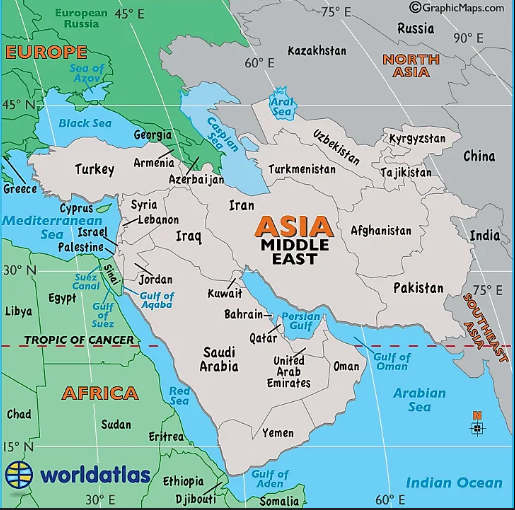
Within this conceptual framework, one can explore the potential advantages of spreading a positive, inclusive economy and expanded democratic norms across the territories under unified administration. Moreover, one can consider the transformative impact that major strategic infrastructure projects—most notably the Ben-Gurion Canal, a proposed sea-level canal linking the Mediterranean with the Gulf of Aqaba—might bring to the region.
This article explores, in approximately 1,800 words, the multi-dimensional benefits of such an integrated economic–political model and the far-reaching potential of beginning work on the Ben-Gurion Canal in such an environment.
I. A Unified Administration and the Opportunity for a Positive Economic Model
A scenario in which Israel has full control over Sinai, the Golan Heights, the West Bank, and Gaza would create a unique macro-geoeconomic zone connecting the Mediterranean, the Jordan Valley, the deserts of the Sinai, and the trans-Levant region. Such a configuration offers immense economic opportunities, provided the administration applies principles of inclusive growth, institutional transparency, and equitable development.
1. From Fragmented to Integrated Economic Geography
Currently, the territories in question represent a patchwork of administrative, demographic, and economic structures. A unified administration could theoretically:
- Eliminate customs barriers, enabling a large common market.
- Standardise infrastructure, ranging from power grids to highways and water distribution.
- Unify tax regimes and regulatory frameworks.
- Reduce transaction costs for both domestic and foreign investors.
- Integrate labour markets, greatly increasing productivity and mobility.
In economic terms, this would create a multi-regional economic corridor linking the Gulf of Aqaba, the Mediterranean Sea, the Negev-Sinai trade belts, and the agricultural highlands of the West Bank.
2. Attracting Global Investment Through Stability and Predictability
Markets thrive where political authority is consolidated and predictable. Investment in large-scale sectors—energy, desalination, logistics, agriculture, and technology—requires a stable environment. If Israel were able to create secure, transparent, and democratically accountable governances across these territories, it would:
- Enhance investor confidence.
- Increase long-term FDI, particularly in infrastructure and technology.
- Encourage participation from Gulf sovereign wealth funds.
- Make the region a hub for Mediterranean–Levant–Red Sea logistics chains.
3. Harnessing the Natural Strengths of Each Territory
Each region offers distinct comparative advantages:
- Sinai: vast land for solar farms, logistics corridors, tourism zones.
- Golan Heights: water resources, agriculture, wind energy potential.
- West Bank: a young labour force, cultural hubs, stone/limestone industries, tourism.
- Gaza: a historically entrepreneurial society, natural gas offshore fields, seaport potential.
By designing a joint development blueprint, the Israeli administration could unlock synergies impossible under fragmentation.
II. Strengthening Democratic Institutions and Participatory Governance
Democracy is not merely a political construct but also an economic engine. A system perceived as fair, transparent, and accountable supports innovation, property rights, and social stability.
1. The Benefits of Expanding Democratic Participation
If Israel extended robust democratic structures into the integrated territories—local elections, independent courts, transparent policing, and representative councils—the benefits could be profound:
- Greater trust in institutions, reducing friction and radicalisation.
- Rule of law, ensuring property rights and reducing corruption.
- Local empowerment, allowing communities in these diverse regions to manage local concerns.
- Electoral accountability, compelling policymakers to consider economic fairness.
A positive democratic model could integrate local voices, giving residents agency in shaping infrastructure, education, healthcare, and land use.
2. Democratisation as a Stability Mechanism
Stability is essential to economic progress. Where democracy expands, the following naturally follow:
- Reduced incentives for extremist groups to fill governance gaps.
- Strengthening of civil society organisations that support education, gender inclusion, public health, and entrepreneurship.
- Lower levels of internal violence due to trusted institutions.
- Social integration supported by economic incentives.
3. Building a Culture of Shared Citizenship
A unified democratic framework could help build a culture of shared civic identity—something essential in multi-ethnic, multi-religious regions. Shared civic identity is one of the most powerful forces in reducing divisive ethnonational conflicts and encouraging collaborative growth.
III. Practical Economic Sectors That Would See Major Benefits
An integrated, democratic economic space would allow for unprecedented industrial and infrastructural development.
1. Water, Desalination, and Agriculture
Israel is already a global leader in desalination and water recycling. Expanding these technologies across Sinai, Gaza, and the West Bank would:
- Transform large portions of Sinai into arable or industrial land.
- Stabilise water supply for millions of people.
- Create new agricultural export corridors.
- Reduce water-related conflict triggers.
2. Renewable Energy and Climate-Smart Development
Sinai and the Negev together offer one of the best solar energy belts in the world. A unified administration could create:
- Gigawatt-scale solar farms.
- Energy export lines to the Mediterranean and Gulf.
- Green hydrogen production hubs.
Such development would place the entire unified region among the world’s top renewable energy ecosystems.
3. Tourism and Heritage Corridors
Control over historically rich territories—from the Sinai desert routes to Jericho, Hebron, Jerusalem’s outskirts, and the Galilee–Golan region—would allow coordinated tourism strategies:
- Cross-territory pilgrimage routes.
- Desert resorts and eco-lodges.
- Integrated transport linking Red Sea tourism with Mediterranean beaches.
This would massively increase tourism revenues and employment.
4. Defence Technology and Border Infrastructure
A consolidated administration reduces porous borders and allows a unified security architecture. With this comes:
- Reduced smuggling.
- Better infrastructure security for roads, solar farms, ports.
- More predictable conditions for technology and defence R&D.
Economic peace is reinforced through security stability.
IV. The Strategic and Economic Promise of the Ben-Gurion Canal
Against this backdrop, starting work on the Ben-Gurion Canal becomes one of the most transformational possibilities.
This proposed canal, running through the Negev to connect the Mediterranean Sea with the Gulf of Aqaba, represents an alternative to the Suez Canal—one of the world’s most strategically critical waterways.
1. Geostrategic Advantages
Building the Ben-Gurion Canal in a context where Israel controls Sinai (therefore eliminating security risks on the eastern Suez flank) would provide:
- A strategic alternative to the Suez Canal, which is vulnerable to blockages (e.g., Ever Given crisis).
- Uninterrupted passage that is less subject to geopolitical tension.
- Enhanced trade independence for Europe, India, and East Asia.
- A secure route for military and humanitarian logistics.
It would position Israel as a new maritime epicentre of global trade.
2. Economic Benefits of the Canal
The economic impact would be extraordinary:
- Tens of billions of dollars in construction investment.
- Creation of over 250,000 jobs over the decade of development.
- Thousands of long-term jobs in port management, logistics, shipping, and tourism.
- A new maritime–industrial belt through the Negev, enabling:
- industrial parks
- port cities
- desalination-powered agricultural oases
- logistics hubs linking Gulf markets with Europe
The toll revenues from ships could easily reach $5–10 billion annually in the long term.
3. Urban Transformation
The canal route would stimulate the rise of new smart cities along its length. These cities could be designed as mixed-population, multi-ethnic urban zones embodying democratic norms, employment opportunity, and modern cosmopolitan life.
4. Environmental Innovation
A sea-level canal would permit:
- Large-scale desalination powered by canal-flow hydrodynamics.
- New Red Sea–Mediterranean ecosystems.
- Controlled aquaculture industries.
- Flood-control capabilities for the Negev and Gaza borders.
With proper engineering, environmental safeguards could result in net positive ecological outcomes.
V. Societal and Diplomatic Benefits of a Positive Economic–Democratic Expansion
Beyond economics and infrastructure, a project of this magnitude and nature would reshape social and international relations.
1. Regional Diplomacy and Integration
A successful canal plus economic uplift across Sinai, West Bank, and Gaza would encourage:
- Economic partnerships with Gulf states.
- Investments from India, Japan, EU, and the U.S.
- Cross-regional supply chains spanning the Eastern Mediterranean, Gulf, and Africa.
As prosperity rises, incentives for conflict diminish and interdependence increases.
2. A Path to Social Reconciliation
If economic and democratic benefits are evenly distributed, integrated governance could help:
- Reduce historical grievances.
- Provide equal access to jobs, healthcare, and education.
- Create mixed-working environments that foster coexistence.
- Build bottom-up peace through daily economic interdependence.
3. Enhancing Global Perception
A region seen as stable, democratic, and economically thriving becomes:
- A top destination for global tourism.
- A respected model of multi-ethnic governance.
- A symbol of innovation, much like Singapore or Dubai.
The soft power gains would be significant.
VI. Long-Term Vision: A Prosperous, Democratic, Integrated Eastern Mediterranean Hub
In the long term, the combination of:
- positive, inclusive economy,
- strengthened democracy,
- territorial integration, and
- the disruptive potential of the Ben-Gurion Canal
could transform this extended Israeli-administered region into a new global corridor of trade, technology, and tourism.
The Negev–Sinai megaregion could become one of the world’s most advanced climate-smart economic corridors.
The West Bank and Gaza could become thriving hubs of innovation, logistics, and culture.
The Golan Heights could anchor food security and green energy.
And the Ben-Gurion Canal could reshape global maritime trade.
Cohesive administrative control
A scenario where Israel has cohesive administrative control over Sinai, the Golan Heights, West Bank, and Gaza—while highly speculative—offers a fertile landscape for academic exploration.
Under such a unified model, spreading a positive, inclusive economy and democratic governance could release enormous development potential, reduce long-term instability, and create pathways toward social reconciliation.
The Ben-Gurion Canal, if built under such conditions, emerges as a strategic megaproject of global significance, capable of reshaping maritime logistics, powering new cities, expanding energy and water ecosystems, and reinforcing economic interdependence across the Middle East. Together, these factors could create not only a stronger, more prosperous Israel but an integrated region serving as a beacon of stability, innovation, and economic revival in the Eastern Mediterranean.