
African regional development lenders have fortified their capital positions, setting the stage for a decade of unprecedented lending expansion
By Debasish Roy
CEO, Royalle Corporation (www.royalle.in)
Africa is undergoing a structural financial transformation — one far removed from the stereotypical narratives of debt traps and aid dependency. According to S&P Global Ratings’ Supranationals Special Analysis (2025), African regional development lenders have fortified their capital positions, setting the stage for a decade of unprecedented lending expansion. This shift, combined with fresh private investments in clean energy and mobility, and bold fiscal reforms in major economies like Nigeria and Senegal, signals that Africa is entering a phase of strategic financial assertiveness.
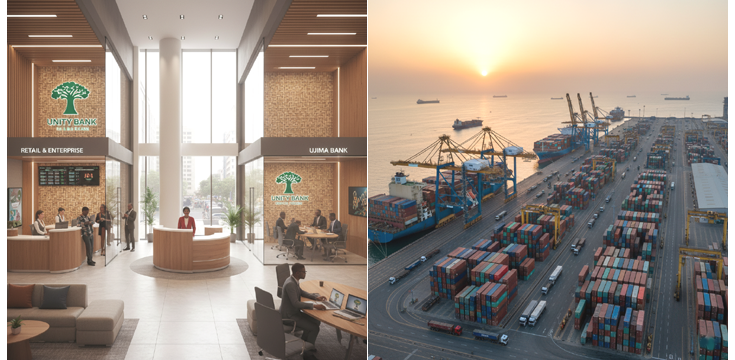
S&P’s analysis, backed by Reuters’ recent reporting, reveals that institutions like the African Development Bank (AfDB) and the Afreximbank are leveraging innovative instruments — from hybrid capital issuance to exposure-exchange agreements — to lift risk-adjusted capital ratios by roughly 10%. The implications are enormous: these tools could unlock billions in additional lending capacity, enabling sovereign and private-sector borrowers to access affordable, long-term finance for infrastructure, climate resilience, and industrial diversification.
As Moody’s Analytics noted in a parallel 2024 report, every 1% increase in lending capacity at African multilaterals can translate into $3 billion to $5 billion in new infrastructure financing across the continent. That multiplier effect could be decisive for a region where the African Union estimates a $100 billion annual gap in infrastructure investment.
Hybrid Capital and the Rise of Financial Sovereignty
The concept of hybrid capital issuance — part debt, part equity — is a financial innovation long used by European and Asian supranationals like the European Investment Bank (EIB) or the Asian Development Bank (ADB). For Africa, it represents a step toward greater autonomy and financial sovereignty.
In practical terms, this means that institutions such as AfDB can issue instruments that count as capital on their balance sheets without diluting shareholder control. Combined with exposure-exchange agreements — essentially insurance mechanisms among multilaterals to spread risk — African banks can now lend more aggressively without jeopardizing credit ratings.
Dr. Akinwumi Adesina, President of the AfDB, stated earlier this year, “Our goal is to build the world’s most trusted and agile development finance institution — one capable of absorbing shocks while fueling inclusive growth.”
That vision is increasingly supported by numbers. The AfDB’s capital adequacy ratio, which stood at 31% in 2023, is expected to exceed 35% by 2026, according to S&P. This exceeds the threshold for AAA-rated multilaterals, positioning the AfDB as a credible peer to institutions like the World Bank.
The Currency Story: Rand and Risk Sentiment
While institutional strength grows, Africa’s currencies remain tethered to global macroeconomic moods. The South African rand, long a bellwether for emerging-market sentiment, held largely steady this week as investors awaited the U.S. Federal Reserve’s interest rate decision. Analysts from Bloomberg Economics and Standard Bank suggest that the rand’s flat trading reflects “wait-and-see” dynamics rather than weakness — but the underlying message is clear: Africa’s markets are still highly sensitive to global monetary shifts.
A 2025 IMF study estimated that for every 100-basis-point change in U.S. interest rates, African currencies move, on average, 2.5% in the opposite direction. This dependence highlights a paradox — as Africa strengthens its internal development finance, its external vulnerabilities remain tied to global capital cycles.
Nonetheless, policy credibility within African central banks has improved. South Africa’s Reserve Bank, Kenya’s Central Bank, and Nigeria’s apex bank have all adopted inflation-targeting regimes and enhanced transparency, signaling maturity. These measures, though modest in global comparison, are crucial in attracting long-term capital.
Green Wheels Turning: Spiro’s $100 Million Leap
If financial resilience is Africa’s new foundation, green innovation is its visible expression. The e-mobility revolution, once confined to Europe and Asia, has now found its African champion: Spiro.
The startup, operational in Kenya, Nigeria, Rwanda, and Uganda, recently raised $100 million led by the Fund for Export Development in Africa (FEDA) — a subsidiary of Afreximbank. This is among the largest e-mobility deals ever on the continent, rivaling the scale of investments seen in Latin America’s renewable transport market.
According to BloombergNEF, Africa’s two-wheeler market exceeds 30 million vehicles, with urban areas suffering chronic air pollution and traffic inefficiencies. Electrifying even 10% of that fleet could reduce emissions by 20 million tonnes of CO₂ annually while saving import-dependent countries millions in fuel subsidies.
McKinsey & Company’s 2024 Africa Energy Outlook predicts that the continent’s EV adoption, currently below 1%, could rise to 7–10% by 2030, primarily through two-wheelers and fleet vehicles. Spiro’s focus on battery-swap infrastructure — localized, fast, and low-cost — could make Africa a laboratory for scalable electric mobility models suitable for other emerging markets.
For India, this shift presents both a challenge and an opportunity. Indian battery manufacturers, EV component suppliers, and renewable energy investors are now eyeing partnerships in Africa, supported by India’s Exim Bank and private giants like Tata Motors and Ola Electric. The India-Africa Forum Summit 2024 saw New Delhi pledge $10 billion in new credit lines for clean energy and transport projects — many of which align with the trajectory of companies like Spiro.
Agriculture Finance: Feeding Growth, Not Just People
At the base of Africa’s economic pyramid lies agriculture — employing nearly 60% of the continent’s workforce but contributing less than 20% of GDP due to chronic underinvestment. This is why the AfDB’s latest allocation from the Global Agriculture and Food Security Program (GAFSP) — about $14 million — is far more significant than its size suggests.
The grant will seed a risk-sharing facility that encourages local banks to lend to smallholder-focused agribusinesses by mitigating default risk. The facility combines grants, guarantees, and technical assistance — an approach the World Economic Forum’s 2024 Future of Food report called “the missing link between capital and capability.”
According to the AfDB, each dollar of such blended finance can catalyze up to $5–$7 in private lending. In practical terms, the GAFSP track could mobilize over $100 million in working capital for agro-input suppliers, distributors, and small enterprises — fueling the continent’s climate-smart agriculture push.
This mirrors similar efforts in India’s NABARD (National Bank for Agriculture and Rural Development), where risk-sharing models transformed smallholder credit flows. Analysts expect such India–Africa knowledge sharing to intensify, especially as both regions face similar challenges: fragmented supply chains, climate risk, and rural credit gaps.
Nigeria’s Bold Tax Gamble
Fiscal consolidation is emerging as another key frontier. Nigeria’s government recently announced a 10% withholding tax on short-term securities — a move designed to broaden its tax base but also one that could affect market liquidity.
While Reuters reports caution from investors worried about declining returns, the policy aligns with Nigeria’s long-term objective of reducing dependence on oil revenues. The Brookings Institution’s Africa Growth Initiative (2025) estimated that Nigeria loses $15 billion annually in potential tax revenue due to narrow collection frameworks. Expanding taxation into financial instruments could generate up to ₦400 billion (roughly $260 million) yearly — funds that can strengthen fiscal health if managed transparently.
Deloitte Africa’s 2024 Fiscal Trends Report cautions, however, that such measures need sequencing. “Introducing taxes on short-term investments without enhancing market depth risks crowding out retail and institutional investors,” the report notes. Nigeria’s challenge is to strike a delicate balance between fiscal prudence and market confidence.
Senegal’s Lesson: Populism vs. Fiscal Prudence
In Senegal, political optimism collided with market realism. After the new prime minister pledged to cut household energy costs and prioritize domestic funding, sovereign bond yields spiked, indicating investor skepticism.
This episode underscores a pattern seen globally: populist fiscal commitments often strain debt sustainability. As the Center for Global Development (CGD) observed in a recent paper, “Fiscal populism in energy pricing can erode years of macroeconomic discipline within a single budget cycle.”
Senegal’s situation mirrors experiences in Argentina and Sri Lanka, where politically motivated subsidies widened deficits. Yet the underlying intent — easing household burdens — remains legitimate. The solution, experts suggest, lies in targeted energy subsidies, renewable transition financing, and deeper local bond markets — all areas where African development banks can now play a catalytic role.
A Continent in Transition: The Global Context
Globally, Africa’s economic transformation is being watched closely. The OECD Development Centre estimates Africa’s GDP growth will average 4.1% annually between 2025 and 2030, outpacing Latin America and the EU. Much of this growth will come from infrastructure, digitalization, and green energy — sectors now backed by a healthier, more confident development banking ecosystem.
Yet the global competition for influence in Africa is intensifying. China’s Belt and Road Initiative remains a dominant force, accounting for over $150 billion in cumulative project financing since 2013. However, as McKinsey Global Institute points out, China’s lending has slowed by nearly 40% in the past three years amid domestic economic pressures. This opens the door for India, the EU, and the U.S. to expand influence through softer instruments — trade, education, and technology partnerships.
India, in particular, enjoys a trust advantage. With deep historical and diaspora ties, bilateral trade between India and Africa reached $103 billion in FY2024, according to India’s Ministry of Commerce, making India Africa’s third-largest trading partner. The emerging focus is on co-development — building value chains, not just trading commodities.
India and Africa: Partners in a Shared Future
India’s engagement with Africa has evolved from aid and infrastructure contracts to strategic co-investment. Institutions like EXIM Bank of India and Invest India have co-created financing mechanisms with the AfDB to support sectors like renewable energy, digital payments, pharmaceuticals, and agritech.
A 2024 study by the Observer Research Foundation (ORF) highlights that 75% of Indian investments in Africa are in sectors that contribute directly to the UN Sustainable Development Goals (SDGs). These include clean energy (Adani Green, Tata Power), healthcare (Serum Institute, Dr. Reddy’s), and education (NIIT, Byju’s Africa initiatives).
The geopolitical subtext is also unmistakable. As Western institutions retreat and China recalibrates, the India–Africa axis could redefine South–South cooperation. Both share democratic traditions, youthful populations, and climate vulnerability — factors that make them natural allies in global forums like the G20, BRICS, and the International Solar Alliance.
In the long run, analysts from Ernst & Young’s 2025 Geopolitical Forecast suggest that India’s role in Africa could resemble Japan’s role in Southeast Asia — a model of developmental partnership rooted in mutual growth rather than dependency.
Predictions: The Road to 2035
Looking ahead, Africa’s financial and geopolitical landscape is likely to evolve along three major trajectories:
- Development Bank Powerhouses:
By 2030, the AfDB, Afreximbank, and other supranationals could collectively manage over $300 billion in assets, rivaling global players like the Inter-American Development Bank. Their success will hinge on disciplined risk management and effective hybrid capital utilization. - Green Urban Transitions:
With growing investments in e-mobility and clean energy, African cities could leapfrog directly into low-carbon infrastructure. This could position Africa as a testbed for sustainable urbanization — offering lessons for Asia and Latin America. - Multipolar Partnerships:
The 2020s will mark the shift from aid to alliance. Africa will increasingly dictate terms of engagement with global partners — India included — focusing on technology transfer, industrial corridors, and value-added exports.
Conclusion: The Age of African Agency
From the AfDB’s capital reforms to Spiro’s electric revolution and Nigeria’s tax recalibration, Africa is quietly reclaiming agency over its financial and developmental destiny. What once looked like fragmented policy efforts now forms a coherent narrative of economic maturity — a continent ready to negotiate from strength, not need.
As global capital searches for growth in a volatile world, Africa’s hybrid model of development banking, private innovation, and South–South collaboration may well become the blueprint for the next generation of emerging economies.
And in that blueprint, India’s partnership — grounded in shared challenges and mutual respect — may prove to be Africa’s most enduring alliance in the decades to come.