
Only if the mandated fine becomes Rs 1 crore personally and Rs 10 crore corporate then the bribe will be Rs 10 – 20 lakhs for an individual accused and Rs 2-3 crore for companies. Corruption will always be there, given India’s culture. The deterrent will be the statute
Food adulteration in India is rampant because there is no punishment as per the law. The punishment for food adulteration in India varies, but it can include imprisonment of (a patsy who can take the hit) for up to six months or a fine of up to ₹1,000, or both, as per the Indian Penal Code, Section 272. Under the Food Safety and Standards Act, 2006, penalties can be much stricter, especially if the adulteration causes harm, with punishments ranging from imprisonment up to six months and a fine of ₹1 lakh for minor offenses, to imprisonment for a term that may extend to one year and a fine of up to ₹3 lakh for non-grievous injury.
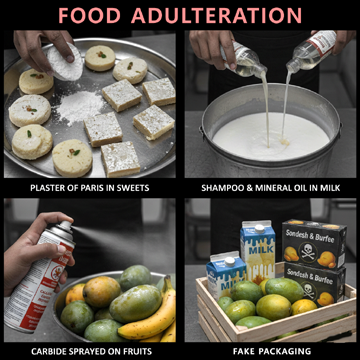
Therefore, for a shop / business dealing in sweets worth at least Rs 5 lakh (5,684.99 United States Dollar) per day the fine / punishment is peanuts. This results in aduleration of food items with impunity adding even poisonous stuff into the food — Sweets, snacks or even meals. if the mandated fine is only Rs 1,000 then the bribe will be Rs 200. The accused will always pay less than the fine to escape the fine. Right? Then, if the mandated fine becomes Rs 1 crore personally and Rs 10 crore corporate then the bribe will be Rs 10 – 20 lakhs for an individual accused and Rs 2-3 crore for companies.
Corruption will always be there in India, given India’s culture. The deterrent will be the statute. The culture is not likely to change but we can change the statute.
The new law: The sections in the Bharatiya Nyaya Sanhita (BNS) dealing with food adulteration are Section 274 for adulterating food or drink for sale and Section 275 for selling noxious or unfit food or drink. Both sections can result in a punishment of up to six months of imprisonment, a fine of up to five thousand rupees, or both. These sections are found in Chapter 15 of the BNS, which covers offenses affecting public health.
BNS Section 274: Adulteration of food or drink intended for sale
What it covers: Intentionally adulterating any article of food or drink to make it noxious, with the intent to sell it as such.
Punishment: Imprisonment for up to six months, or a fine of up to five thousand rupees, or both.
BNS Section 275: Sale of noxious food or drink
What it covers: Selling, offering, or exposing for sale any article that has become noxious or is unfit for consumption, when you know or have reason to believe it is harmful.
Punishment: Imprisonment for up to six months, or a fine of up to five thousand rupees, or both.
Placement in the BNS: Both sections fall under Chapter 15, which deals with offenses affecting the public health, safety, convenience, decency, and morals.
Food adulteration is a significant issue in India, with a recent FSSAI analysis of over 1.5 lakh samples in 2023–24 finding more than 33,000 were non-conforming. Statistics show rising rates over the years, with around 26.4% of samples tested in 2018–19 found to be adulterated compared to 23.4% in 2016–17. Common adulterants include substances added to increase weight or improve appearance, with milk and paneer being particularly high-risk products.
Key statistics and findings
Overall prevalence: In 2023–24, FSSAI found that over 33,000 out of 1.5 lakh food samples tested were non-conforming, highlighting a persistent problem.
Trend over time: The rate of adulteration has increased, rising from 13% in 2011–12 to 23% in 2016–17.
Commonly adulterated products: Dairy products, especially paneer, are frequently found to be unsafe due to harmful chemicals and unidentified substances. Spices are also a concern, with around 12% of samples failing safety standards due to issues like pesticide residues.
Geographical variations: Some states have higher rates, with Uttar Pradesh having a reported 52.32% non-conforming rate in 2018–19, followed by Tamil Nadu and Jharkhand.
Legal action: Legal cases for food adulteration are rising, with over 24,000 civil cases and 4,000 criminal cases filed in 2020–21. The resolution rate for criminal cases can be slow, with only 16% resolved in a three-year period in one specific region.
Specific cases: Instances of brands being found with harmful substances like lead, MSG, or the carcinogen ethylene oxide have been reported, raising concerns about both large and small food producers.
Reasons for the issue
Economic motives: Adulteration is often driven by the desire to increase profits by adding cheaper or non-food substances to increase weight or improve appearance.
Supply and demand: The high demand for certain products, like milk and paneer, creates an environment where adulteration is prevalent due to the large gap between supply and demand.
Enforcement challenges: Inadequate enforcement at the state level is a key factor, as stated by the FSSAI itself.
Steps being taken
Increased surveillance: The FSSAI and state authorities are increasing their surveillance and enforcement activities.
Consumer awareness: Resources like the “EatSmart Cities” campaign and the “DART” (Detect Adulteration with Rapid Tests) booklet are used to educate the public on how to test food for adulteration at home.