
Electoral victories provide governments with opportunities to translate campaign promises into public policy. Success or failure is ultimately measured by the lived experiences of citizens

The political landscape of India has often been defined by dramatic shifts in public sentiment, electoral realignments, and the rise and fall of dominant political forces. Throughout the history of independent India, regional parties and national parties have alternated in influence, reflecting the aspirations, frustrations, and expectations of voters. The scenario of sweeping Bharatiya Janata Party (BJP) victories in both West Bengal and Delhi represents one of the most significant political transformations in contemporary Indian politics. Such victories would not merely change governments; they would alter administrative priorities, governance models, and political narratives at both the regional and national levels.
In West Bengal, a BJP victory ending fifteen years of Trinamool Congress rule would mark a historic transition in a state long known for powerful ideological movements and strong regional identities. Bengal has historically played a pivotal role in shaping India’s political consciousness. From the Bengal Renaissance and the freedom movement to decades of Left Front rule and the subsequent rise of the Trinamool Congress under Mamata Banerjee, the state has repeatedly demonstrated its capacity to influence national political discourse. A decisive BJP victory in such a state would therefore carry implications extending far beyond its borders.
Similarly, Delhi occupies a unique position in India’s federal structure. As the national capital and seat of the Union Government, developments in Delhi often serve as indicators of broader national political trends. A BJP victory replacing a decade of Aam Aadmi Party governance would be interpreted by supporters as a mandate for administrative integration between municipal, state, and central authorities. Critics and supporters alike would recognize that such a change could influence the execution of infrastructure projects, welfare schemes, and environmental initiatives.
The significance of these developments lies in the competing visions of governance they represent. Political parties seek legitimacy by promising solutions to practical challenges such as economic development, law and order, social welfare, public infrastructure, environmental protection, and employment generation. Electoral victories provide governments with opportunities to translate campaign promises into public policy. Success or failure is ultimately measured by the lived experiences of citizens.
In this context, the BJP’s victories in West Bengal and Delhi would symbolize the expansion of a national political project into regions where opposition parties previously maintained strong influence. Such an expansion would inevitably reshape political calculations for future elections, influence coalition-building strategies, and redefine debates around governance, development, and identity.
The political transformations in Bengal and Delhi would also raise broader questions about democratic accountability. Every electoral transition represents a transfer of public trust. Citizens who vote for change often expect visible improvements in administration, transparency, economic opportunities, and public services. Governments inheriting power after long periods of opposition frequently face heightened expectations because they have campaigned as agents of transformation. Consequently, the early decisions of a new administration often attract intense scrutiny from supporters and critics alike.
The scenario described in Bengal and Delhi illustrates how modern democratic politics increasingly revolves around governance performance. While ideological narratives remain important, voters often evaluate governments based on practical outcomes. Infrastructure projects, women’s safety initiatives, welfare delivery mechanisms, industrial investment, and environmental management become key benchmarks by which administrations are judged. The BJP’s assumed victories in these regions would therefore represent not only political success but also the beginning of a demanding test of governance.
West Bengal: A New Political Era and the Promise of Administrative Change
West Bengal’s political history is unique within India. Few states have experienced such prolonged periods of ideological dominance. The state was governed by the Left Front for more than three decades before the Trinamool Congress emerged as the principal vehicle of political change. A BJP victory securing a substantial majority in the Legislative Assembly would thus represent the third major political era in Bengal’s post-independence history.
One of the central themes of the new administration’s agenda is border security and illegal immigration. Bengal’s geographical location, sharing a long international border with Bangladesh, has made border management a recurring political issue. Successive governments have approached the matter differently, balancing humanitarian considerations, economic realities, and national security concerns. The BJP’s political position has traditionally emphasized stricter border controls and the implementation of measures such as the National Register of Citizens. Supporters argue that such policies strengthen national security, improve demographic transparency, and reduce illegal migration. Critics often express concerns regarding implementation challenges and the potential impact on vulnerable populations.
Another major priority highlighted by the new government is women’s safety. Public concern regarding crimes against women has frequently influenced political debates across India. High-profile incidents often become symbols of broader concerns about law enforcement, judicial responsiveness, and social attitudes. The emphasis on women’s safety reflects an attempt to address these concerns through stronger policing, institutional reforms, and enhanced support mechanisms for victims. Whether such measures succeed depends on effective implementation, resource allocation, and sustained political commitment.
Industrial revival represents another key pillar of the administration’s agenda. Bengal was once among India’s most industrialized regions, hosting major manufacturing and commercial enterprises. Over time, however, concerns regarding labour disputes, regulatory complexity, political instability, and investment climate contributed to industrial decline. Various governments have attempted to reverse this trend with varying degrees of success. The BJP’s proposed efforts to attract investment and encourage business activity reflect a recognition that long-term economic growth depends upon employment generation and industrial expansion.
The cabinet expansion led by Chief Minister Suvendu Adhikari, as described in the scenario, reflects an effort to distribute administrative responsibilities across a broad leadership team. The allocation of portfolios indicates strategic priorities. Women’s welfare, social development, rural administration, sports, tribal welfare, and food distribution are areas that directly affect large sections of the population. Effective governance in these sectors could influence public perceptions of the administration’s performance.
The decision to discontinue religiously categorized stipends and replace them with broader welfare initiatives such as the Annapurna scheme reflects a shift in policy philosophy. The government appears to be emphasizing universal or broad-based welfare programs rather than community-specific financial assistance. Supporters may view this as promoting equal treatment under public policy. Critics may argue that targeted support mechanisms sometimes address specific social realities. Such debates are common in democratic societies and reflect differing views regarding fairness, representation, and resource allocation.
North Bengal development and tribal welfare also occupy prominent positions within the cabinet structure. Historically, these regions have often demanded greater attention to infrastructure, employment, and administrative responsiveness. Targeted development initiatives could potentially strengthen regional integration and address longstanding grievances.
The national significance of a BJP victory in Bengal would be considerable. For decades, the state has been viewed as a challenging terrain for the party. Securing a commanding mandate would demonstrate the party’s ability to expand beyond its traditional strongholds and establish itself as a dominant force in eastern India. Such a development would influence political strategies across the country and encourage other parties to reassess their organizational structures, messaging, and electoral coalitions.
Ultimately, Bengal’s political transformation would be judged not by electoral margins but by outcomes. Voters would expect improvements in governance, economic opportunities, public safety, and administrative efficiency. Meeting these expectations would determine whether the political change becomes a durable realignment or a temporary episode in the state’s dynamic political history.
Delhi’s Transformation: Governance, Infrastructure and Administrative Integration
Delhi occupies a distinctive place within India’s political system. As the nation’s capital, it serves simultaneously as a global city, a major economic centre, and the headquarters of the Union Government. Political developments in Delhi therefore attract attention disproportionate to the territory’s size.
A BJP victory securing a substantial majority in the Assembly would signify a major shift after a decade of governance by the Aam Aadmi Party. Such a transition would be particularly significant because it would align the municipal corporation, the state administration, and the central government under the same political banner. Supporters describe this arrangement as a “triple-engine” model of governance, suggesting that administrative coordination can accelerate project implementation and reduce institutional conflicts.
One of the most visible priorities of the new administration is infrastructure modernization. Urban transportation remains a major challenge in rapidly growing cities. The introduction of electric buses under initiatives such as the DEVI project reflects broader efforts to improve mobility while reducing environmental impact. Electric transportation has gained prominence worldwide as governments seek to address pollution and climate concerns. In Delhi, where air quality has long been a major public issue, such measures carry both practical and symbolic significance.
The effort to clean the Yamuna River represents another critical challenge. The river holds cultural, historical, and ecological importance, yet pollution has remained a persistent problem despite decades of policy initiatives. Effective river restoration requires coordination across multiple agencies, investment in sewage treatment infrastructure, enforcement of environmental regulations, and sustained public engagement. Success in this area would have implications not only for environmental sustainability but also for public confidence in government effectiveness.
The removal of landfill sites is similarly important for urban development. Large landfill accumulations have become symbols of the environmental challenges facing modern cities. Clearing these sites requires significant financial resources and long-term planning. The availability of central government support could potentially accelerate progress on such projects.
Another significant aspect of the administration’s agenda is the implementation of national welfare schemes. Programs such as Ayushman Bharat aim to expand healthcare access and reduce financial burdens associated with medical treatment. The integration of central welfare initiatives into state-level governance reflects an effort to create greater policy uniformity across the country. Supporters argue that this improves efficiency and ensures broader access to benefits. Critics may question aspects of implementation or advocate alternative welfare approaches.
Delhi’s political significance extends beyond governance outcomes. As the national capital, developments in the city often influence public perceptions of political competence and administrative effectiveness. Visible improvements in transportation, environmental management, healthcare delivery, and urban infrastructure can have substantial symbolic value.
The broader challenge facing any administration in Delhi is balancing immediate public expectations with long-term urban planning objectives. Infrastructure projects often require years to produce measurable results, while voters frequently expect rapid improvements. Managing this tension requires effective communication, institutional capacity, and consistent policy execution.
The scenario described suggests an administration seeking to emphasize efficiency, coordination, and development. Whether such goals are achieved depends on numerous factors, including bureaucratic effectiveness, fiscal management, political stability, and public cooperation. Nonetheless, the prospect of aligned governance structures provides an interesting case study in how political integration may influence administrative performance.
From Fascism to Communism: Historical Lessons and Contemporary Relevance
Political transformations in modern democracies often prompt broader discussions about ideology, governance, and historical experience. The reference to the collapse of fascism and communism provides an opportunity to examine how major ideological systems have risen, evolved, and declined over time.
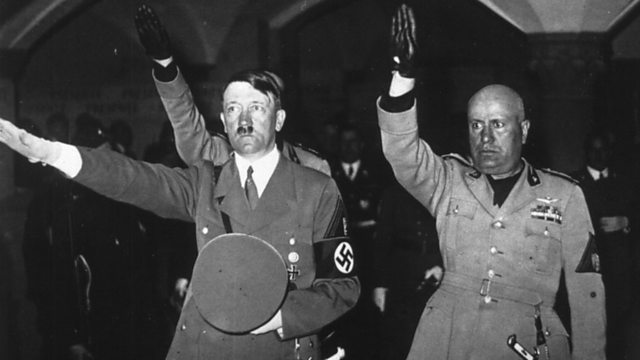
The fall of fascism and the collapse of communism are sometimes discussed together because both involved powerful twentieth-century political movements. However, their historical trajectories were fundamentally different. Classical fascism emerged in the aftermath of World War I amid economic instability, social unrest, and nationalist sentiment. Leaders such as Benito Mussolini and Adolf Hitler built authoritarian regimes that emphasized centralized power, aggressive nationalism, and political repression.
The destruction of fascism occurred primarily through military defeat. World War II placed the Axis powers in direct conflict with a broad international coalition. As military losses mounted, fascist regimes lost their capacity to sustain themselves. Mussolini’s government collapsed in 1943, while Nazi Germany was defeated in 1945. The ideology was discredited not only by military failure but also by revelations regarding war crimes and atrocities committed under fascist rule.
Communism followed a different path. The Soviet Union emerged from the Russian Revolution as the world’s first communist state and later became one of two global superpowers. For much of the twentieth century, communist governments controlled large portions of Europe, Asia, and other regions. Unlike fascism, communism was not destroyed through external military conquest. Instead, its decline resulted largely from internal weaknesses.

Economic stagnation played a central role. State-controlled economies often struggled to achieve efficiency, innovation, and consumer satisfaction. Chronic shortages and declining productivity weakened public confidence. Simultaneously, the financial burdens associated with maintaining military competition during the Cold War placed additional pressure on communist systems.
The reforms introduced by Soviet leader Mikhail Gorbachev were intended to revitalize socialism. Perestroika sought economic restructuring, while Glasnost promoted greater political openness. Yet these reforms produced consequences that many leaders did not anticipate. Increased freedom of expression encouraged criticism of existing institutions, while economic reforms exposed systemic weaknesses.
The revolutions of 1989 transformed Eastern Europe. Citizens in countries such as Poland, Hungary, and Czechoslovakia demanded political change and democratic participation. The fall of the Berlin Wall became an iconic symbol of the broader collapse of communist authority throughout the region. By 1991, the Soviet Union itself dissolved into fifteen independent states.
The historical experiences of fascism and communism offer important lessons. Political systems ultimately depend upon legitimacy, effectiveness, and public consent. Governments that fail to address economic realities, suppress dissent, or become disconnected from societal needs often face growing instability. The mechanisms of collapse may differ, military defeat in one case, internal erosion in another, but the underlying principle remains consistent: political authority is sustainable only when institutions retain public confidence.
In the contemporary world, ideological labels continue to influence political discourse. Yet modern politics is often less about rigid doctrinal adherence and more about practical governance. Economic growth, technological innovation, environmental sustainability, social inclusion, and national security have become central concerns across ideological boundaries.
The survival of communist governments in countries such as China, Vietnam, Laos, Cuba, and North Korea demonstrates that political systems can evolve and adapt. Several of these countries have incorporated significant market-oriented reforms while maintaining one-party political structures.
The political developments imagined in West Bengal and Delhi therefore fit within a larger historical context. Democracies differ fundamentally from authoritarian systems because they permit peaceful transfers of power through elections. Political change occurs through ballots rather than revolutions or wars. Governments rise and fall according to public judgment, and policy debates continue within constitutional frameworks.
As India continues to evolve as the world’s largest democracy, electoral transitions will remain an essential feature of its political life. Whether in Bengal, Delhi, or elsewhere, the ultimate measure of success will not be ideological victory alone but the ability of governments to deliver prosperity, justice, security, and opportunity for the citizens they serve.