
Sanjeev Sanyal has been vocal about how Bengal had been murdered by the communists under Jyoti Basu and Mamata Banerjee. What if BJP high command chooses him to be Bengal CM? He has the administrative ability but does he have the political clout? Will Dilip Ghosh and company listen to him, despite the party’s inner discipline?
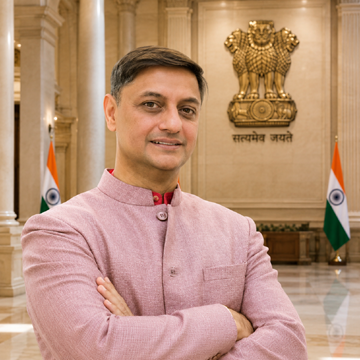
Sanjeev Sanyal represents an unusual proposition in Indian politics: a technocrat with deep roots in policy, economics, and history, yet also someone who embodies the Bengali intellectual tradition that once defined the state’s global identity. In an era where electoral politics is often dominated by slogans, personality cults, and welfare arithmetic, Sanyal’s profile appears almost countercultural. Sanyal has been vocal about how Bengal had been murdered and hijacked. He is the fit man for the job to put Bengal back in its rightful place. What if BJP high command chooses him to be Bengal CM? He has the administrative ability but does he have the political clout? Will Dilip Ghosh and company listen to him, despite the party’s inner discipline?
The BJP itself has a history of surprising observers with chief ministerial selections. Few anticipated Yogi Adityanath emerging as the face of governance in Uttar Pradesh after the BJP’s sweeping victory there. Similarly, several BJP-led states have seen leadership choices that prioritised ideological signalling or administrative alignment over conventional political calculations. Bengal may therefore witness another such departure from predictable templates.
The state’s problems are fundamentally structural rather than cyclical. Bengal is not dealing merely with potholes, electricity shortages, or administrative inefficiency. It is grappling with the long-term consequences of industrial decline, labour militancy, capital flight, demographic pressure, urban decay, and the erosion of institutional confidence. Once home to some of India’s most important industrial houses, trading networks, and intellectual institutions, Bengal today struggles to attract large-scale investment or retain entrepreneurial talent.
This decline has been gradual but relentless. Factories moved out, business families relocated, port activity diminished, and the political discourse increasingly revolved around welfare distribution rather than wealth creation. While other Indian states aggressively competed for manufacturing, logistics, technology investment, and infrastructure, Bengal often appeared trapped within ideological battles of the twentieth century.
That is why the debate over leadership matters so profoundly. The next chief minister cannot merely be an electoral tactician. Bengal requires someone capable of understanding capital flows, urban systems, global supply chains, demographic economics, and institutional reform. It requires a leadership model that sees governance not simply as politics but as state reconstruction.
Many of the names traditionally floated within the BJP ecosystem in Bengal are experienced organisers or mass campaigners. Some are ideological loyalists who built the party at the grassroots level; others are defectors from rival political formations who bring electoral arithmetic and caste or regional influence. These leaders undoubtedly possess political value, but Bengal’s current moment may require something beyond conventional politics.
This is where Sanjeev Sanyal emerges as a distinctive possibility. As a member of the Economic Advisory Council to the Prime Minister and former Principal Economic Adviser to the Government of India, he has operated at the highest levels of policymaking. His professional experience spans economics, financial markets, environmental policy, urban theory, and macroeconomic strategy. Unlike many politicians who acquire administrative exposure only after entering office, Sanyal’s career has revolved around understanding systems and designing long-term policy frameworks.
More importantly, his intellectual orientation aligns with the kind of structural thinking Bengal desperately needs. He has consistently argued that eastern India’s economic decline represents one of the biggest imbalances within the Indian growth story. While western and southern states accelerated through manufacturing, logistics, technology, and export-oriented growth, large parts of eastern India, including Bengal, lagged behind.
A chief minister who already understands these macroeconomic distortions would begin governance from a position of conceptual clarity rather than political improvisation.
Economic revival as Bengal’s defining political mission
The strongest argument for a Sanyal-led Bengal lies in economics. Bengal’s political debates have for too long focused on redistributive politics while neglecting wealth generation. Yet no state can sustain social welfare indefinitely without expanding its productive economy. Employment, investment, infrastructure, and industrial growth remain the true foundations of long-term political stability.
Historically, Bengal was among the wealthiest regions in the world. The riverine economy of undivided Bengal once powered trade routes stretching across Asia and Europe. Its agricultural productivity, textile industry, maritime commerce, and intellectual capital made it one of the great economic centres of the pre-colonial world. Kolkata itself emerged as the commercial capital of British India because of Bengal’s enormous economic potential.
The tragedy is that much of this legacy eroded after Independence. Partition shattered trade networks, refugee crises strained resources, labour unrest drove industries away, and decades of ideological hostility toward private enterprise deepened economic paralysis. Over time, Bengal developed a reputation for political volatility and bureaucratic complexity, discouraging both domestic and international investors.
Sanjeev Sanyal’s worldview directly addresses these structural weaknesses. Unlike traditional politicians whose economic understanding is often shaped by electoral populism, Sanyal approaches development through the lens of systems thinking. His writings and public interventions repeatedly emphasise the importance of infrastructure, urban design, logistics networks, and institutional efficiency in driving economic growth.
His experience in international finance is particularly significant. Having worked in global financial institutions and policy circles, Sanyal understands how investors perceive risk, opportunity, governance quality, and regulatory stability. This matters enormously for Bengal because rebuilding investor confidence is perhaps the single biggest challenge the state faces.
Investment decisions today are not driven merely by tax incentives. Investors look for predictable governance, infrastructure readiness, efficient urban systems, labour stability, and political confidence. Bengal’s image over the past several decades has often worked against it in these areas. A technocratic chief minister with global credibility could potentially alter that perception.
Sanyal’s understanding of urbanisation could also become transformative. Kolkata remains one of India’s most historically important cities, yet it suffers from chronic infrastructural stress, ageing systems, congestion, and uneven urban planning. Sanyal has frequently spoken about organic urban growth, walkability, environmental balance, and infrastructure efficiency. These ideas are not abstract intellectual exercises; they are directly relevant to a city struggling to modernise without losing its historical character.
He has also discussed the strategic importance of maritime infrastructure and eastern India’s port ecosystem. Bengal’s geographic location gives it enormous untapped potential as a logistics and trade hub connecting mainland India to Southeast Asia and the Bay of Bengal region. Revitalising port-led development, inland waterways, warehousing, and export-oriented manufacturing could fundamentally reshape Bengal’s economy.
Such a vision requires more than political rhetoric. It requires someone capable of understanding the interconnected nature of modern economic ecosystems. In that sense, Sanyal would not simply administer Bengal’s economy; he would attempt to redesign its architecture.
This distinction is crucial. Traditional governance often focuses on managing decline more efficiently. Bengal, however, may need governance that actively reverses decline.
A Bengali intellectual with international stature
One of the BJP’s persistent challenges in Bengal has been perception. Despite its electoral gains, the party is still viewed by many sections of Bengali society as culturally external to the state’s traditional intellectual and social identity. Organisational expansion alone cannot entirely solve this problem. Political legitimacy in Bengal has historically been deeply intertwined with culture, language, literature, and intellectual symbolism.
Sanjeev Sanyal occupies a unique position in this context. Born in Kolkata and shaped by the Bengali intellectual tradition, he possesses the cultural authenticity that many voters seek in a state leader. Yet he simultaneously represents a cosmopolitan, globally connected identity that appeals to urban professionals, entrepreneurs, and younger aspirational classes.
This duality could prove politically powerful. Bengal has long admired intellectual achievement. From the Bengal Renaissance to modern literary and political movements, the state’s self-image has been tied to ideas, debate, scholarship, and cultural sophistication. A technocratic economist-author as chief minister would therefore resonate with a deeply embedded aspect of Bengali identity.
Sanyal’s educational and professional background further strengthens this perception. Educated at prestigious global institutions and recognised internationally for his policy work, he brings credibility that transcends state politics. His recognition as a global policy thinker gives him stature not only within India but also in international economic and academic circles.
This matters because Bengal today faces a crisis not merely of economics but of confidence. Large sections of its educated middle class have become cynical about governance and disengaged from political participation. Many talented Bengalis have migrated to other states or countries in search of opportunities. Reversing this psychological decline requires leadership that inspires confidence rather than merely manages expectations.
Sanyal’s profile could help bridge that gap. He represents success without abandoning cultural rootedness. He combines global exposure with unmistakably Bengali intellectual instincts. In a political landscape often dominated by populist theatrics, such a figure would appear refreshingly different.
His family background also contributes to this image. Connected to India’s freedom movement and administrative history, Sanyal embodies continuity with a certain tradition of public service and intellectual engagement. This allows him to project legitimacy not as an imported technocrat but as someone deeply connected to Bengal’s historical evolution.
For the BJP, this is strategically important. The party’s long-term success in Bengal depends not only on electoral arithmetic but also on cultural integration. A leadership figure like Sanyal could soften resistance among sections of society that remain sceptical of the BJP’s cultural fit within Bengal.
At the same time, his governance-oriented image may appeal to those voters who are increasingly prioritising economic opportunity over ideological polarisation. Urban middle-class voters, young professionals, entrepreneurs, and the Bengali diaspora may find in him a leadership model more aligned with twenty-first century aspirations.
Reframing Bengal’s political narrative
Perhaps the most compelling aspect of the Sanjeev Sanyal proposition is narrative transformation. Bengal’s crisis is not merely material; it is psychological and civilizational. A society that once saw itself as intellectually and economically pioneering gradually became defensive, inward-looking, and excessively dependent on state structures.
Sanyal has often argued that Bengal suffers from what could be described as an erosion of aspiration. Such observations have sometimes attracted criticism, but they also demonstrate a willingness to confront uncomfortable realities rather than hide behind political sentimentality. This willingness to challenge entrenched narratives may be exactly what Bengal requires.
For decades, politics in the state has frequently revolved around grievance, nostalgia, and subsidy frameworks. Economic stagnation was often rationalised through ideological rhetoric or cultural exceptionalism. Yet nostalgia alone cannot generate employment, attract investment, modernise infrastructure, or create opportunities for future generations.
A chief minister who frames governance as a project of renewal rather than mere administration could fundamentally alter public discourse. Instead of asking how benefits should be distributed, the conversation could shift toward how prosperity should be created. Instead of romanticising past glory, the focus could move toward rebuilding competitiveness.
This aligns with the BJP’s broader national narrative of civilizational revival, but Sanyal would likely interpret that idea through the lens of economic pragmatism rather than purely ideological symbolism. That distinction matters in Bengal, where intellectual credibility remains culturally significant.
Unlike conventional politicians, Sanyal would not be heavily dependent on local patronage networks or factional calculations. This could give him greater freedom to pursue disruptive reforms. Bureaucratic restructuring, investment facilitation, urban redesign, educational reforms, and institutional accountability often face resistance from entrenched interests. A technocratic outsider may be better positioned to challenge these structures.
Of course, disruption carries risks. Bengal’s political culture is intensely combative and deeply networked. Any attempt at structural reform would inevitably encounter resistance from bureaucratic inertia, political opponents, labour interests, and sections of civil society accustomed to existing arrangements.
Yet the alternative, incrementalism, may no longer be sufficient. Bengal’s relative decline has persisted for too long to be reversed through cosmetic adjustments. What the state potentially requires is a complete reimagining of governance priorities.
This is why the debate over Sanyal is ultimately not about one individual but about a governance philosophy. Should Bengal continue to be governed through traditional political instincts, or should it experiment with a more technocratic, policy-driven model?
The answer to that question could shape the state’s trajectory for decades.
Administrative capability versus electoral experience
The most obvious criticism of a Sanjeev Sanyal candidature is the absence of direct electoral experience. Bengal is not an easy state to govern. Its politics are emotionally charged, organisationally dense, and historically confrontational. Managing such an environment requires political instincts that cannot always be learned from policy papers or economic frameworks.
Critics would argue that administrative competence and political legitimacy are not interchangeable. A chief minister must negotiate party factions, manage legislators, communicate emotionally with voters, respond to crises, and survive relentless political attacks. Technocrats often struggle in such environments because governance is not merely about efficiency; it is also about power management.
These concerns are legitimate. However, they also assume that traditional political experience necessarily produces effective governance. Bengal’s recent history offers little evidence for that assumption. Many experienced politicians have governed the state, yet structural decline continued.
Sanyal’s supporters would counter that his experience within the Union government represents a different but equally valuable form of administrative exposure. As Principal Economic Adviser and member of the Prime Minister’s Economic Advisory Council, he has participated in high-level policymaking involving multiple ministries, international negotiations, institutional coordination, and strategic economic planning.
Such roles require intellectual discipline, bureaucratic navigation skills, and long-term thinking. They also involve working within complex political ecosystems where consensus-building and institutional management are essential. While this differs from electoral politics, it is not devoid of governance experience.
Moreover, modern governance increasingly depends on specialised expertise. Economic competition between states now revolves around attracting investment, managing infrastructure, developing logistics networks, improving urban systems, and integrating with global supply chains. These are areas where technocratic competence may matter more than traditional political charisma.
The BJP’s organisational structure could also compensate for some of the political limitations of a technocratic chief minister. Under leaders like Narendra Modi and Amit Shah, the party has demonstrated an ability to centralise political management while allowing chief ministers to focus more heavily on governance delivery.
In such a model, the party apparatus handles mobilisation and electoral strategy while the chief minister concentrates on administration and reform. This division of labour has worked in several contexts across India and may prove especially useful in Bengal, where rebuilding governance credibility is as important as maintaining political momentum.
Furthermore, Sanyal’s outsider status within Bengal’s faction-ridden political environment could become an advantage. Without deep entanglement in local rivalries, he may be better positioned to select administrators and advisers based on competence rather than factional loyalty.
That possibility alone differentiates him from many conventional contenders.
Why the BJP may consider a new leadership template
The BJP’s Bengal unit includes several influential leaders with strong organisational credentials and electoral experience. Some have spent years building the party from the ground up; others have defected from rival formations and brought significant political capital with them. Each possesses strengths within the conventional framework of state politics.
Yet each also carries limitations. Career politicians are often deeply embedded within factional structures. Defectors may raise questions of ideological consistency. Organisational leaders may lack administrative exposure. In a state requiring structural reconstruction, these limitations become more visible.
Sanjeev Sanyal, by contrast, represents a relatively unencumbered option. His lack of entrenched political alliances could allow for a governance-first administration focused more on institutional rebuilding than patronage management. His technocratic image may also attract professionals, entrepreneurs, academics, and diaspora investors who have largely remained detached from Bengal’s political process.
The symbolism of such a choice would also matter enormously. It would signal that the BJP intends to govern Bengal differently rather than merely replace one political establishment with another. It would suggest an emphasis on policy, economic revival, and institutional reform over conventional identity-based politics.
For the BJP nationally, such a move would reinforce the party’s image as willing to experiment with leadership models. It would demonstrate confidence in governance-oriented politics at a time when urban voters increasingly prioritise economic opportunity and administrative efficiency.
There are risks, certainly. A technocratic experiment could face resistance from local political actors unused to centralised reform-oriented governance. Opposition parties would likely portray Sanyal as disconnected from grassroots realities. Questions about electoral legitimacy would persist.
Yet transformative moments often involve calculated risks. Bengal’s current situation may require precisely such a gamble. The state’s problems are too deep for cosmetic governance. Its economic stagnation, infrastructural decay, and psychological decline require bold structural interventions.
The recent electoral mandate provides the BJP with a rare opportunity to redefine Bengal’s trajectory. Choosing a safe, predictable candidate may ensure short-term political stability, but it may not generate the momentum necessary for long-term transformation. Choosing Sanyal would be a far more ambitious move, one that prioritises reconstruction over continuity.
Ultimately, the debate is about what kind of future Bengal wants. Does it wish to remain trapped within familiar political cycles, or does it seek a more radical reset driven by ideas, data, and long-term strategic thinking?
Sanjeev Sanyal represents the possibility of that new template. He is not the obvious choice, and that may precisely be why he stands out. History often rewards leaders who emerge outside conventional expectations during moments of structural transition.
Bengal today stands at such a crossroads. If the BJP genuinely intends not merely to win the state but to transform it, then the search for leadership cannot remain confined to traditional political formulas. In that search, Sanjeev Sanyal emerges not simply as a potential chief ministerial candidate, but as a broader proposition, that Bengal can once again aspire to be governed by intellect, vision, and economic imagination as much as by politics itself.