
India is one of the largest producers of sugar in the world, driven by extensive sugarcane cultivation across states like Uttar Pradesh, Maharashtra, and Karnataka. All this bagasse from sugarcane can produce DME gas to replace India’s LPG imports 100%
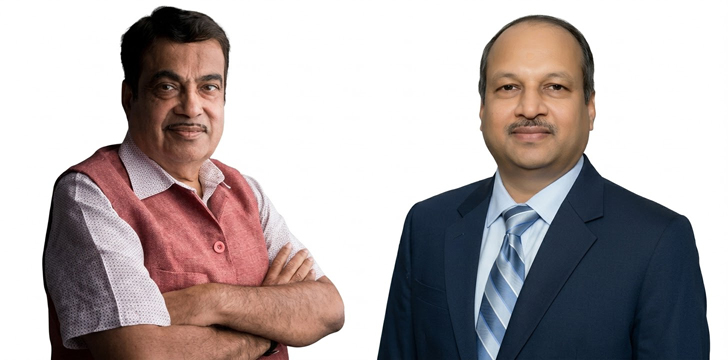
When Nitin Gadkari argued that India should move away from excessive sugar production and diversify into ethanol and methanol, the statement was seen by many as disruptive, even uncomfortable. India’s sugar economy is deeply entrenched, politically, economically, and socially. Millions of farmers depend on sugarcane cultivation, and the sugar industry has long enjoyed structural protection.
Yet, in hindsight, Gadkari’s argument was not merely about agriculture. It was about energy security, economic efficiency, and environmental sustainability. His emphasis on ethanol and methanol was part of a broader vision: converting agricultural surplus and waste into fuel, thereby reducing dependence on imports while creating new value chains.
Today, that vision appears increasingly relevant as Indian scientists push the frontier further with the development of dimethyl ether (DME), a clean-burning fuel that could potentially replace liquefied petroleum gas (LPG) in households.
The sugar economy and its structural distortions
India is one of the largest producers of sugar in the world, driven by extensive sugarcane cultivation across states like Uttar Pradesh, Maharashtra, and Karnataka. However, the economics of sugar production are far from efficient.
Sugarcane is a water-intensive crop, often grown in regions facing water stress. It requires heavy subsidies, price controls, and political intervention to remain viable. The mismatch between production and demand frequently leads to surplus stocks, forcing the government to intervene with export incentives or buffer stocking schemes.
This cycle creates distortions. Farmers continue to grow sugarcane because of assured procurement, even when it may not be the most sustainable or profitable option. Mills accumulate debt, payments to farmers get delayed, and the entire ecosystem becomes dependent on policy support.
Gadkari’s suggestion to “stop producing sugar” was not literal in an absolute sense but indicative of the need to rebalance priorities. Instead of converting sugarcane solely into sugar, it could be diverted toward ethanol and other fuels, creating a more resilient and diversified economic model.
Ethanol blending and India’s evolving fuel strategy
India has already made significant progress in ethanol blending. The government’s ethanol blending program aims to mix ethanol with petrol to reduce crude oil imports and lower emissions.
Ethanol can be produced from sugarcane, molasses, and even grains. By incentivizing ethanol production, the government has provided an alternative revenue stream for sugar mills and farmers. This has helped reduce surplus sugar stocks while contributing to energy security.
The success of ethanol blending demonstrates the viability of biofuels as part of India’s energy mix. However, ethanol is only one piece of the puzzle. Methanol and its derivatives, including DME, offer additional possibilities.
Methanol and the pathway to DME
Methanol is a versatile chemical that can be produced from a wide range of feedstocks, including natural gas, coal, biomass, and waste materials. It serves as a building block for various fuels and chemicals.
Dimethyl ether (DME) is produced by dehydrating methanol using a catalyst. It shares several properties with LPG, making it suitable for cooking and heating applications.
The ability to produce DME from diverse feedstocks is particularly significant for a country like India, which has abundant agricultural residues and waste. Instead of burning stubble or disposing of waste inefficiently, these materials can be converted into valuable fuel.
The breakthrough at CSIR–National Chemical Laboratory
The development of indigenous DME production technology by CSIR–National Chemical Laboratory in Pune marks a significant milestone in India’s energy journey.
Scientists at the laboratory have developed a patented process that uses an indigenously designed catalyst to convert methanol into DME efficiently. This is not just a scientific achievement but a strategic one, as it reduces dependence on imported technologies.
The work led by Thirumalaiswamy Raja reflects decades of research and persistence. As he noted, the foundation for this innovation was laid nearly two decades ago, underscoring the importance of long-term investment in scientific research.
Why DME could replace LPG
Liquefied petroleum gas (LPG) is widely used in Indian households for cooking. However, India imports a significant portion of its LPG requirements, making it vulnerable to global price fluctuations and supply disruptions.
DME offers several advantages as an alternative.
First, it burns much cleaner than LPG. Emissions of soot, sulphur oxides, nitrogen oxides, and particulate matter are significantly lower. This has direct implications for indoor air quality and public health.
Second, DME has comparable thermal efficiency, meaning it can perform effectively for cooking and heating without requiring major behavioral changes from users.
Third, and perhaps most importantly, DME can be stored and transported using existing LPG infrastructure with minimal modifications. The fact that it can be handled at around 10-bar pressure makes it compatible with current cylinders and distribution systems.
This compatibility reduces the barriers to adoption, making large-scale transition more feasible.
From lab to pilot plant
The technology developed at CSIR-NCL has already moved beyond the laboratory stage. A pilot plant capable of producing around 250 kilograms of DME per day has demonstrated the feasibility of the process.
This is a crucial step in the innovation lifecycle. Many technologies fail to transition from lab-scale to real-world applications due to scalability challenges. The successful operation of a pilot plant indicates that these challenges are being addressed.
The next step is the development of an industrial-scale demonstration facility with a capacity of around 2.5 tonnes per day. Scaling up production will be critical to achieving cost competitiveness and commercial viability.
Economic implications and foreign exchange savings
India’s heavy reliance on imported energy has long been a concern. Crude oil and LPG imports place a significant burden on the country’s foreign exchange reserves.
Estimates suggest that replacing just 8% of India’s LPG consumption with DME could save nearly ₹9,500 crore annually in foreign exchange. This is not a trivial figure. It represents a substantial reduction in import dependence.
Moreover, domestic production of DME would create new industries, generate employment, and stimulate rural economies. The value chain—from feedstock collection to fuel production—offers multiple opportunities for economic activity.
Environmental benefits and sustainability
The environmental advantages of DME extend beyond cleaner combustion.
If produced from biomass or waste, DME can contribute to a circular economy. Agricultural residues, which are often burned in fields causing severe air pollution, can be converted into fuel. Urban waste can also be utilized, reducing landfill burdens.
Lower emissions of harmful pollutants make DME a more sustainable option compared to conventional fossil fuels. In the context of global climate commitments, such innovations are essential.
India faces the dual challenge of meeting growing energy demand while reducing environmental impact. DME provides a pathway to address both.
Energy security in a volatile world
Global energy markets are inherently volatile. Geopolitical tensions, supply chain disruptions, and price fluctuations can have significant impacts on energy-importing countries.
For India, reducing dependence on imported fuels is not just an economic objective but a strategic imperative.
The development of indigenous technologies for fuel production enhances resilience. It allows the country to leverage its own resources and capabilities.
DME, with its flexibility in feedstock and compatibility with existing infrastructure, fits well into this strategy.
Challenges on the road to adoption
Despite its potential, the transition to DME is not without challenges.
First, there is the issue of scaling up production. Building industrial-scale plants requires significant investment and coordination between government, industry, and research institutions.
Second, regulatory frameworks need to be updated. Standards for storage, transportation, and usage of DME must be established to ensure safety and reliability.
Third, market acceptance is critical. Consumers and distributors must be convinced of the benefits and reliability of DME.
Fourth, supply chains for feedstock need to be developed. Collecting and processing biomass or waste at scale is a complex task that requires logistical innovation.
Finally, pricing will play a decisive role. DME must be cost-competitive with LPG to achieve widespread adoption.
The broader vision of fuel diversification
The emergence of DME should be seen as part of a broader shift toward fuel diversification.
Ethanol, methanol, biogas, hydrogen, and electric mobility are all components of a multi-pronged strategy to reduce dependence on fossil fuels.
No single solution will suffice. Instead, a combination of technologies tailored to different applications will be necessary.
Gadkari’s emphasis on diversification reflects this understanding. By encouraging the development of multiple fuel pathways, India can build a more resilient and sustainable energy system.
Linking agriculture with energy
One of the most compelling aspects of this strategy is the integration of agriculture with energy production.
Farmers can benefit from new markets for their produce and residues. Instead of relying solely on food crops, they can participate in energy value chains.
This can enhance income stability and reduce vulnerability to price fluctuations.
However, careful planning is required to ensure that food security is not compromised. The balance between food and fuel must be managed thoughtfully.
Innovation and indigenous capability
The development of DME technology at CSIR-NCL highlights the importance of indigenous innovation.
Relying on imported technologies can be costly and strategically limiting. By developing homegrown solutions, India can retain control over critical technologies and adapt them to local conditions.
Investment in research and development is essential for sustaining such innovation. The success of CSIR-NCL demonstrates what can be achieved with long-term commitment.
Policy support and implementation
For DME to become a mainstream fuel, policy support will be crucial.
This may include incentives for production, subsidies for adoption, and integration into existing energy programs.
Public-private partnerships can play a key role in scaling up production and distribution.
Learning from the ethanol blending program, the government can design policies that align incentives across stakeholders.
A turning point for India’s energy future
The convergence of visionary policy ideas and scientific innovation marks a turning point for India’s energy landscape.
Gadkari’s call for diversification and the development of DME technology are not isolated events. They are part of a broader movement toward self-reliance and sustainability.
As the world grapples with climate change and energy insecurity, such initiatives gain even greater significance.
From sugar to fuel, from dependence to self-reliance
The journey from sugarcane fields to clean-burning fuel encapsulates a profound transformation.
What was once seen as agricultural surplus can become a strategic resource. What was once considered waste can be converted into energy.
The deadweight of inefficiencies in traditional systems can be replaced by dynamic, integrated value chains.
The message is clear: diversification is not just an option; it is a necessity.
By embracing ethanol, methanol, and now DME, India has the opportunity to redefine its energy future—reducing imports, improving environmental outcomes, and empowering its people.
In this context, the assertion that “Nitin Gadkari was right” is not merely a statement of validation. It is a recognition of a vision whose time has come.