
Shipping security in the Persian Gulf influences global energy markets, manufacturing costs, and geopolitical alliances. At the same time, tighter import standards in India could alter trade flows, stimulate domestic manufacturing, and transform employment patterns across several sectors of the Indian economy
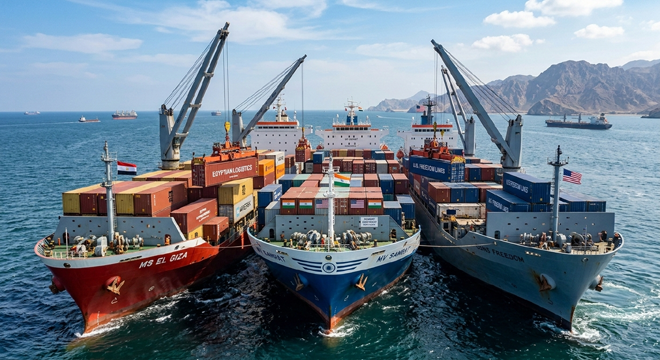
In the interconnected world economy of the twenty-first century, even a few policy decisions taken by major governments can ripple across continents, industries, and labor markets. Two such developments have recently begun attracting serious attention among economists, strategists, and business leaders. The first is the decision by the United States to underwrite and guarantee shipping through the critical maritime chokepoint known as the Strait of Hormuz. The second is the tightening of product standards in India through regulatory frameworks developed by the Bureau of Indian Standards (BIS), which could significantly restrict imports from China if those goods fail to meet the new standards.
At first glance these two developments appear unrelated. One concerns maritime security and energy logistics in the Middle East, while the other deals with product certification and trade regulation in South Asia. Yet together they represent a broader shift in global economic politics. Both decisions reflect attempts by major powers to reshape supply chains, secure strategic routes, and redefine the balance between domestic production and international trade.
The consequences of these policies could be far-reaching. Shipping security in the Persian Gulf influences global energy markets, manufacturing costs, and geopolitical alliances. At the same time, tighter import standards in India could alter trade flows, stimulate domestic manufacturing, and transform employment patterns across several sectors of the Indian economy.
Understanding how these developments interact requires examining the strategic importance of maritime routes, the politics of industrial standards, and the emerging competition between manufacturing centers across Asia.
The strategic importance of the Strait of Hormuz
Few geographic locations play as significant a role in the global economy as the Strait of Hormuz. This narrow passage of water, located between Iran and the Arabian Peninsula, connects the Persian Gulf with the Gulf of Oman and the broader Indian Ocean. Every day, millions of barrels of oil and vast quantities of liquefied natural gas pass through this corridor on their way to markets in Asia, Europe, and North America.
The strait is one of the most critical energy chokepoints in the world. A disruption in shipping there can cause immediate fluctuations in oil prices and energy supplies across the globe. For decades, geopolitical tensions in the region have made the safety of maritime traffic through the strait a matter of international concern.
By announcing that it would act as a guarantor for shipping through the Strait of Hormuz, the United States is effectively signaling its willingness to ensure that commercial vessels can pass safely through the region. Such a guarantee may involve naval escorts, maritime surveillance, and diplomatic pressure aimed at preventing interference with shipping lanes.
This move is particularly significant because a large proportion of global energy exports originate from countries along the Persian Gulf. Any threat to these shipments can create shockwaves in energy markets and affect industries far beyond the Middle East.
Why the United States would underwrite shipping security
The decision by the United States to underwrite maritime shipping in the Strait of Hormuz reflects both economic and strategic considerations. From an economic perspective, stable energy flows are essential for the functioning of global markets. Even though the United States itself has increased domestic energy production in recent years, its allies and trading partners remain heavily dependent on Middle Eastern oil and gas.
From a strategic standpoint, guaranteeing shipping lanes allows the United States to maintain influence over one of the world’s most important economic corridors. Control of maritime security has historically been a cornerstone of American global power, and maintaining a presence in key chokepoints reinforces that influence.
Another reason for such a policy may be the increasing competition between major powers in the Indo-Pacific region. Secure energy routes benefit countries across Asia, including India, Japan, and South Korea, which rely heavily on imported oil.
By guaranteeing safe passage through the strait, the United States strengthens economic ties with these countries and reinforces existing security partnerships.
The global impact on energy markets
When shipping lanes in the Persian Gulf are considered secure, energy markets tend to stabilize. Oil traders, shipping companies, and governments can plan their operations with greater certainty. Insurance premiums for tankers traveling through the region also decline, reducing overall transportation costs.
Lower shipping risk can translate into lower fuel prices for many countries. Since energy costs influence manufacturing, transportation, and electricity generation, the effects can cascade across multiple sectors of the global economy.
For countries heavily dependent on imported oil, such as India, stability in the Strait of Hormuz is particularly important. A reliable flow of energy allows industries to operate without sudden price shocks, helping maintain economic growth.
However, the American guarantee also has geopolitical implications. It reinforces the strategic presence of the United States in the region and may shape how other global powers approach energy security.
India’s tightening of import standards
While maritime security in the Middle East addresses global supply routes, India’s tightening of product standards addresses another aspect of international trade: quality control and regulatory compliance.
The Bureau of Indian Standards has increasingly issued new technical requirements for a wide range of imported goods. These standards cover product safety, manufacturing quality, environmental impact, and performance specifications.
If imported goods fail to meet BIS certification requirements, they cannot legally enter the Indian market. Although these rules apply to all exporters, they have particular implications for Chinese manufacturers, who currently supply a large share of consumer goods, electronics, machinery, and industrial inputs used in India.
By enforcing stricter standards, India may effectively limit the volume of low-cost imports entering its market.
The role of standards in economic strategy
Industrial standards are not merely technical regulations; they can also serve as strategic economic tools. Governments sometimes use standards to protect domestic industries, encourage local manufacturing, and ensure product safety.
When a country introduces rigorous certification processes, foreign manufacturers must invest in compliance measures such as quality testing, redesigning products, or altering production processes. Some exporters find it easier to withdraw from the market rather than undertake these changes.
In India’s case, the introduction of detailed BIS standards may encourage foreign companies to set up local manufacturing facilities in order to meet regulatory requirements more efficiently.
Such developments could lead to increased investment in Indian factories, supply chains, and industrial infrastructure.
Impact on Chinese exports
China has long been the world’s largest manufacturing hub, exporting vast quantities of goods to countries across Asia, Africa, Europe, and the Americas. Its dominance in global supply chains stems from large-scale industrial capacity, efficient logistics networks, and competitive pricing.
However, stricter BIS standards could create new challenges for Chinese exporters targeting the Indian market. Products that previously entered India without extensive certification may now require detailed testing and documentation.
Some manufacturers may adapt by improving product quality and compliance. Others may shift production to factories located within India or in neighboring countries to bypass regulatory hurdles.
In either case, the shift would alter existing supply chains and reduce the direct flow of Chinese manufactured goods into the Indian market.
Opportunities for Indian manufacturing
For India, tighter import standards can create opportunities for domestic industries. When imports become more difficult or expensive, local manufacturers often gain an advantage in the domestic market.
Several sectors could benefit from such a shift. Consumer electronics, electrical appliances, automotive components, and industrial machinery are areas where Indian manufacturing has been expanding but still faces strong competition from imports.
If imports decline due to stricter standards, Indian companies may find it easier to increase production and capture a larger share of the domestic market.
Such growth could stimulate investment in factories, machinery, and supply chains within India.
Effects on the Indian job market
The impact on employment could be significant. Manufacturing industries typically require large numbers of workers across multiple skill levels. From assembly line operators to engineers and logistics specialists, industrial growth creates diverse employment opportunities.
If domestic production increases due to import restrictions, job creation could occur in several areas. Factory employment would expand as companies scale up production. Ancillary industries such as packaging, transportation, and equipment maintenance would also grow.
In addition, higher demand for technical skills could encourage educational institutions to expand training programs in engineering, industrial design, and quality assurance.
Over time, such developments could strengthen India’s position as a global manufacturing center.
Interaction with global supply chains
The combined effect of secure maritime shipping through the Strait of Hormuz and stricter manufacturing standards in India could reshape international supply chains.
Energy stability supports industrial expansion because reliable fuel supplies keep factories running efficiently. At the same time, regulatory shifts can redirect production toward new locations.
If companies decide to manufacture goods in India rather than export them from China, the structure of global trade may gradually shift. Supply chains may increasingly link energy imports from the Middle East with manufacturing hubs in South Asia.
Such transformations would influence shipping routes, investment flows, and trade partnerships.
The geopolitical dimension
Both developments also have geopolitical implications. The United States’ role in guaranteeing shipping lanes strengthens its strategic position in the Middle East and the Indo-Pacific region.
India’s regulatory policies, meanwhile, signal a desire to reduce dependence on foreign manufacturing and build stronger domestic industries.
Together these moves reflect broader trends in global politics, where economic security and national resilience are becoming increasingly important considerations.
Countries are seeking to ensure that critical supply chains—whether energy routes or manufacturing inputs—remain under reliable and secure conditions.
Challenges and potential drawbacks
While these policies offer potential benefits, they also present challenges. Stricter import standards can sometimes increase costs for consumers if domestic industries are unable to produce goods as cheaply as foreign manufacturers.
Companies that rely on imported components may also face disruptions if suppliers cannot meet new certification requirements.
Similarly, guaranteeing maritime shipping in the Strait of Hormuz may increase geopolitical tensions if rival powers view such actions as attempts to dominate strategic waterways.
Balancing economic security with international cooperation will therefore remain an ongoing challenge for policymakers.
Long-term implications for global trade
Looking ahead, the combination of secure shipping routes and shifting manufacturing regulations could accelerate changes already underway in the global economy.
For decades, globalization encouraged companies to concentrate manufacturing in a few low-cost locations. Today many governments are reconsidering this model in favor of more diversified supply chains.
India’s efforts to strengthen domestic manufacturing align with this broader trend. By combining regulatory standards with industrial policy, the country may attract investment from companies seeking alternatives to existing production hubs.
A transforming economic landscape
The global economy rarely changes through a single dramatic event. Instead, transformation usually occurs through a series of interconnected decisions taken by governments, corporations, and international institutions.
The United States’ guarantee of maritime shipping through the Strait of Hormuz and India’s tightening of import standards represent two such decisions. Each addresses a different aspect of the global economic system—energy logistics and industrial production—but both reflect a common objective: securing national and regional economic stability.
For India, these developments could open new pathways toward industrial growth and job creation. For the wider world, they signal a gradual shift toward a more strategically managed form of globalization.
In the coming years the success or failure of these policies will become clearer. What is already evident, however, is that the intersection of maritime security, industrial standards, and global trade is reshaping the economic landscape in ways that will influence millions of workers, businesses, and consumers around the world.