
The liver must process these damaged fats. Over time, excessive intake of poor-quality fats contributes to non-alcoholic fatty liver disease (NAFLD), a condition increasingly common in India. Fat accumulates in liver cells, impairing function. What begins as silent fat deposition can progress to inflammation, fibrosis, and even cirrhosis. The only guard is not more expensive brands but our sense of smell and taste. If we train our children to detect adulteration with smell and taste then they are home and dry
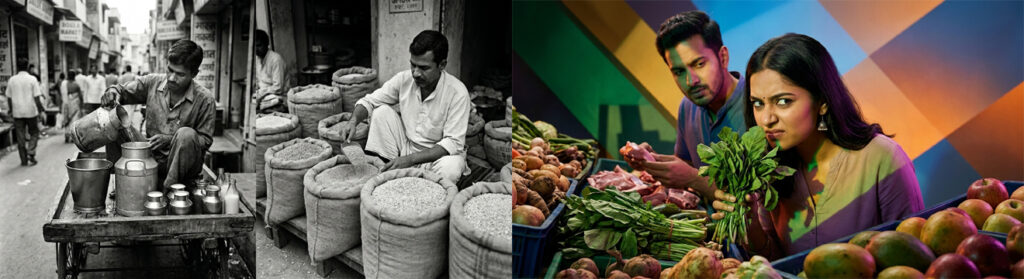
There was a time when food adulteration in India meant a little water in milk, brick powder in chilli powder, or papaya seeds mixed into black pepper. It was deception, but it was crude. Today, the deception has turned industrial, chemical, and far more insidious. The Indian thali, once a symbol of balance and nourishment, is increasingly vulnerable to substances never meant for human consumption: palm oil disguised as desi ghee or mustard oil, mineral oil masquerading as edible fat or vegetable oil, oxalates in leafy vegetables, and even rubber solution in factory made bread and other processed foods. The threat is no longer just about taste or short-term illness. It is about long-term organ damage, especially to the liver—the silent workhorse of the human body.
If there is one organ that bears the brunt of this chemical assault, it is the liver. It detoxifies, metabolizes, filters, and stores. It works without complaint, even as toxins accumulate. But when its capacity is overwhelmed, the consequences can be catastrophic. In that sense, adulterated food is not merely a consumer rights issue; it is a public health emergency unfolding slowly, bite by bite.
From petty adulteration to chemical sophistication
Before 2000, most food adulteration in India was small-scale and opportunistic. The local milkman might dilute milk with water. A grain merchant might mix inferior grains into a premium batch. The motive was profit, and the method was simple. While unethical and sometimes harmful, these practices rarely involved synthetic chemicals engineered for industrial use.
The post-liberalization era transformed the food landscape. Rapid urbanization, the rise of packaged food, complex supply chains, and intense price competition created new incentives. The food business became a high-volume, low-margin industry. To survive, some manufacturers and traders turned to cheaper substitutes and chemical enhancements. The goal was not just to increase quantity but to mimic quality—color, texture, aroma, and shelf life—through artificial means.
Cheap unhealthy palm oil became a ubiquitous substitute. Mineral oil, meant for industrial lubrication, found its way into food processing. Artificial ripening agents replaced natural maturation. Non-food-grade colors brightened spices and sweets. In this transformation, food ceased to be purely agricultural produce and became a laboratory product.
Palm oil and the illusion of purity
Palm oil, derived from oil palm fruit, is not inherently toxic. It is widely used globally. The problem arises when it is used deceptively. In India, desi ghee holds cultural, religious, and nutritional significance. It is associated with purity and health. But pure ghee is expensive. Palm oil, far cheaper, can be blended and flavored to resemble ghee in appearance and texture.
The health implications of excessive palm oil consumption are complex. While it contains saturated fats, the real danger lies in how it is processed and reused. In small eateries and sweet shops, palm oil is often reheated repeatedly. Each reheating generates harmful compounds such as aldehydes and trans fats. These compounds increase oxidative stress and inflammation in the body.
The liver must process these damaged fats. Over time, excessive intake of poor-quality fats contributes to non-alcoholic fatty liver disease (NAFLD), a condition increasingly common in India. Fat accumulates in liver cells, impairing function. What begins as silent fat deposition can progress to inflammation, fibrosis, and even cirrhosis.
Thus, when palm oil is used transparently and responsibly, it is one thing. When it is disguised, overused, and chemically degraded, it becomes part of a slow metabolic assault.
Mineral oil: from machinery to meals
One of the most disturbing trends is the use of mineral oil in food. Mineral oil is a petroleum-derived product typically used in machinery, cosmetics, and industrial applications. Certain highly refined grades are permitted in limited food applications, but industrial-grade mineral oil has no place in the human digestive system.
Yet, reports have periodically surfaced of mineral oil being used to enhance shine in fruits and vegetables or to increase the apparent fat content of edible products. In some cases, it has been added to edible oils to increase volume.
When ingested, mineral oil is not metabolized in the same way as natural fats. It can accumulate in body tissues. Chronic exposure may lead to inflammation and impairment of liver function. The liver attempts to process foreign hydrocarbons, but persistent exposure strains detoxification pathways.
The danger is compounded by the invisibility of the threat. Mineral oil is colorless and often odorless. Consumers cannot easily detect its presence. Without rigorous testing and enforcement, it can slip unnoticed into the food chain.
Oxalates and the hidden burden
Oxalates occur naturally in many foods, including spinach and certain leafy vegetables. In moderate amounts, they are not inherently dangerous. However, high levels—whether due to certain agricultural practices, contamination, or concentration processes—can pose health risks.
Excess oxalates bind with calcium to form crystals. While the kidneys are often highlighted in discussions of oxalate overload, the liver also participates in oxalate metabolism. When metabolic pathways are disrupted, oxalate accumulation can contribute to systemic stress.
Industrial agriculture, with its heavy use of fertilizers and growth enhancers, may inadvertently alter the chemical composition of produce. Furthermore, improper storage and processing can concentrate certain compounds. The cumulative effect is that consumers may ingest higher levels of naturally occurring toxins than previous generations.
The problem is not spinach itself or traditional foods. It is the changing chemical environment in which they are grown and processed.
Rubber solution and the dark side of processing
The mention of rubber solution in food sounds like a dystopian exaggeration. Yet, food safety raids have occasionally uncovered the use of non-food-grade adhesives and industrial substances in processed items. In some cases, rubber solution or similar chemicals have been used to enhance elasticity or binding in counterfeit products.
These substances are not designed for human consumption. They may contain volatile organic compounds and solvents harmful to multiple organs. Once ingested, such chemicals require detoxification. The liver’s enzymatic systems attempt to break them down, converting them into water-soluble forms for excretion. This process generates reactive intermediates, which can damage liver cells.
Repeated exposure, even in small amounts, can overwhelm these systems. The damage is not always immediate. It accumulates. By the time symptoms appear—fatigue, jaundice, abdominal discomfort—the injury may already be advanced.
The liver as the silent casualty
The liver is remarkable for its regenerative capacity. It can recover from significant injury. But regeneration has limits. Chronic exposure to toxins leads to persistent inflammation. Inflammatory cells release cytokines, activating fibrogenic pathways. Scar tissue forms. Healthy tissue is replaced with fibrous bands.
In India, liver disease is increasingly common. While alcohol and viral hepatitis are known causes, metabolic and toxin-related liver diseases are rising. Urban lifestyles, processed foods, and chemical exposure create a perfect storm.
Unlike acute poisoning, which triggers immediate alarm, chronic dietary toxin exposure operates quietly. A person may feel healthy for years while liver enzymes slowly rise. Imaging may reveal fatty infiltration. Biopsy may show inflammation. By then, reversing the damage becomes harder.
Thus, adulterated food is not merely about cheating the palate. It is about eroding the body’s detoxification capacity.
The economics of adulteration
Why has adulteration become more chemical and sophisticated? The answer lies in economics. India’s vast population creates enormous demand for affordable food. Consumers are price-sensitive. Retailers compete fiercely. Margins are thin.
When raw material costs rise, unscrupulous actors seek cheaper substitutes. Palm oil is cheaper than milk fat. Industrial dyes are cheaper than natural spices. Synthetic sweeteners are cheaper than sugar. Each substitution, individually small, becomes significant at scale.
Moreover, the fragmented supply chain allows responsibility to be diffused. A manufacturer may blame a supplier. A supplier may blame a farmer. In such an ecosystem, accountability weakens.
Regulatory bodies conduct inspections and raids, but enforcement struggles to keep pace with innovation in deception. Every time one method is exposed, another emerges.
The psychological shift toward suspicion
The idea that “food can be slow death if we are not suspicious of every morsel” reflects a deeper societal anxiety. Trust in food systems has eroded. Consumers increasingly question the origin of ingredients, the authenticity of labels, and the safety of street food and packaged goods alike.
This suspicion, while protective, has costs. It creates stress and undermines cultural traditions centered around shared meals. It fosters a climate where every bite is accompanied by doubt.
Yet, blind trust is no longer viable. Informed skepticism—reading labels, preferring trusted brands, sourcing from reliable vendors, and cooking at home—becomes a form of self-defense.
The rise of ultra-processed foods
Another dimension of the problem is the explosion of ultra-processed foods. These products often contain multiple additives: emulsifiers, preservatives, artificial flavors, and stabilizers. While many are approved for use within limits, cumulative exposure is poorly understood.
The liver metabolizes additives just as it metabolizes medications. When the diet consists largely of packaged items, the chemical burden increases. Combined with environmental pollutants and pharmaceutical residues, the detoxification load grows heavy.
Children are particularly vulnerable. Early exposure to processed foods may shape metabolic pathways, predisposing them to obesity, insulin resistance, and fatty liver disease.
Regulatory frameworks and their limitations
India has a structured regulatory framework for food safety under the Food Safety and Standards Act. Standards are set, inspections conducted, and penalties imposed. Yet enforcement is uneven. Resource constraints, corruption, and the sheer scale of the food market complicate oversight.
Testing infrastructure is limited relative to the volume of products circulating daily. Rural and informal markets are especially difficult to monitor. Adulteration thrives in these blind spots.
Stronger penalties alone may not suffice. What is needed is systemic reform: better traceability, technology-enabled tracking, and consumer awareness.
The cultural cost of compromised food
Food in India is not merely sustenance. It is ritual, hospitality, and identity. Ghee lamps are lit in temples. Sweets mark celebrations. Spices define regional cuisines. When these foods are adulterated, cultural symbols are tarnished.
The attack on the liver is therefore also an attack on trust and tradition. When consumers suspect that even prasad or festive sweets may be chemically enhanced, a subtle cultural injury occurs.
Preserving food integrity becomes an act of cultural preservation.
The way forward: vigilance and responsibility
The solution lies not in paranoia but in vigilance and reform. Consumers can prioritize whole foods, seasonal produce, and home-cooked meals. They can reduce reliance on ultra-processed items. They can support local producers known for ethical practices.
Producers, in turn, must recognize that short-term profit from adulteration risks long-term reputational damage and legal consequences. Transparency can become a competitive advantage.
Government agencies need stronger laboratories, rapid testing kits, and public reporting systems. Technology such as blockchain-based traceability could help map supply chains.
Education is crucial. Teaching children about nutrition, label reading, and food origins fosters informed citizens less likely to be deceived.
Protecting the liver in an era of chemical exposure
Beyond systemic change, individuals can take steps to support liver health. A balanced diet rich in fiber, antioxidants, and natural fats reduces metabolic stress. Avoiding repeated consumption of reheated oils and deep-fried foods lowers toxin intake. Regular health check-ups, including liver function tests, can detect early abnormalities.
Hydration, physical activity, and moderation in alcohol consumption also matter. While these measures cannot neutralize all external toxins, they strengthen the body’s resilience.
The liver’s regenerative power offers hope. When toxic exposure decreases, healing can begin.
Reclaiming the plate
The story of adulterated food in India is not just about palm oil, mineral oil, oxalates, or rubber solution. It is about the transformation of food from a natural product into a chemically manipulated commodity. It is about economic pressures colliding with ethical boundaries. It is about the silent suffering of an organ that works tirelessly without applause.
If food becomes a slow poison, society must respond with urgency. Suspicion alone is insufficient; it must be paired with systemic reform and personal responsibility. The Indian plate, once a symbol of nourishment and harmony, can be reclaimed. But only if vigilance becomes as habitual as eating itself.
The liver, silent and resilient, deserves nothing less.