
The Bernabéu Market experience resembles airport lounges, luxury malls, or cruise ships, environments engineered to maximize dwell time and spending. Food is part of the entertainment product. In contrast, Reale Arena’s Basque offerings provide emotional authenticity. Fans eating local pintxos and traditional snacks experience cultural belonging rather than luxury indulgence
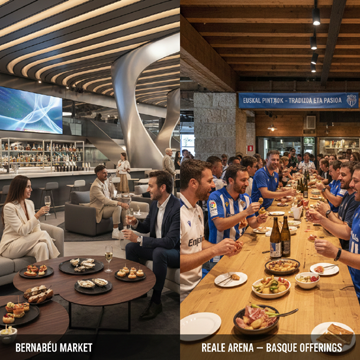
The modern football stadium has quietly transformed from a place where fans eat greasy snacks and shout at referees into a full-blown economic ecosystem that would make a multinational investment bank jealous. The contrast between Real Madrid’s Santiago Bernabéu and Real Sociedad’s Reale Arena perfectly captures this global shift. One represents the hyper-financialized, premium hospitality future of sports infrastructure, while the other remains rooted in regional authenticity and cultural identity. Yet both models tell an important story about how cities, governments, corporations, and fans interact in an era shaped by tourism, consumer spending, urban branding, and global capital flows.
At the newly renovated Santiago Bernabéu in Madrid, the Bernabéu Market opened in November 2025 at Gate 54 with nearly twenty restaurants curated by Grupo Amicalia, offering a high-end culinary experience that rivals luxury malls and airport lounges. The Reale Arena in San Sebastián, by contrast, continues to emphasize traditional Basque fare, hearty local snacks, and community atmosphere. The difference is not merely gastronomic. It reflects deeper economic philosophies: one driven by premium monetization and global branding, the other by regional identity and local loyalty. Understanding why these approaches exist requires looking beyond football into urban economics, consumer psychology, and even public policy.
Food, finance, and football: the trillion-dollar stadium economy
Consulting firms such as Deloitte and PwC have repeatedly documented how sports venues are evolving into multi-use commercial hubs generating revenue streams from hospitality, retail, events, and digital experiences. Deloitte’s annual football finance reports show that matchday revenue is increasingly tied to premium seating, VIP hospitality, and curated dining experiences rather than simple ticket sales. In other words, the football stadium is becoming part restaurant district, part entertainment complex, and part real estate project.
The Bernabéu renovation reportedly cost over €1 billion, financed through sophisticated Loans and long-term infrastructure financing arrangements resembling Mortgage structures more common in commercial real estate than sports. Banks and institutional investors view such projects as stable assets with predictable cash flows, especially when tied to tourism in major cities like Madrid. Stadium revenue diversification reduces risk, improves Credit ratings, and attracts international investors looking for steady returns.
Meanwhile, Reale Arena represents a different but still economically rational model. Regional stadiums often rely on community support, local sponsors, and modest hospitality upgrades rather than massive capital expenditures. Think tanks like the Brookings Institution have noted that not every city benefits equally from mega-projects; smaller markets often see better returns from incremental improvements rooted in local culture rather than grand architectural statements.
The premiumization of fandom and the psychology of consumption
Why would a football fan pay gourmet restaurant prices inside a stadium when they could eat outside for less? The answer lies in behavioral economics. Consulting studies from McKinsey & Company show that consumers in immersive environments spend more because experiences feel exclusive and time-limited. A stadium visit becomes an event, not merely a match. Fans are willing to Transfer discretionary spending into hospitality purchases because the experience feels memorable.
The Bernabéu Market taps into this psychology with curated cuisine, modern design, and brand partnerships. The experience resembles airport lounges, luxury malls, or cruise ships, environments engineered to maximize dwell time and spending. Food is no longer just sustenance; it is part of the entertainment product.
In contrast, Reale Arena’s Basque offerings provide emotional authenticity. Fans eating local pintxos and traditional snacks experience cultural belonging rather than luxury indulgence. Research from European tourism agencies suggests that authenticity can be just as powerful a driver of spending as premiumization, particularly among domestic visitors.
Governments, infrastructure, and the politics of stadium funding
The financing of stadiums often intersects with public policy debates involving taxpayers, subsidies, and urban development incentives. Data from the OECD indicates that governments frequently justify stadium investments by citing tourism growth, job creation, and urban regeneration. Critics, however, argue that benefits are unevenly distributed and sometimes overstated.
In Spain, the Bernabéu project relied heavily on private financing structures, which reduced political controversy compared to publicly funded stadiums in some other countries. Yet indirect benefits still involve city planning approvals, infrastructure improvements, and zoning decisions that affect public resources.
In the United States, stadium financing often involves municipal bonds and taxpayer subsidies, sparking debates among Attorneys, Lawyers, and policy advocates over whether public funds should support private sports franchises. Academic research shows mixed outcomes: some projects stimulate economic activity, while others generate limited long-term gains.
Hospitality: From beer stands to Michelin aspirations
The transformation of stadium food reflects broader trends in hospitality and tourism industries. The global food service market inside sports venues is growing rapidly, driven by rising incomes, urban tourism, and changing consumer expectations. International business chambers such as the International Chamber of Commerce highlight how experiential consumption, spending on experiences rather than goods, is reshaping industries from travel to entertainment.
At the Bernabéu, visitors encounter gourmet burgers, sushi, Mediterranean cuisine, craft beverages, and digital ordering Software systems designed to minimize queues and maximize throughput. Technology integration allows mobile ordering, cashless payments, and data analytics to track consumer preferences in real time. This is not a food court; it is a revenue optimization platform disguised as a culinary destination.
Reale Arena’s approach, by contrast, aligns with slow food movements and regional gastronomy trends that emphasize heritage and local sourcing. Both models can succeed because they target different market segments: international tourists versus local loyalists.
The hidden financial ecosystem behind stadium dining
Few fans realize that every sandwich purchased inside a stadium connects to complex financial systems involving Insurance policies, supply chain contracts, and risk management frameworks. Vendors must carry liability Insurance, negotiate supplier agreements, and manage perishable inventory risks. Food operators often secure Loans for equipment and franchise fees, similar to restaurant entrepreneurs in commercial districts.
Large stadium projects also involve construction Insurance, event cancellation coverage, and revenue protection mechanisms. Legal teams, Attorneys and corporate Lawyers, negotiate concession contracts, intellectual property rights, and sponsorship agreements. If a food vendor fails to meet contractual standards, a Claim process may trigger penalties or termination clauses.
This invisible infrastructure mirrors corporate operations in sectors like aviation or hospitality, underscoring how professionalized sports economics has become.
Technology, data, and the rise of smart stadiums
Modern stadiums increasingly rely on Software platforms to manage everything from ticketing to inventory to fan engagement. Digital ecosystems track spending behavior, allowing operators to personalize promotions and predict demand patterns. During major matches, backend teams may coordinate via Conference Call systems monitoring logistics, supply levels, and security data in real time.
Technology companies see stadiums as testing grounds for smart city innovations, including energy management systems controlling Gas/Electricity consumption, crowd flow analytics, and predictive maintenance. Consulting firms note that these innovations often Transfer into broader urban applications, benefiting transportation hubs and public venues.
The Bernabéu’s technological sophistication reflects this trend, while smaller stadiums like Reale Arena adopt selective upgrades suited to budget constraints.
Tourism, branding, and the global city competition
Cities compete fiercely for tourism dollars, and iconic stadiums play a major role in urban branding strategies. Government tourism boards and bilateral agencies like the World Bank emphasize sports infrastructure as a catalyst for destination marketing. Visitors travel not only for matches but also for stadium tours, restaurants, museums, and events.
Madrid benefits from global recognition associated with Real Madrid’s brand, which enhances hotel occupancy, restaurant traffic, and retail spending. The Bernabéu Market extends visitor engagement beyond matchdays, generating year-round revenue. This diversification improves financial Recovery prospects following disruptions such as pandemics or economic downturns.
San Sebastián, home to Reale Arena, leverages culinary tourism and regional culture rather than global sports branding alone. Both approaches demonstrate how stadiums integrate into broader economic development strategies.
Fans as consumers: the economics of loyalty
Football loyalty often resembles brand loyalty in consumer markets. Fans maintain emotional connections that translate into predictable spending patterns, whether through merchandise, hospitality packages, or membership programs. Economists compare fan behavior to subscription models in digital industries.
Credit card partnerships, loyalty programs, and bundled experiences encourage fans to spend more per visit. Some clubs offer financing options for season tickets, effectively turning fandom into a structured payment plan similar to consumer Loans. While this may sound excessive, demand remains strong, particularly for elite clubs with global fan bases.
Reale Arena’s local focus fosters loyalty through cultural identity rather than luxury spending. Fans feel ownership of the club, which strengthens long-term engagement even without premium amenities.
Risk, regulation, and the legal dimension
Large stadium operations face regulatory scrutiny involving food safety, crowd management, employment law, and consumer protection. Government data repositories show that compliance costs can be substantial, especially for mega-venues hosting tens of thousands of spectators.
Legal disputes sometimes arise over vendor contracts, sponsorship rights, or construction delays. Attorneys specializing in sports law navigate these complexities, ensuring compliance with local regulations and international commercial agreements. Insurance claims related to injuries or property damage also require legal oversight.
Such legal frameworks reinforce the professionalization of sports infrastructure, aligning it with industries like aviation, healthcare, and finance.
The surprising parallels with healthcare and education sectors
At first glance, stadium dining might seem unrelated to sectors like healthcare or education, yet economic parallels exist. Just as universities monetize campus facilities and hospitals diversify revenue streams through specialized Treatment programs or Rehab services, sports venues seek multiple income sources beyond core activities.
Some stadiums host corporate Classes, conferences, and community programs during off-season periods. Others partner with health organizations for fitness initiatives or public events. Even niche sectors like Cord Blood awareness campaigns or charity drives may use stadium venues for outreach, demonstrating how multipurpose infrastructure supports diverse activities.
This diversification reduces financial risk and enhances community integration, strengthening long-term viability.
Corporate partnerships and the business of sponsorship
Corporate sponsorship remains a critical revenue source for football clubs. Multinational companies use stadium visibility to promote products ranging from beverages to financial services. Investment banks sometimes finance stadium projects in exchange for branding rights or advisory fees.
Sponsorship deals often involve complex contractual arrangements negotiated by Lawyers and financial advisors. Clubs must balance commercial interests with fan sentiment, avoiding partnerships that could damage brand reputation. Successful collaborations generate substantial revenue while enhancing consumer experiences.
The Bernabéu’s premium environment attracts luxury brands and global corporations, while Reale Arena often features regional sponsors aligned with local identity.
Community impact and social responsibility
Despite commercial ambitions, football clubs maintain social responsibilities toward communities. Many organizations operate charitable foundations encouraging fans to Donate to local causes, youth programs, and social initiatives. Research from European think tanks indicates that sports institutions can play meaningful roles in community cohesion and youth engagement.
Local stadium models like Reale Arena often emphasize community outreach, strengthening regional pride and cultural continuity. Mega-projects like the Bernabéu, meanwhile, contribute through employment opportunities and tourism revenue.
Balancing profit motives with social impact remains a key challenge for modern sports organizations.
Global comparisons: lessons from other countries
The Bernabéu transformation mirrors developments in stadiums worldwide. In the United States, venues such as SoFi Stadium in Los Angeles combine luxury hospitality with advanced technology, financed through complex private investment structures. In Asia, countries like Japan and South Korea integrate stadiums into mixed-use developments including shopping centers and hotels.
European clubs vary widely. Some prioritize premium experiences targeting international tourists, while others focus on preserving local traditions. Consulting reports consistently show that success depends on aligning infrastructure investment with market realities rather than copying models blindly.
The cultural battle: authenticity versus luxury
At the heart of the Bernabéu versus Reale Arena contrast lies a philosophical question: should football embrace global luxury consumption or protect regional authenticity? There is no universal answer. Both approaches offer advantages and risks.
Luxury environments attract high-spending visitors but may alienate traditional fans if prices rise too sharply. Authentic local experiences strengthen community bonds but may limit revenue potential in global markets. Clubs must navigate this balance carefully, considering long-term sustainability rather than short-term profit.
Economic resilience and future outlook
The future of stadium economics will likely involve hybrid models combining premium hospitality with cultural authenticity. Technology integration, sustainable energy systems, and diversified revenue streams will become standard. Climate considerations may influence Gas/Electricity usage and infrastructure design, while digital engagement will expand global fan bases.
Financial resilience will depend on diversified income sources, prudent debt management, and adaptable business strategies. Clubs that rely solely on matchday revenue risk financial instability, while those embracing multi-purpose ecosystems may achieve stronger Recovery after economic shocks.
Football’s ecosystem is bigger than sport
The contrast between Real Madrid’s Bernabéu Market and Real Sociedad’s Reale Arena food culture illustrates how football has evolved into a complex economic sector intersecting with finance, technology, tourism, law, and public policy. Stadiums now resemble miniature cities, complete with supply chains, financial instruments, legal frameworks, and digital ecosystems.
For fans, this transformation offers both excitement and tension. Gourmet dining, immersive experiences, and modern amenities enhance enjoyment, yet commercialization raises concerns about affordability and authenticity. For cities and investors, stadiums represent opportunities for economic growth, branding, and infrastructure development.
Ultimately, football remains an emotional spectacle rooted in passion and identity. Whether enjoyed with a Michelin-style meal in Madrid or traditional Basque snacks in San Sebastián, the essence of the sport endures. The stadium may look like a corporate ecosystem run by an investment bank, supported by Insurance contracts, Loans, Software analytics, and Conference Call coordination, but when the whistle blows, millions still watch for the same reason: the unpredictable magic of the game.

