
The turning point came when Bachchan approached filmmaker Yash Chopra for work, leading to a role in Mohabbatein. Simultaneously, television changed his destiny through Kaun Banega Crorepati. The show restored his income streams, allowed structured repayment plans, and gradually cleared liabilities. By the late 2000s, he had repaid debts and resolved most disputes. Why didn’t Rajpal Yadav do the same?
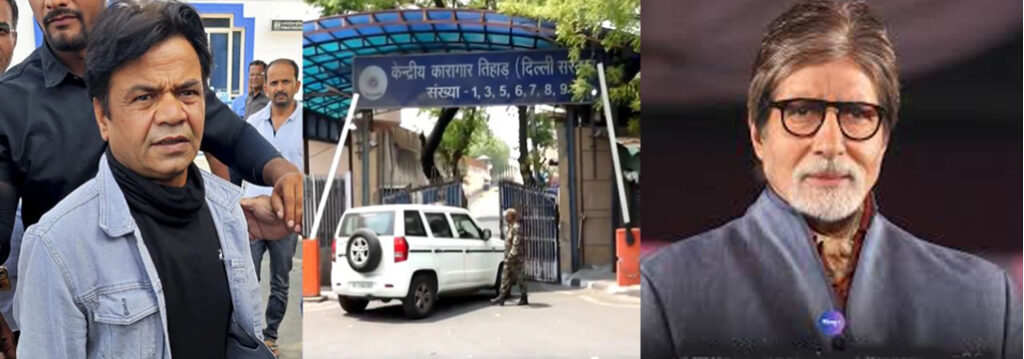
When two actors face financial collapse, courts, creditors, and the specter of prison, public reaction should ideally be governed by law, logic, and contracts. Yet reality—especially in India’s celebrity ecosystem—rarely obeys such neat equations. The contrasting stories of Amitabh Bachchan and Rajpal Yadav reveal not just differences in legal outcomes, but also in financial literacy, institutional engagement, personal strategy, and public psychology. One man stood on the brink of bankruptcy with roughly ₹90 crore in liabilities and emerged without prison. The other struggled with about ₹9 crore and landed in jail. On the surface, the math looks absurd. Dig deeper, and the difference becomes a masterclass in how modern economies treat debt, risk, reputation, and responsibility.
The emotional outrage around Rajpal Yadav’s imprisonment—“How can they jail a comedian for money?”—ignores a basic principle that governs everything from a student Loan to a multinational Mortgage: borrowed money is not charity. Whether you are taking Credit from a neighborhood lender, signing a corporate bond with an investment bank, or financing a film through private capital, repayment is the foundation of trust. Without it, Insurance collapses, Trading systems freeze, Software startups fail to raise funds, and entire financial markets enter Recovery mode.
The anatomy of Amitabh Bachchan’s financial collapse
In the mid-1990s, Amitabh Bachchan attempted something unprecedented for an Indian film star: building a vertically integrated entertainment corporation. His company, Amitabh Bachchan Corporation Ltd. (ABCL), aimed to combine film production, distribution, event Hosting, talent management, and media rights under one umbrella. It was ambitious—perhaps too ambitious for India’s then-nascent corporate entertainment ecosystem. Losses mounted, particularly after the disastrous Miss World event management venture in Bengaluru. By the late 1990s, Bachchan was reportedly drowning in debt approaching ₹90 crore. Creditors filed more than 50 legal cases. Cash flow evaporated. Even his iconic residence, Prateeksha, faced threat.
The crisis was not merely financial; it was reputational. In corporate finance terms, Bachchan’s personal brand—his most valuable intangible asset—was under severe impairment. Yet crucially, he never defaulted with the intent to evade repayment. Instead, he entered negotiations, settlements, and restructuring discussions similar to corporate debt Recovery frameworks used globally. Reports indicate industrialist Dhirubhai Ambani, through his son Anil Ambani, offered help, which Bachchan declined. That decision mattered psychologically: it signaled willingness to solve the crisis independently rather than seek bailout sympathy.
The turning point came when Bachchan approached filmmaker Yash Chopra for work, leading to a role in Mohabbatein. Simultaneously, television changed his destiny through Kaun Banega Crorepati. The show restored his income streams, allowed structured repayment plans, and gradually cleared liabilities. By the late 2000s, he had repaid debts and resolved most disputes.
In legal terms, Bachchan’s situation resembled corporate restructuring, not criminal non-compliance. He did not issue dishonored cheques repeatedly nor submit misleading affidavits. There was distress, but not contempt of court. That distinction is everything.
Rajpal Yadav’s debt spiral and legal consequences
Rajpal Yadav’s troubles began with ambition similar to Bachchan’s: creative control. In 2010, he and his wife borrowed approximately ₹5 crore from Murali Projects Pvt Ltd to finance his directorial venture Ata Pata Laapata. The film failed commercially. Interest, penalties, and legal costs ballooned the liability to around ₹9 crore over time.
The key difference lies not in the amount but in behavior. Cheques issued to the lender bounced repeatedly, triggering criminal proceedings under India’s Negotiable Instruments Act. Courts granted extensions. Payment did not materialize. In 2013, he even faced imprisonment briefly for filing a false affidavit. Eventually, after years of non-compliance, the Delhi High Court refused further relief and ordered surrender at Tihar Jail in 2026.
From a legal standpoint, this was not punishment for being poor. It was punishment for failing to honor court orders and financial instruments. In banking terms, this is similar to a borrower ignoring foreclosure notices on a Mortgage or refusing settlement after arbitration. Courts intervene not because money is owed, but because judicial authority is ignored.
Why one avoided prison and the other could not
The divergence between Bachchan and Yadav rests on four pillars: legal posture, repayment intent, asset monetization, and institutional engagement. Bachchan actively pursued income generation to repay creditors. Yadav’s case involved prolonged non-payment despite reported earnings and assets. Bachchan’s negotiations resembled corporate restructuring with lawyers, accountants, and lenders working toward settlement. Yadav’s trajectory escalated into criminal enforcement due to bounced cheques and alleged procedural missteps.
Globally, financial distress rarely leads to jail unless fraud or contempt is involved. According to the World Bank insolvency frameworks, modern economies prioritize restructuring over incarceration to preserve economic value. Similarly, research by McKinsey & Company shows that early creditor engagement dramatically improves Recovery outcomes. Bachchan followed that model intuitively. Yadav did not.
The psychology of sympathy: celebrity, class and projection
Why are people emotional about Rajpal Yadav going to jail? Because he is perceived as “one of us.” He plays the struggling common man on screen. Audiences project their own financial anxieties onto him—Loans, electricity bills, Gas payments, school Classes fees, Insurance premiums, medical Treatment, even Rehab costs for family members. His distress becomes symbolic.
But law does not operate on emotional identification. If a middle-class borrower defaults on a bank Loan, repossession follows. Courts do not organize a Conference Call of donors to settle liabilities. The outrage therefore reveals something deeper: society often expects accountability from institutions but forgiveness for individuals it likes.
Economists call this moral hazard. When borrowers believe sympathy will shield them, repayment discipline weakens. A study by the International Monetary Fund on credit cultures notes that repayment compliance correlates strongly with perceived enforcement certainty. Public sympathy campaigns can unintentionally undermine that certainty.
Financial literacy, advisors and the power of professionals
Another difference is access to professional ecosystems. High-net-worth individuals facing crises typically assemble Attorneys, Lawyers, chartered accountants, restructuring specialists, and sometimes even an investment bank to renegotiate obligations. Debt can be refinanced, assets transferred, Insurance policies leveraged, intellectual property monetized, or future income securitized.
Bachchan’s recovery involved precisely this type of professional engagement. Modern celebrity finances resemble corporations—brand endorsements, Software licensing, royalty streams, Hosting fees, equity investments, and international Transfer income. Structured correctly, these can service debt.
If reports suggesting Rajpal Yadav earned significant income in recent years are accurate, then failure to allocate funds toward settlement reflects planning gaps rather than inability. Courts interpret that as lack of seriousness.
Global comparisons: lessons from other countries
In the United States, celebrities like actors, athletes, and entrepreneurs routinely face bankruptcy without imprisonment because they enter legal restructuring processes such as Chapter 11. The U.S. Federal Reserve and OECD data show that personal bankruptcy laws aim to preserve productive capacity while ensuring creditor recovery.
In Europe, debt mediation programs supported by agencies like the European Commission encourage negotiated settlements before enforcement. Japan similarly uses structured insolvency rehabilitation mechanisms emphasizing repayment plans over punishment.
India’s system has evolved with the Insolvency and Bankruptcy Code for corporations, but personal insolvency frameworks remain less utilized. According to the Reserve Bank of India and industry bodies like Federation of Indian Chambers of Commerce and Industry, financial literacy gaps continue to influence borrower behavior, especially among creative professionals with volatile income streams.
The morality question: is repayment really that simple?
At a moral level, the user’s question—“If I take money, shouldn’t I return it?”—is economically sound. Lending is trust converted into numbers. Whether funds finance a house Mortgage, a startup Software venture, medical Treatment, or even Cord Blood banking services, someone else’s capital is at risk.
But morality also intersects with capacity. Genuine inability differs from refusal. Courts attempt to distinguish the two through evidence of effort, transparency, and cooperation. Bachchan demonstrated effort. Courts concluded Yadav did not sufficiently demonstrate compliance.
The charity narrative and public perception
Post-surrender, offers of help reportedly emerged from industry figures like Sonu Sood, Tej Pratap Yadav, Salman Khan, Ajay Devgn, and Varun Dhawan. While generous, such interventions risk reframing contractual obligations as humanitarian crises. Debt repayment is not Disaster Rehab. It is not a medical emergency requiring Donate campaigns. It is a financial commitment voluntarily undertaken.
This distinction matters because financial ecosystems rely on predictability. If lenders believe celebrity borrowers can avoid consequences through public sympathy, credit availability shrinks, interest rates rise, and legitimate borrowers suffer.
Reputation capital: the invisible collateral
Perhaps the most decisive difference between the two actors is reputation capital. Amitabh Bachchan entered crisis already possessing decades of credibility. Creditors believed he would repay if given time. Reputation functioned as collateral—an intangible asset recognized worldwide in finance literature.
Rajpal Yadav, though respected as a performer, lacked comparable financial credibility. Reputation gaps increase perceived risk, prompting stricter enforcement. A report by Boston Consulting Group notes that trust metrics significantly affect lending terms even outside formal banking.
Lessons for professionals and ordinary borrowers
The takeaway transcends celebrity gossip. Whether you are funding a business Degree abroad, buying property with a Mortgage, financing Gas or Electricity infrastructure, or Trading stocks on margin, three rules apply: borrow conservatively, document transparently, repay proactively. Engage Lawyers early, negotiate before default, and treat court orders as non-negotiable.
Financial crises are survivable. Prison usually enters only when compliance collapses.
Conclusion: sympathy versus accountability
Public empathy for Rajpal Yadav reflects human compassion, but law operates on accountability. Amitabh Bachchan avoided prison not because he was richer or more famous, but because he treated debt as an obligation to be honored through effort, negotiation, and repayment. Rajpal Yadav’s imprisonment stems from prolonged legal non-compliance despite opportunities.
In a world powered by Credit, Insurance, Loans, and capital flows, repayment discipline is civilization’s quiet backbone. Sympathy may trend on social media, but contracts rule the courtroom.