
At the heart of the controversy lies a pattern that many observers find difficult to explain: systems with complete Indian intellectual property, designed and produced domestically, remain stuck in limited orders or prolonged evaluation cycles, while platforms assembled around imported technology receive faster clearances, larger contracts, or emergency procurements
India today stands at an awkward but revealing inflection point in its defence-industrial journey. On the one hand, official rhetoric, policy documents, and export statistics celebrate the rise of Atmanirbhar Bharat in defence. On the other, procurement outcomes on the ground often tell a far more tangled story,one in which fully indigenous, IP-controlled Indian systems struggle for sustained domestic orders, while screwdriver-assembled platforms with foreign cores appear to enjoy smoother passage through the Ministry of Defence (MoD) and the armed services.
This tension is not new, but it has sharpened dramatically in the past decade as private Indian defence firms, Kalyani Defence, SSS Defence, Tata Advanced Systems, L&T, and Adani Defence, have moved from the margins into the centre of India’s military-industrial ecosystem. The question is no longer whether India can design and manufacture weapons systems. The question is why the Indian state so often hesitates to buy what Indian industry has already built, tested, and in some cases successfully exported.
At the heart of the controversy lies a pattern that many observers find difficult to explain: systems with complete Indian intellectual property, designed and produced domestically, remain stuck in limited orders or prolonged evaluation cycles, while platforms assembled around imported technology receive faster clearances, larger contracts, or emergency procurements.
IP ownership vs procurement reality
Consider the contrast between Kalyani Defence and SSS Defence on one side, and Adani Defence on the other. Kalyani Defence, the defence arm of Bharat Forge, has invested heavily in indigenous artillery, small arms, armoured systems, and ammunition. Its flagship achievement, the Advanced Towed Artillery Gun System (ATAGS), is a DRDO-partnered, Indian-designed, Indian-manufactured 155mm/52-calibre gun that has repeatedly demonstrated world-class performance metrics in range and firing endurance.
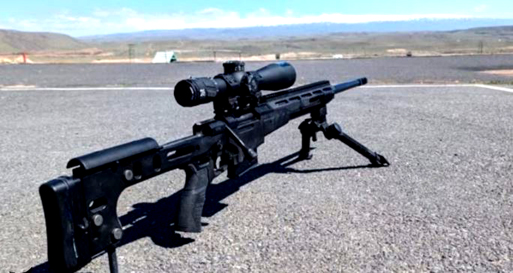
SSS Defence, meanwhile, has developed a portfolio of fully indigenous small arms, assault rifles, carbines, and sniper systems, with complete design ownership and domestic production. Its P-72 assault rifle has secured orders from state police forces, and its 9×19 mm carbine has won contracts with elite units such as the National Security Guard (NSG).
Yet, despite these credentials, both companies have faced a familiar ceiling: small initial orders, long gaps between tranches, and uncertainty about bulk induction. Assembly lines struggle to maintain continuity. Economies of scale fail to materialise. Unit costs remain high, reinforcing the very objections used to delay larger purchases.
In contrast, Adani Defence has emerged rapidly as a major recipient of defence contracts despite relying extensively on joint ventures and licensed production with foreign partners, particularly from Israel. UAVs, small arms, sensors, and electronics produced under these arrangements often involve integration and assembly in India rather than end-to-end indigenous design.
This has led critics to describe Adani’s model as “screwdriver assembly”, legally compliant with Make in India norms but strategically limited in terms of long-term technological sovereignty.
The bulk order that never comes
One of the most damaging features of India’s defence procurement system is its reluctance to place early bulk orders for already tested and approved systems. Instead, the armed forces often opt for small batches, prolonged observation periods, or parallel evaluations of foreign alternatives.
The ATAGS story illustrates this vividly. Despite outperforming competing systems in trials, the gun’s induction was slow and incremental. While a contract for 307 ATAGS guns was finally signed in March 2025, this came after years of delay,years during which the production line remained underutilised and costs remained artificially high.
This pattern repeats across platforms. Once an assembly line dries up, the system becomes vulnerable to being labelled “non-viable” or “too expensive,” opening the door to emergency imports or fast-tracked foreign purchases. The cycle is self-reinforcing: no bulk orders lead to higher costs, which then justify further hesitation.
The K9 Vajra programme, despite being a relative success, also demonstrated how fragile such arrangements can be without assured long-term demand. Without sustained orders, private manufacturers are forced to rely on exports or diversify into non-defence production just to keep facilities alive.
WHAP vs Stryker: A case study in contradictions
Few episodes capture the inconsistency of Indian procurement as starkly as the Wheeled Armoured Platform (WHAP) saga. Developed jointly by DRDO and Tata Advanced Systems, the WHAP has won international orders, passed rigorous trials, and attracted export interest serious enough for Tata to establish a production facility in Morocco.
Yet the Indian Army has not inducted the WHAP in significant numbers. Instead, it has repeatedly flirted with the idea of acquiring the US-origin Stryker armoured vehicle,despite the Stryker reportedly failing Indian trials and being rejected on technical grounds.
The optics are hard to ignore. An Indian-designed, Indian-tested, export-proven platform struggles for domestic acceptance, while a foreign system that does not meet operational requirements continues to receive attention at the highest levels. For Indian industry, the message is deeply unsettling: export success does not guarantee domestic credibility.
Small arms and the SSS Defence question
SSS Defence occupies a particularly revealing position in this ecosystem. Unlike large conglomerates, it focuses narrowly on small arms and has pursued a fully indigenous design philosophy. Its products have found acceptance with state police forces and specialised central units, indicating confidence in reliability and performance.
Yet the Indian Army, the largest potential customer, has not placed large-scale orders. One explanation is institutional caution: The MoD and Army may prefer to wait for long-term feedback from police and special forces before committing to mass induction.
This is not inherently unreasonable. However, the same caution does not always apply to foreign systems inducted under urgency clauses, where operational feedback is gathered after procurement rather than before. The asymmetry fuels suspicion that indigenous firms are being held to higher evidentiary standards than foreign or JV-based platforms.
Adani Defence and the political economy question
Any discussion of defence procurement in India inevitably raises the issue of political economy. Adani Defence’s rapid rise since 2017 coincides with a broader restructuring of India’s defence industrial base, where private players have been actively encouraged to displace legacy public-sector monopolies.
From a policy standpoint, this shift is defensible. India needed scale, capital, and managerial capacity, which large conglomerates could provide. Adani’s partnerships with Israeli firms offered ready-to-deploy technology at a time of heightened border tensions and urgent capability gaps.
However, critics argue that speed and political access have sometimes substituted for technological depth. Allegations of cronyism, particularly around small arms, UAVs, and submarine-related projects, have surfaced repeatedly, even if they have not resulted in formal cancellations or prosecutions.
It is important to distinguish between the government of India and the ruling party, but it is equally naïve to pretend that electoral finance, corporate sponsorship, and lobbying do not shape outcomes. In the United States, such dynamics are openly institutionalised as lobbying. In India, they operate more discreetly, but their influence is no less real.
Exports without induction: Armenia as a mirror
Perhaps the most striking symbol of India’s procurement paradox came when Armenia publicly displayed Indian-origin weapon systems, many of which are not in service with the Indian Army itself. ATAGS guns, rocket systems, radars, and ammunition supplied by Indian firms featured prominently,highlighting a strange inversion where foreign militaries deploy Indian weapons that Indian soldiers do not.
From a geopolitical perspective, these exports are a success. Armenia is a strategic partner in the Eurasian space, and Indian defence supplies strengthen diplomatic leverage. From an industrial perspective, exports help keep production lines running.
But from a doctrinal and moral standpoint, the situation is uncomfortable. A state that hesitates to trust its own weapons while encouraging allies to do so sends a mixed signal about confidence, risk, and accountability.
The Kaveri engine and the cost of strategic timidity
No discussion of indigenous defence capability is complete without addressing the Kaveri engine programme. Launched in 1989 with the ambition of powering the Light Combat Aircraft (Tejas), the Kaveri suffered from underfunding, shifting requirements, and technological gaps, particularly in materials and thrust-to-weight ratios.
By 2014, funding for its fighter-engine role was effectively halted after expenditures of roughly ₹2,100 crore, a fraction of what comparable engine programmes in the US, Europe, or China receive. Critics often frame this as abandonment, but the reality is more complex. The engine did not meet Tejas requirements and continuing without course correction would have been futile.
What is harder to justify is the absence of a flying test bed for decades and the lack of sustained investment in aero-engine metallurgy and manufacturing ecosystems. The revival of Kaveri as a dry-thrust engine for UAVs like Ghatak, and its successful trials in Russia in 2025, demonstrate that the programme was never beyond redemption.
The lesson is not that indigenous programmes fail, but that they fail when treated as experiments rather than strategic necessities.
Risk aversion as institutional culture
A recurring explanation offered by procurement officials is risk aversion. The armed forces, understandably, prioritise reliability, logistics support, integration with existing systems, and assured supply chains. Foreign OEMs or JVs with established players are perceived as lower risk, particularly under urgent operational timelines.
However, this mindset often ignores a critical reality: foreign dependence merely shifts risk rather than eliminating it. Supply chain disruptions, export controls, sanctions, and upgrade denials have all affected India in the past. Indigenous systems may carry initial performance risk, but they offer long-term strategic control.
True self-reliance is not about eliminating all foreign content overnight. It is about securing critical choke points, engines, seekers, sensors, software, and upgrade rights. An Indian prime contractor assembling foreign cores without full control over these elements does not fundamentally reduce dependency.
The mango analogy and domestic confidence
The comparison with Alphonso mangoes is apt. India exports its best produce while consuming lower-grade versions at home, even as imported fruits fill domestic shelves. In defence, a similar dynamic appears to be emerging: the most confident use of indigenous systems occurs abroad, while domestic adoption remains cautious and incremental.
If the government genuinely wants to signal confidence in Indian industry, it must be the first and most reliable customer. Export markets follow domestic validation, not the other way around.
Toward transparency and accountability
Ultimately, the solution is not to favour one company over another, or to frame procurement as a binary between conglomerates and smaller firms. The real need is institutional transparency. Clear evaluation criteria, published trial results, independent audit trails, and time-bound procurement decisions would go a long way in restoring trust.
If indigenous systems are rejected, the reasons should be explicit and technical. If emergency purchases become routine, their necessity should be publicly justified. Without such openness, suspicions of favouritism, whether justified or not, will persist.
Choosing the future, we claim to want
India’s defence industrial base is no longer the fragile ecosystem it was two decades ago. It can design, test, and manufacture complex weapons. What it lacks is not capability, but institutional confidence in its own creation.
Kalyani Defence, SSS Defence, Tata, and others are not asking for blind patronage. They are asking for predictable demand, fair evaluation, and the same margin of error routinely granted to foreign suppliers. Until that happens, Atmanirbhar Bharat will remain a slogan rather than a strategic posture.
The choice before India is stark. It can continue to hedge, import, and assemble, remaining perpetually one crisis away from dependence. Or it can accept the short-term discomfort of backing indigenous systems fully, learning from failures, and building depth rather than optics.
History suggests that great powers are not those that never fail at home, but those that trust themselves enough to try and to buy, what they build.