One of the most alarming aspects of Trump’s statement is the implied assertion of presidential authority over aircraft certification. Air worthiness and certification in the United States is handled by the Federal Aviation Administration (FAA), an independent regulatory body whose mandate is safety, not trade enforcement. Duh!
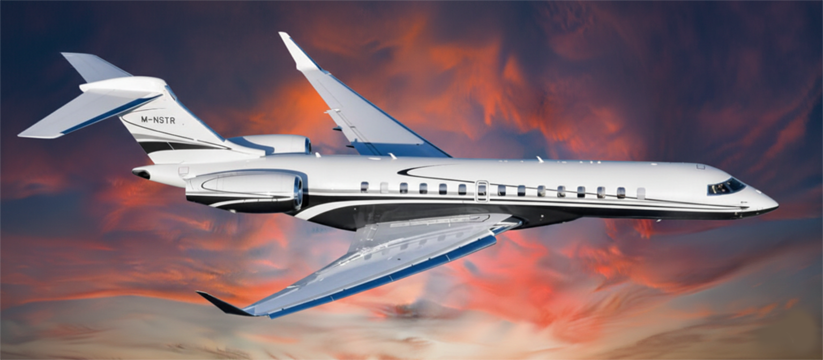
The global aviation industry is accustomed to turbulence, but rarely does it come from a social media post issued from the Oval Office. Yet that is precisely what happened when U.S. President Donald Trump, posting on his Truth Social platform, threatened to decertify all Canadian-made aircraft and impose a sweeping 50 percent tariff on aircraft imported from Canada. At the center of the storm lies Bombardier, Canada’s flagship aerospace manufacturer, and its crown jewel, the Global Express family of long-range business jets.
Trump’s language was incendiary and absolute. He accused Canada of “wrongfully, illegally and steadfastly” refusing to certify several Gulfstream aircraft types—jets produced by a U.S.-based rival that competes directly with Bombardier in the ultra-long-range business jet segment. As retaliation, the president declared that the United States would decertify Bombardier Global Express aircraft and, potentially, all aircraft manufactured in Canada until Gulfstream was “fully certified.”
The threat sent shockwaves through the aviation industry, not only because of its immediate implications for Bombardier, but because it challenged a foundational principle of global aviation: that aircraft certification is a technical, safety-driven process insulated from political and trade disputes. If that firewall were to collapse, the consequences would extend far beyond Canada and the United States, reshaping global aerospace governance.
The competitive backdrop: Bombardier vs. Gulfstream
Bombardier and Gulfstream are not merely competitors; they are arch-rivals in one of aviation’s most lucrative niches. The Bombardier Global series—particularly the Global 6000, Global 7500, and Global 8000—competes head-to-head with Gulfstream’s G500, G600, G700, and G800 aircraft. These jets are purchased by ultra-high-net-worth individuals, multinational corporations, and fractional ownership firms such as NetJets and Flexjet. Each sale can be worth tens of millions of dollars, and market perception matters as much as technical performance.
Trump’s post specifically named Gulfstream models—the 500, 600, 700, and 800—claiming Canada had refused to certify them. However, the factual basis for that claim is contested. Gulfstream itself acknowledged as far back as 2011 that Transport Canada had authorized several of its aircraft, including the G500 and G550, to operate at their maximum certified altitudes. In other words, Canadian authorities have not categorically blocked Gulfstream aircraft; certification has occurred where manufacturers have sought it.
Industry sources note that certification is not automatic or proactive. Manufacturers must initiate the process, typically when they have customers or operational needs in a given jurisdiction. Transport Canada, like other regulators, does not go out of its way to certify every aircraft type globally. This procedural reality undermines the core accusation behind Trump’s threat, raising questions about whether the dispute is less about certification and more about leverage.
Can a President decertify an aircraft?

One of the most alarming aspects of Trump’s statement is the implied assertion of presidential authority over aircraft certification. In practice, certification in the United States is handled by the Federal Aviation Administration (FAA), an independent regulatory body whose mandate is safety, not trade enforcement.
There are two key forms of certification at issue. A type certificate approves an aircraft’s design and is a prerequisite for mass production. An airworthiness certificate, by contrast, applies to individual aircraft and confirms they are safe to operate. Only registered aircraft owners—or their agents—can apply for airworthiness certificates, and the FAA has historically revoked them only for safety or compliance reasons.
Legal and aviation experts question whether a U.S. president can lawfully compel the FAA to revoke certification for political or economic reasons. Such a move would be unprecedented in modern aviation history. Certification regimes are built on mutual trust and reciprocal recognition between regulators. If that trust were broken, it could invite retaliation from other countries, fragmenting the global aviation system.
Bombardier’s response and its U.S. footprint
Bombardier moved swiftly, if cautiously, in response to Trump’s comments. In a statement issued late Thursday, the Montreal-based company said it had taken note of the president’s remarks and was in contact with the Canadian government. While Bombardier is headquartered in Quebec, it emphasized its deep integration into the U.S. economy.
The company employs more than 3,000 people across nine major facilities in the United States and works with approximately 2,800 U.S.-based suppliers. Bombardier also pointed to recent investments, including an expansion in Fort Wayne, Indiana, underscoring that it is not a foreign interloper but a major contributor to American aerospace employment.
“Our aircraft, facilities and technicians are fully certified to FAA standards and renowned around the world,” Bombardier said, adding that thousands of Canadian-built aircraft operate safely in U.S. airspace every day. The company’s measured tone reflected both confidence in its regulatory standing and concern about the broader implications of the dispute.
The scale of potential disruption
The numbers alone illustrate why the aviation industry reacted with alarm. According to aviation analytics firm Cirium, approximately 2,700 Bombardier-manufactured aircraft are registered and in service in the United States, including about 150 Global Express jets operated by 115 different operators. These aircraft support corporate travel, medical transport, emergency response, and other critical functions.
The impact would not stop with Bombardier’s business jets. Canadian-made aircraft are deeply embedded in the U.S. commercial aviation ecosystem. The CRJ family of regional jets—originally manufactured in Canada—forms the backbone of regional operations for major U.S. airlines such as United, Delta, and American. There are 648 passenger CRJ jets currently in service in the United States, collectively operating more than 2,600 flights per day and providing roughly 175,000 passenger seats daily.
Industry analyst Richard Aboulafia summed it up bluntly: decertifying all Canadian-made jets would be “a transportation disaster.” While grounding a limited number of business jets might be manageable, disrupting regional airline fleets would ripple through the entire U.S. air travel system, affecting connectivity, ticket prices, and economic activity.
Beyond jets: Helicopters, firefighting, and Airbus
The scope of the threat extends even further. Thousands of Canadian-made Bell helicopters operate across the United States, supporting law enforcement, medical evacuation, offshore energy, and military training. Decertification would call their operational status into question, creating safety and logistical nightmares.
Firefighting aircraft present another critical vulnerability. De Havilland Canada produces some of the world’s most sought-after water bombers, aircraft that play a vital role in combating wildfires. These planes were instrumental during major disasters, including the devastating 2025 Los Angeles firestorm. Any interruption in their availability due to certification disputes could have life-or-death consequences.
Even Airbus is indirectly implicated. The Airbus A220 narrow-body airliner is produced in both Mirabel, Quebec, and Mobile, Alabama. While Airbus declined to comment on Trump’s statement, the idea that Canadian-built A220s could be targeted raises complex questions about multinational production chains and the feasibility of distinguishing “nationality” in modern aerospace manufacturing.
Tariffs as a blunt instrument
Alongside decertification, Trump threatened to impose a 50 percent tariff on all aircraft sold from Canada into the United States, escalating an already tense trade relationship. The threat followed an earlier warning of 100 percent tariffs on Canadian goods if Ottawa proceeded with a trade deal with China—a deal Canada had already struck.
Such tariffs would be devastating for the aerospace sector. Aircraft are high-value, low-margin products, and a 50 percent tariff would effectively price Canadian manufacturers out of the U.S. market. For Bombardier, which has refocused its business on private and business jets after exiting most commercial aircraft production, losing access to its largest market would be a severe blow.
The economic damage would not be confined to Canada. U.S. suppliers, maintenance facilities, and service providers depend heavily on Bombardier and other Canadian manufacturers. Tariffs would disrupt these relationships, increasing costs and reducing competitiveness across the North American aerospace industry.
A trade war context
The aviation dispute cannot be separated from the broader deterioration in Canada–U.S. relations. The two countries are already embroiled in a trade war, and Trump is preparing for a renegotiation of the U.S.-Mexico-Canada Agreement (USMCA). Aviation appears to be the latest front in a strategy aimed at maximizing leverage.
Canadian Prime Minister Mark Carney had not directly responded at the time of publication, but relations reportedly cooled after an assertive speech he delivered at the World Economic Forum in Davos. In that address, Carney criticized economic coercion by great powers against smaller nations, remarks widely interpreted as a rebuke of U.S. trade policy. The speech drew international praise and, according to observers, irritated Trump.
U.S. Treasury Secretary Scott Bessent subsequently warned Carney that his public comments could backfire as the USMCA review approached. Carney, however, rejected claims that he had softened his stance during a phone call with Trump, insisting he stood by his Davos remarks and reaffirming Canada’s intention to diversify trade through a dozen new agreements.
Certification is about safety, not politics
Aviation experts have been nearly unanimous in condemning the idea of decertification for trade reasons. John Gradek, who teaches aviation management at McGill University, described certification as a non-negotiable safety process.
“Certification is not trivial,” Gradek said. “It is a very important step in getting planes to operate safely. Decertification for trade reasons does not happen.”
Gradek noted that many Gulfstream aircraft have been certified in Canada for years, undermining the narrative that Canadian regulators are unfairly blocking U.S. manufacturers. In his view, the certification dispute is a “smokescreen,” a symbolic escalation designed to pressure Ottawa rather than resolve a technical issue.
Echoes of 2017
For Bombardier, the episode revives memories of 2017, when the U.S. Commerce Department imposed duties on its C Series commercial jets, accusing the company of selling aircraft below cost with the help of unfair government subsidies. That dispute was eventually resolved when the U.S. International Trade Commission ruled that Bombardier had not injured U.S. industry.
The lesson from that episode was that aerospace disputes can be politically charged but are ultimately constrained by legal and institutional checks. Whether those checks would hold in the face of an aggressive decertification order remains an open question.
What is at stake
If Trump’s threat were carried out, the consequences would extend far beyond Bombardier. The integrity of the global aviation certification system would be undermined, setting a precedent that other countries might follow. Airlines, operators, and manufacturers would face uncertainty not about engineering or safety, but about politics.
For the flying public, the risks include reduced connectivity, higher costs, and potential safety concerns arising from regulatory chaos. For governments, the dispute highlights the danger of weaponizing technical institutions for trade leverage.
Waiting for resolution
For now, the industry waits. Bombardier has called for a swift resolution to avoid “a significant impact to air traffic and the flying public.” Canadian government officials have remained publicly silent, perhaps calculating that escalation would only inflame tensions. Whether Trump’s threat proves to be a negotiating tactic, a rhetorical flourish, or a genuine policy move will determine the next chapter. What is already clear, however, is that aviation—long a symbol of international cooperation—is increasingly being pulled into the orbit of geopolitical conflict. And once certification becomes a weapon, no aircraft, and no country, can remain entirely out of range.