In theory, the Indian Parliament is modeled on Westminster traditions: orderly debate, reasoned disagreement, and adherence to procedure. In practice, it sits atop a vastly different social and political ecosystem. Indian democracy is loud, crowded, emotionally charged, and deeply personal
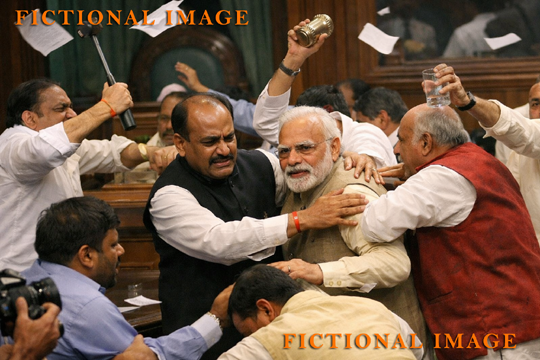
Parliament is supposed to be the highest temple of democracy, a place where words defeat fists and persuasion triumphs over force. Yet across the world—and very visibly in India—legislative chambers have often resembled wrestling rings more than debating halls. The physical scuffles involving Indian Members of Parliament, though not a daily occurrence, have become an enduring part of political folklore, endlessly replayed on television, dissected on social media, and debated in drawing rooms. Chairs have been overturned, papers flung like confetti, microphones wrenched away, and on rare but unforgettable occasions, MPs have lunged at one another with clenched fists. These moments shock, entertain, embarrass, and, paradoxically, mobilize voters. To understand why Indian MPs sometimes fight physically, one must go beyond moral outrage and explore the deeper political, cultural, and performative logic behind such eruptions.
The Idea of Parliament Versus the Reality of Power
In theory, the Indian Parliament is modeled on Westminster traditions: orderly debate, reasoned disagreement, and adherence to procedure. In practice, it sits atop a vastly different social and political ecosystem. Indian democracy is loud, crowded, emotionally charged, and deeply personal. MPs do not merely represent abstract ideologies; they carry with them caste loyalties, regional pride, linguistic identities, and intense party rivalries. Parliament becomes an arena where these identities clash under the glare of cameras.
Physical confrontation is often the final stage of a long escalation. It begins with sloganeering, descends into accusations of betrayal or corruption, moves into obstruction of proceedings, and finally spills into bodily assertion—standing too close, grabbing papers, blocking the Speaker’s view, or pushing rivals away from the well of the House. When tempers snap, a shove becomes a scuffle, and the sanctity of the House collapses in seconds.
A Short History of Physical Disorder in Indian Legislatures
India’s tryst with parliamentary chaos began early. Even in the first decades after Independence, shouting matches and walkouts were common. Physical fights, however, were rarer and considered deeply shameful. Over time, especially from the late 1980s onward, the nature of parliamentary behavior changed. Coalition politics, the rise of regional parties, and the fragmentation of electoral mandates altered incentives. Visibility became currency. An MP who disrupted proceedings could appear combative and uncompromising to constituents back home.
There have been infamous moments when MPs tore documents, climbed onto desks, or rushed toward rivals across the aisle. In state assemblies, where security is lighter and tempers often shorter, physical altercations have been more frequent. Punches thrown in Uttar Pradesh, microphone stands used as shields in Maharashtra, and shirt-tugging matches in Andhra Pradesh have all entered the visual archive of Indian politics.
Why Physicality Appeals to the Political Imagination
At the heart of these confrontations lies a contradiction. Indian political culture celebrates debate and dissent, yet also venerates strength, masculinity, and the image of the fearless fighter. An MP who shouts loudly or physically confronts opponents can project the image of a warrior defending the honor of the people. For voters frustrated by slow governance and elite language, raw aggression can feel authentic.
Television has amplified this tendency. Parliamentary proceedings are no longer dusty transcripts read by specialists; they are live spectacles. A viral clip of an MP charging across the floor can generate more attention than a meticulously argued speech. Physicality, in this sense, becomes a form of communication—crude, risky, but instantly legible.
Performative Politics and the Theater of Conflict
Political scientists increasingly describe such incidents as “performative politics.” The fight is not always about the immediate issue at hand; it is about signaling loyalty, rage, and relevance. An MP may know that legislation will pass regardless, but disrupting the House physically sends a message to supporters: “I fought for you, literally.”
This performative dimension places India firmly within a global pattern. Parliamentary brawls are not an Indian monopoly. Taiwan’s legislature is famous worldwide for dramatic fistfights, with MPs hurling chairs, water balloons, and even physically wrestling over voting procedures. South Korea has witnessed lawmakers physically barricading doors or grappling to block bills. Turkey’s parliament has seen frequent fistfights during emotionally charged reform debates, while Ukraine’s legislature has become notorious for scenes of MPs punching, choking, and grappling each other in full view of cameras.
India in the Global Gallery of Parliamentary Brawls
When placed alongside other democracies and semi-democracies, India appears neither uniquely violent nor exceptionally restrained. Pakistan’s National Assembly has a long history of shouting matches that spill into physical confrontations, reflecting intense political polarization. Nigeria’s parliament has seen scenes where clothes are torn and lawmakers brawl on the floor. Somalia’s past incidents include MPs wielding chairs and clubs, often mirroring the country’s broader instability.
Hong Kong’s Legislative Council, particularly during periods of high political tension, has witnessed clashes between pro-democracy and pro-establishment camps, with pushing, shoving, and forced removals. Bolivia has reported incidents of fisticuffs, while Afghanistan’s parliament has seen fights involving both verbal insults and physical blows. Even Israel, often cited for its argumentative but cerebral political culture, has experienced occasional shouting matches escalating into thrown objects, such as water bottles.
India, in this global context, stands out not for frequency but for symbolism. As the world’s largest democracy, its parliamentary scuffles are scrutinized more harshly. Each punch thrown seems to contradict the country’s self-image as a mature constitutional republic.
The Role of Party Discipline and Leadership
One crucial factor behind physical confrontations is the weakening of internal party discipline. In earlier decades, party leaders exercised tight control over their MPs’ behavior. Today, especially in fragmented coalitions or opposition benches, individual MPs often act autonomously, driven by local pressures rather than central directives.
Leadership style also matters. Aggressive rhetoric from party leaders can trickle down into parliamentary behavior. When politics outside Parliament becomes combative and accusatory, it is unrealistic to expect saintly restraint inside the House. MPs mirror the tone set by their leadership, consciously or subconsciously.
Institutional Triggers: The Well of the House and the Speaker’s Authority
Most physical confrontations in India erupt near the well of the House—the space closest to the Speaker. Storming the well is itself a breach of parliamentary norms, but it has become a routine tactic to stall proceedings. When multiple MPs rush toward the same space, physical contact becomes almost inevitable.
The Speaker’s authority plays a critical role in preventing escalation. A respected, assertive Speaker can defuse tension early by naming unruly members, suspending proceedings, or ordering marshals to intervene. When the Speaker is perceived as partisan or weak, MPs feel emboldened to push boundaries, sometimes literally.
Masculinity, Honor, and the Body in Politics
Another uncomfortable truth is the gendered nature of parliamentary violence. Most physical fights involve male MPs, and they often draw upon ideas of honor and dominance. The body becomes a political instrument—a way of asserting superiority when words fail or are ignored.
This does not mean women MPs are immune to aggressive behavior, but physical fights involving them are far rarer. Their presence, in fact, often highlights the absurdity of such confrontations, exposing them as performative masculinity rather than genuine political struggle.
Media, Social Media, and the Reward Structure of Outrage
In the age of 24-hour news and viral clips, bad behavior is often rewarded with attention. A calm, nuanced speech rarely trends; a punch almost always does. Media houses replay such footage endlessly, sometimes condemning it, sometimes sensationalizing it. On social media, supporters circulate clips with triumphant captions, framing brawls as evidence of courage.
This creates a perverse incentive structure. MPs learn that physical disruption guarantees visibility. Even suspension from the House can be spun as martyrdom back home, proof that the system tried to silence a “fighter for the people.”
Legal and Ethical Consequences—or the Lack Thereof
One reason physical confrontations persist is the relative absence of serious consequences. While MPs can be suspended for disorderly conduct, criminal charges are rare. Parliamentary privilege, designed to protect free speech, often becomes a shield against accountability for physical misconduct.
Ethically, such behavior degrades democratic norms. Parliament is meant to be the place where conflicts are sublimated into debate. When fists replace arguments, the moral authority of the institution erodes. Citizens watching from home may conclude that if lawmakers cannot resolve differences peacefully, why should anyone else?
Comparisons with More Restrained Legislatures
The contrast with some other countries is instructive. In the Czech Republic, parliamentary altercations have mostly been limited to microphone scuffles—grabbing or switching off mics rather than throwing punches. Canada, often cited as a model of parliamentary civility, has witnessed extremely rare physical altercations, and when they occur, they provoke widespread condemnation and swift apologies. The Philippines, despite its own turbulent politics, sees occasional tension in the House but far fewer physical brawls than media stereotypes might suggest.
These examples show that institutional culture matters. Clear norms, strong enforcement, and social shame can curb physical misconduct.
Public Reaction: Outrage, Amusement, and Indifference
Indian public reaction to parliamentary fights is deeply ambivalent. Urban commentators often express outrage, calling such behavior a national embarrassment. Others react with dark humor, sharing memes and jokes that trivialize the violence. In some constituencies, however, such behavior is celebrated. An MP who “stood up and fought” is seen as fearless and authentic.
This divided reaction allows the phenomenon to persist. Without a unified public demand for decorum, political parties feel little pressure to reform behavior.
Democracy Degraded or Democracy Revealed?
Defenders of unruly behavior sometimes argue that such confrontations reveal the rawness of democracy. They claim that passionate conflict, even physical, reflects genuine engagement rather than scripted politeness. Critics counter that this romanticizes violence and lowers standards, normalizing behavior that would be unacceptable in any other workplace.
The truth lies somewhere in between. Conflict is inherent to democracy, but violence is not. Physical fights signal a breakdown of institutional trust and procedural respect. They may be understandable, even predictable, but they are not inevitable.
Can Indian Parliament Be Reformed?
Reducing physical confrontations requires a multi-pronged approach. Stronger enforcement of rules, meaningful penalties for violence, and consistent action by Speakers are essential. Political parties must take responsibility for disciplining their members rather than celebrating bad behavior.
Equally important is changing the reward structure. Media and voters must resist the temptation to glorify parliamentary brawls. When aggression stops translating into popularity, incentives will shift.
A Global Problem, Not an Indian Exception
By situating India within a global landscape—from Taiwan’s chair-throwing spectacles to Ukraine’s punch-ups, from Pakistan’s confrontations to Nigeria’s torn-clothes brawls—it becomes clear that parliamentary violence is a worldwide phenomenon. These incidents often function as performative politics, signaling struggle and commitment, but they are widely criticized for degrading democratic institutions.
India’s challenge is magnified by its scale and symbolism. As a country that prides itself on constitutionalism and democratic endurance, each parliamentary scuffle carries disproportionate weight.
Choosing Words Over Fists
Physical fights among Indian MPs are not mere lapses of decorum; they are symptoms of deeper political incentives, cultural norms, and media dynamics. They reflect a democracy still negotiating the boundary between passion and procedure. While India is far from alone in facing this problem, its solutions must be rooted in a renewed respect for Parliament as a space where conflict is resolved through speech, not strength.
The sight of lawmakers trading punches may thrill some and disgust others, but it ultimately weakens the very institution meant to channel political conflict peacefully. Democracy does not demand silence or submission; it demands restraint. Until Indian politics learns to reward persuasion over provocation, the temptation to fight—literally—will remain just one heated debate away.
Key Countries with Documented Parliamentary Fights
Taiwan: Famous for frequent, dramatic brawls involving chairs, water balloons, and scuffles over voting.
South Korea: Known for physical standoffs and attempts to block legislation physically.
Turkey: Frequent fistfights, especially during tense reform debates.
Ukraine: Regular occurrences of MPs grappling, throwing punches, and choking.
Pakistan: Frequent shouting matches turning into physical confrontations.
Nigeria: Known for scenes of torn clothes and brawls on the floor.
Somalia: Past incidents have included fights with chairs and clubs.
India: Occasional brawls and ruckus across national and state assemblies.
Hong Kong: Clashes between pro-democracy and pro-establishment camps.
Bolivia: Reported incidents of fisticuffs.
Afghanistan: Fights involving insults and physical blows.
Israel: Occasional shouting matches or throwing objects like water.
Other Notable Mentions
Czech Republic: Mic scuffles.
Canada: Rare physical altercations.
Philippines: Occasional tension in the House. These brawls often act as “performative politics” to show constituents hard work but are widely criticized for degrading democracy.