
In India, out of 543 members in the 18th Lok Sabha, 74 are women, constituting roughly 13.6 percent of the House. This is not India’s lowest figure, but it is a step back from the 17th Lok Sabha in 2019, which had 78 women members
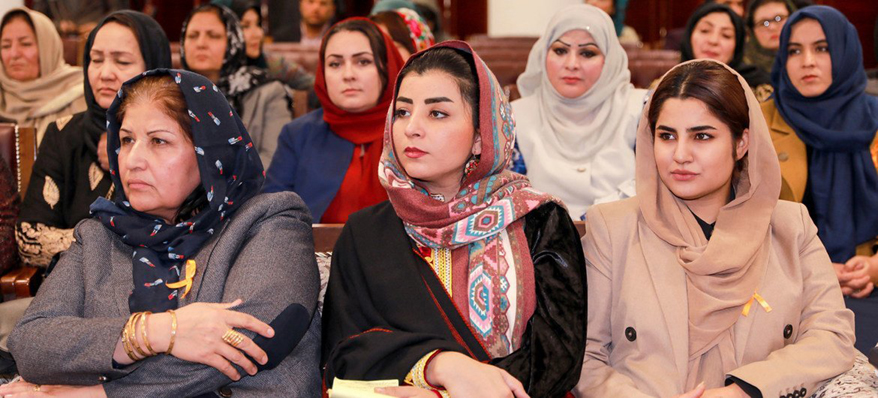
The presence of women in legislatures has long been treated as both a mirror and a measure of democratic maturity. Who gets elected, who speaks, who frames laws, and who ultimately governs tells us not only about political parties but about societies themselves. In India’s 18th Lok Sabha, elected in 2024, the numbers around women’s representation are revealing in subtle, sometimes uncomfortable ways. They show incremental progress, regional contrasts, party strategies, and structural limits that continue to hold women back even as the rhetoric of empowerment grows louder. When placed against the global landscape of women in parliaments, India’s situation appears neither uniquely regressive nor particularly exemplary. It sits somewhere in the middle—ambitious in language, cautious in execution, and slow in outcomes.
The raw numbers from the 18th Lok Sabha set the stage. Out of 543 members, 74 are women, constituting roughly 13.6 percent of the House. This is not India’s lowest figure, but it is a step back from the 17th Lok Sabha in 2019, which had 78 women members. The decline is modest, but symbolically important: it signals stagnation rather than momentum. In a country where women make up nearly half the population and where voter turnout among women has in recent elections matched or exceeded that of men, a Parliament with barely one in seven members being female raises unavoidable questions.
Within this group of 74 women MPs, party distribution matters. The Bharatiya Janata Party, as the largest party in the House, accounts for 31 women MPs. This is a significant number in absolute terms, but it also means that a majority of women MPs—43 of them, or about 58 percent—come from non-BJP parties. The Indian National Congress contributes 13 women MPs, while the Trinamool Congress contributes 11. These three parties alone account for the bulk of female representation in the Lok Sabha, underscoring how women’s political participation is shaped less by national averages and more by party-level decisions on candidate selection.
This distribution complicates simplistic narratives. It would be inaccurate to claim that one ideological camp alone is responsible for advancing women in Parliament. Instead, representation emerges from a mix of electoral compulsions, regional political cultures, leadership choices, and candidate pipelines. Some parties consistently field women in winnable seats; others rely on a few high-profile leaders while keeping the broader structure male-dominated. The BJP’s 31 women MPs reflect its overall seat dominance, but the fact that non-BJP parties collectively account for more women suggests that opposition formations—especially regional ones—play a crucial role in sustaining female presence in the House.
State-wise representation adds another layer of complexity. West Bengal leads the country with 11 women MPs, an extraordinary figure by Indian standards. Maharashtra and Uttar Pradesh follow with seven women MPs each. These numbers are not coincidental. West Bengal’s political culture, shaped by decades of mass politics, grassroots mobilization, and strong female leaders, has created a relatively fertile environment for women candidates. The Trinamool Congress, in particular, has consciously projected women leaders and fielded them in competitive constituencies, translating rhetoric into electoral outcomes.
Maharashtra and Uttar Pradesh, despite being vastly different in social composition and political history, both reflect how size and electoral competitiveness influence representation. Larger states send more MPs to Parliament, increasing the absolute number of women even if their percentage remains modest. Yet the fact that states with intense political competition produce more women MPs suggests that parties under pressure are more willing to experiment, diversify, and broaden their appeal. In contrast, smaller states and union territories often send all-male delegations, revealing how entrenched local power structures can resist change when not challenged by strong electoral incentives.
The slight decline from 78 women MPs in 2019 to 74 in 2024 is particularly telling because it occurred despite growing public discussion around women’s empowerment and despite the passage of the Women’s Reservation Act in 2023, which promises 33 percent reservation for women in the Lok Sabha and state assemblies. The catch, of course, lies in implementation. The reservation is tied to delimitation and census exercises, pushing its practical effect into the future. As a result, the 18th Lok Sabha remains governed by old rules, where women’s entry depends largely on party goodwill rather than constitutional mandate.
This gap between promise and practice is not unique to India. Across the world, women’s representation in parliaments has improved steadily but painfully slowly. As of 2024–2025, women hold roughly 26.9 to 27.2 percent of parliamentary seats globally in lower or single houses. This is a historic high, yet still far from parity. At the current rate of progress, global gender equality in parliaments is not expected before 2063. In other words, today’s gains, while real, are insufficient to close the gap within a politically meaningful timeframe.
The global picture is sharply uneven. Rwanda stands as the most striking outlier, with women holding over 60 percent of parliamentary seats. This extraordinary figure is not an accident of culture or coincidence; it is the result of a post-genocide constitutional design that deliberately embedded gender quotas as a tool of national reconstruction. Rwanda’s example demonstrates how institutional engineering can rapidly reshape representation when political will aligns with structural reform.
Following Rwanda are countries like Cuba, Nicaragua, Mexico, the United Arab Emirates, and Andorra, all of which have achieved 50 percent or more female representation. These cases span different political systems, from socialist states to constitutional monarchies to federal democracies, illustrating that no single ideology has a monopoly on gender inclusion. What they share, however, is the use of strong mechanisms—whether legislated quotas, party-level mandates, or appointment systems—that actively correct gender imbalances rather than passively hoping for change.
Regional trends further illuminate the dynamics at play. Latin America has emerged as a global leader in women’s parliamentary representation, driven by aggressive quota laws, parity requirements, and enforcement mechanisms that penalize non-compliance. Europe, particularly Northern and Western Europe, also performs relatively well, benefiting from long-standing gender equality norms and proportional representation systems that make it easier to balance candidate lists. In contrast, regions like Asia, the Pacific, and parts of the Middle East and North Africa lag behind, constrained by majoritarian electoral systems, patriarchal social norms, and weaker institutional incentives.
India’s position within Asia is paradoxical. It is home to some of the world’s most prominent female political leaders, from prime ministers and chief ministers to party heads and mass mobilizers. Yet this visibility at the top has not translated into broad-based representation at the legislative level. The political system remains heavily centralized around male networks, dynastic gatekeeping, and resource-intensive campaigns that disadvantage women. Even when women are politically active, they are often mobilized as voters rather than elevated as candidates.
One of the clearest lessons from global data is the impact of quotas. Countries with legislated gender quotas average around 31.9 percent women in parliament, compared to just 19.5 percent in countries without such measures. This is not a marginal difference; it is a structural one. Quotas work not because women are incapable of winning elections on their own, but because political systems are rarely neutral. They are shaped by historical exclusions, financial barriers, and informal norms that disproportionately favor men. Quotas act as a corrective, not a concession.
India’s forthcoming implementation of women’s reservation has the potential to be transformative, but only if it is executed with seriousness and transparency. A delayed or diluted rollout risks turning a landmark reform into a symbolic gesture. Moreover, reservation alone will not address deeper issues such as the concentration of women candidates in “safe” or “sacrificial” seats, the sidelining of women in parliamentary committees, or the persistence of gendered scrutiny in public discourse.
The composition of the 18th Lok Sabha underscores these concerns. While 74 women MPs mark progress compared to earlier decades, their share of power within Parliament remains limited. Leadership positions, key ministries, and influential committees are still overwhelmingly male-dominated. Visibility does not automatically translate into authority, and numbers alone do not guarantee impact. The real test lies in whether women MPs are able to shape legislation, influence budgets, and redefine policy priorities in ways that reflect their lived experiences.
State-level patterns offer both caution and hope. West Bengal’s leading position suggests that political culture can evolve, especially when parties consciously invest in women leaders over time. The presence of multiple women MPs from a single state creates a reinforcing effect, normalizing female leadership and encouraging aspirants. Conversely, states with zero or one woman MP reveal how fragile progress can be when it depends on isolated individuals rather than systemic change.
Comparing India to global leaders like Rwanda or Mexico can feel unfair given differences in political systems and histories. Yet the comparison is instructive precisely because it highlights what is possible. Rwanda did not wait for social attitudes to evolve organically; it redesigned institutions to accelerate change. Mexico enforced parity laws that compelled parties to field women equally. These cases show that representation is not merely a reflection of society—it is also a tool to reshape society.
At the same time, India’s scale and diversity pose unique challenges. Implementing reservation in a country with over 900 million voters, deeply entrenched caste and community dynamics, and highly personalized electoral contests is no small task. There are legitimate concerns about tokenism, proxy representation, and elite capture. But these risks must be weighed against the cost of inaction, which is the perpetuation of a democratic deficit that excludes half the population from meaningful representation.
The decline in women MPs from 2019 to 2024, however slight, should serve as a warning. Progress is not linear, and gains can stall or reverse without sustained effort. Public attention often spikes around landmark legislation or symbolic appointments, then fades, allowing old patterns to reassert themselves. The data from the 18th Lok Sabha suggests that without structural enforcement, parties may revert to familiar choices, prioritizing perceived winnability over inclusivity.
This is where independent data sources like the Inter-Parliamentary Union become crucial. By publishing monthly, real-time rankings of women in national parliaments, the IPU provides a global benchmark that governments cannot easily ignore. Transparency creates pressure, comparison creates competition, and both can drive reform. For scholars, journalists, and citizens alike, such data grounds debates in evidence rather than rhetoric.
Ultimately, the story of women in the 18th Lok Sabha is one of constrained progress. There are more women in Parliament today than in most of India’s post-independence history, yet far fewer than a modern democracy should have. Party differences matter, state cultures matter, and global lessons matter. What remains to be seen is whether India will translate its constitutional promise of equality into electoral reality. The next decade will be decisive. If the women’s reservation law is implemented effectively, future Lok Sabhas could look dramatically different, not just in numbers but in tone and priorities. If it is delayed or undermined, India risks falling further behind a world that, while imperfect, is slowly moving toward greater gender balance. The 18th Lok Sabha, with its 74 women MPs, stands at this crossroads—a reminder of how far the country has come, and how far it still has to go.