
India’s engagement with Africa is multifaceted: it encompasses economic cooperation and investments, developmental partnerships, cultural exchanges, educational collaborations, and diplomatic coordination on global issues such as climate change, reform of international institutions, and sustainable development
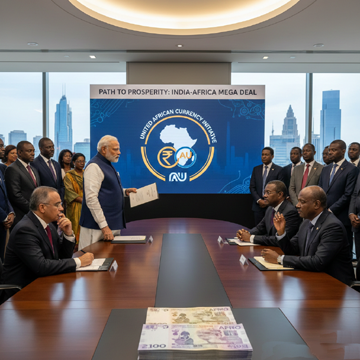
Africa presents both opportunities and complexities for Indian interests. As a rising global power with a growing economy, India seeks to expand strategic links that bring mutual benefit. Yet, Africa’s political and security landscape is uneven—marked by pockets of stability alongside regions plagued by conflict and instability. Understanding the best areas for business and cultural engagement, identifying promising and risky states, and considering where India might—and might not—intervene are key to charting a sustainable and ethical Africa policy.
DronePages Media explores the contours of India’s existing and potential ties with Africa, assess regional stability, examine zones of conflict, and discuss realistic approaches India could adopt to engage, assist, and grow partnerships across the continent. We conclude with an analysis of “possibilities” for India’s role in addressing Africa’s challenges without overstepping into untenable or counterproductive intervention.
India–Africa Relations: Historical and Contemporary Foundations
India’s ties with Africa pre-date modern statehood. Long before the colonial era, trade routes linked Indian and East African ports, exchanging goods like spices, textiles, ivory, and gold. Cultural interactions also flowed along these maritime arteries, eventually shaping communities of South Asian descent along the East African coast.
The shared experience of colonial rule—Britain, France, Portugal, Belgium, and others—further aligned political sympathies. India’s independence movement resonated in African liberation struggles, and post-colonial solidarity often translated into diplomatic support at the United Nations and other multilateral forums.
Today, India’s engagement with Africa is multifaceted: it encompasses economic cooperation and investments, developmental partnerships, cultural exchanges, educational collaborations, and diplomatic coordination on global issues such as climate change, reform of international institutions, and sustainable development.
Key mechanisms include the India–Africa Forum Summit (IAFS), established in 2008 and periodically continued, fostering high-level dialogue and cooperation frameworks. Through concessional lines of credit, technical assistance programs, and scholarships for African students, India has sought to build goodwill while strengthening long-term ties.
The Best Business Ties: Economic Opportunities and Strategic Sectors
Trade and Investment: Existing Patterns
The India–Africa trade relationship has grown significantly in the past two decades, with bilateral trade exceeding tens of billions of dollars annually. India imports African crude oil and minerals while exporting pharmaceuticals, machinery, automobiles, and consumer goods. African energy resources, raw materials, and agricultural commodities align well with Indian industrial needs and energy security.
Strategic Sectors for Growth
1. Energy and Natural Resources:
Africa’s vast reserves of oil, gas, and minerals such as copper, cobalt, and lithium—critical for modern technologies—present long-term opportunities. Indian energy companies already have footprints in West African oil fields and East African gas projects. Renewables also offer a frontier for collaboration, especially solar and hydroelectric power generation, aligning with India’s renewable energy ambitions.
2. Infrastructure and Construction:
India’s engineering and construction firms have the expertise to support African infrastructure needs, from roads and bridges to ports and urban development. Partnerships in public–private ventures can unlock major projects that boost connectivity and economic productivity.
3. Pharmaceuticals and Healthcare:
A comparative advantage for India is its generic pharmaceuticals industry. Africa’s healthcare systems face gaps in access and affordability. Expanded collaboration in local production of essential medicines, vaccines, and medical devices can improve healthcare outcomes while building industrial capacity.
4. Information Technology and Digital Services:
India’s software, fintech, and IT services sectors can support Africa’s digital transformation. Investments in digital infrastructure, mobile applications, e-government platforms, and tech skills training can stimulate jobs and innovation.
5. Agriculture and Food Security:
Agricultural collaboration—through technology transfer, mechanization services, and supply chain partnerships—can boost Africa’s productivity and food security. Indian expertise in drought-resistant crops and farm management practices has relevance in many African contexts.
6. Education, Skills, and Human Capital:
Scholarships, vocational training, and collaborative research programs strengthen people-to-people ties. Indian universities and institutes hosting African students enhance cultural understanding and create future networks of cooperation.
Special Economic Zones and Joint Ventures
Several African nations are encouraging special economic zones (SEZs) to attract foreign investment and foster manufacturing exports. India could leverage these platforms for joint ventures, particularly in agro-processing, textiles, and automotive parts, helping integrate African economies into global value chains.
Connectivity Corridors
With the expansion of maritime trade routes under initiatives like the International North–South Transport Corridor (INSTC) and port modernization programs, India–Africa connectivity holds promise. Efficient logistics reduce costs and increase competitiveness for bilateral commerce.
Cultural Ties: Soft Power and People-to-People Exchanges
Beyond economics, India and Africa share cultural affinities grounded in history, religion, and societal values. Indian cinema, music, yoga, and cuisine enjoy popularity in many African countries, reinforcing cultural goodwill. At the same time, Africa’s dynamic artistic and cultural expressions—music, dance, literature—have captivated audiences in India and beyond.
Language and Heritage:
While India’s colonial history differs from Africa’s, both regions share linguistic ties through English, French, and local lingua francas like Swahili. In countries such as Kenya, Tanzania, South Africa, and Uganda, Indian diasporic communities have long contributed to society, blending cultural practices.
Educational Exchanges:
Programs like the Indian Council for Cultural Relations (ICCR) scholarships and African Diaspora initiatives support academic exchange and capacity building.
Sports and Youth Leadership:
Platforms for youth collaboration—through sports events, cultural festivals, and leadership fellowships—can further cement cross-continental bonds.
Most Stable and Promising African Countries for India
Africa is not monolithic. Some states have made notable strides in political stability, economic reform, and governance.
1. Botswana
Renowned for political stability, democratic governance, and prudent fiscal management, Botswana consistently ranks highly on African governance indexes. Its diamond industry has been managed with relative transparency, and its low corruption levels provide a secure environment for investment.
2. Ghana
Ghana has a history of peaceful democratic transitions and an open business climate. Its natural resources—gold, cocoa, and oil—paired with sound macroeconomic policies, make it attractive to foreign investors. India and Ghana have growing trade links and cultural connections.
3. Rwanda
Despite its tragic history, Rwanda has achieved rapid economic growth and significant improvements in governance and public services. Known for efficient administration and anti-corruption measures, it is positioning itself as a regional hub for technology, logistics, and services.
4. Mauritius
With a stable political environment, strong financial services sector, and strategic location in the Indian Ocean, Mauritius serves as a gateway for investment flows into Africa. Its ties with India are deep, including shared cultural and economic linkages.
5. Kenya
East Africa’s largest economy, Kenya benefits from dynamic entrepreneurship, a growing tech ecosystem (“Silicon Savannah”), and diversified sectors. While governance challenges remain, Kenya’s strategic location and infrastructure investments provide opportunities for collaboration.
6. Morocco
Politically stable and economically diversified, Morocco has become a hub for automotive, aerospace, and renewable energy industries. Its diplomatic reach into Europe and Africa enhances its appeal as a partner.
These countries present environments where India can deepen trade, investment, and cultural relations with managed risk and long-term potential.
Regions with Violence, Corruption, and Civil War
Not all parts of Africa offer the same level of stability. A range of factors—colonial legacies, weak institutions, ethnic tensions, economic exclusion, and external interference—have contributed to conflict in various regions.
1. Sahel Region (e.g., Mali, Burkina Faso, Niger)
The Sahel has become synonymous with armed insurgencies, jihadist violence, and state fragility. Coups and chronic insecurity have disrupted governance and displaced populations. Corruption, weak state presence in rural areas, and illicit trafficking exacerbate instability.
2. Eastern Democratic Republic of Congo (DRC)
The eastern DRC has endured decades of armed groups contesting control of mineral-rich territories. Violence against civilians, militia activity, and limited state control have made sustainable development elusive. Corruption and governance weaknesses further complicate recovery.
3. Somalia and the Horn of Africa
Somalia’s long civil conflict, driven by clan dynamics, extremist groups, and political fragmentation, has undermined stability. Neighboring regions may be affected by refugee flows and economic disruption.
4. South Sudan
Since independence in 2011, South Sudan has experienced civil war, ethnic strife, and economic collapse. Multiple peace agreements have struggled to halt violence or establish governance systems that deliver basic services.
5. Libya and Parts of the Maghreb
Post-2011 Libya has been fragmented among rival armed factions and external powers, with ongoing violence and competing administrations. Border regions in the Maghreb have faced smuggling and terrorist challenges.
6. Central African Republic (CAR)
With recurrent coups and armed group violence, CAR remains one of the most fragile states in the world. Humanitarian crisis levels are high, and state institutions are weak.
Corruption and Governance Challenges Across Regions
Beyond active conflict, corruption remains widespread in many countries, impeding investment and service delivery. Weak rule of law, opaque business practices, and elite capture of resources elevate risks for foreign partners.
Can India Consider Military Intervention in Africa?
The question of military intervention is sensitive, shaped by international law, national interests, and historical experience. India does not have a tradition of unilateral military intervention abroad in the manner of some global powers. Instead, its engagements have favored diplomacy, peacekeeping under the UN, and support for capacity building and stabilization.
India’s Position on Sovereignty and Non-Interference
India’s foreign policy historically emphasizes respect for sovereignty, non-intervention, and multilateralism. These principles are rooted in India’s own struggle against colonial rule and its alignment with the Non-Aligned Movement. Unilateral military intervention in another state—especially without invitation or UN mandate—would contradict these longstanding principles.
UN Peacekeeping and Multilateral Engagement
India is one of the largest contributors to United Nations peacekeeping missions. Indian contingents have served in Africa (e.g., in Sudan, South Sudan, Congo) under UN mandates, focusing on protecting civilians, supporting ceasefires, and training local forces. Such contributions underscore India’s willingness to assist in stabilization within international law frameworks.
Conditions for Engagement
If India were to participate militarily beyond peacekeeping, certain conditions would be necessary:
- Request by legitimate government or AU/UN mandate
Any military engagement should be authorized by the United Nations or African Union and requested by the recognized government. - Clear objectives and exit strategy
Interventions should aim at creating conditions for peace and transfer of responsibility to local authorities. - Multilateral partnerships
Working with other nations and regional blocs reduces unilateral burden and increases legitimacy. - Humanitarian focus
Prioritizing civilian protection and reducing harm are paramount.
Limits and Risks
Unilateral military intervention carries serious risks:
- Entrapment in protracted conflict
Without local ownership of peace processes, foreign troops may become targets without resolving root causes. - Political backlash or accusations of neo-imperialism
African states and civil society are sensitive to perceived external domination. - Resource and strategic diversion
India’s defense priorities and budgets may not accommodate open-ended foreign deployment.
Alternatives to Military Intervention
Instead of intervention, India can:
- Support peacekeeping and capacity building
Train African security forces in human rights, civil-military cooperation, and counter-terrorism within legal frameworks. - Back diplomatic mediation efforts
Use India’s neutral stance to encourage dialogue between factions. - Invest in development and governance programs
Addressing poverty and exclusion can reduce drivers of violence.
Addressing Africa’s Challenges: India’s Role and Possibilities
Africa faces complex challenges that require multifaceted engagement. No single country—India included—can “solve” these issues alone. However, India can play important roles in several domains.
Economic Development and Inclusive Growth
India’s development cooperation model emphasizes capacity building, technology transfer, and economic partnerships rather than simple aid. By expanding trade and investment—especially in diversified sectors that generate jobs—India can contribute to sustainable development in partner states.
Supporting Governance and Institutional Strengthening
Long-term stability requires accountable institutions. India can share its experience with democratic governance, decentralization, digital public service delivery, and anti-corruption frameworks through training programs, peer learning, and advisory support.
Human Capital and Health Systems
Programs that enhance education, vocational skills, and healthcare delivery strengthen societal resilience. India’s pharmaceutical and medical expertise positions it as a potential partner in pandemic response, vaccine distribution, and health workforce training.
Climate Action and Green Transitions
Africa is vulnerable to climate change impacts such as drought, floods, and desertification. India’s engagement in renewable energy projects—solar parks, wind farms, grid modernization—can align with African agendas for sustainable energy.
Diaspora and Cultural Bridges
The Indian diaspora in Africa and African students in India are bridges of trust and understanding. Support for cultural festivals, joint research centers, and exchange programs solidifies these human links.
Regional and Multilateral Cooperation
India can work within frameworks such as the African Union (AU), regional economic communities (RECs), and the United Nations to align priorities, share best practices, and co-design solutions tailored to local contexts.
Leveraging Technology for Development
From digital identity systems to mobile banking and e-commerce platforms, India’s tech ecosystem can help leapfrog infrastructure barriers. Collaborations with African startups and innovators foster mutual growth.
Navigating Risks and Building Trust
Engagement in Africa must be guided by principles of mutual benefit, cultural respect, and long-term partnership—not short-term gain. Lessons from other global actors caution against extractive practices or excessive geopolitical competition that overlooks local priorities.
India’s approach should be:
- Transparent and accountable in agreements.
- Responsive to local needs and voices rather than externally driven agendas.
- Committed to sustainability across economic, social, and environmental domains.
Trust is the foundation of durable cooperation.
A Shared Future of Opportunity and Responsibility
Africa’s diversity presents both promise and challenge. For India, the continent offers avenues for economic engagement, strategic partnership, and cultural solidarity. African countries—from stable democracies to fragile states—each present unique contexts where thoughtful, ethical, and sustained engagement can yield mutual benefits.
Military intervention by India, as a general policy, remains unlikely outside the framework of international mandates and peacekeeping cooperation. Instead, the possibilities for India lie in peacebuilding support, development partnerships, trade and investment, and people-to-people ties that reinforce Africa’s agency and aspirations. If approached with humility, sensitivity, and shared vision, India–Africa cooperation can contribute not only to economic growth but also to a world where partnerships across continents address global challenges—from climate change to equitable prosperity.