
Can SuperHealth’s CEO Varun Dubey, COO Manoj Kumar and CMO Dr Alexander Kuruvilla alongwith Bharat Taxi’s founders get together and drive a patient and doctor centric revolution in Indian healthcare? The model can be borrowed from both SuperHealth and Sahakar Taxi Cooperative Limited, GCMMF (Amul), IFFCO, KRIBHCO, NAFED, NDDB, NCEL, NCDC, NABARD
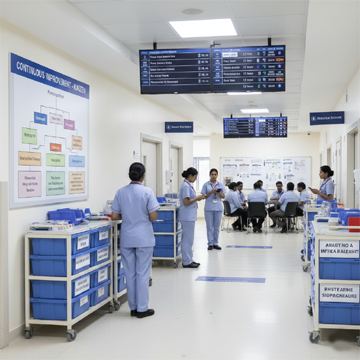
India’s healthcare system — vast, fragmented, and overwhelmed — presents one of the most urgent opportunities for transformation in the world. While startups and established institutions alike have made incremental improvements, systemic challenges persist: long wait times, opaque costs, workforce burnout, and uneven access to quality care. Two emerging initiatives — SuperHealth Hospitals and the Bharat Taxi cooperative — rooted in radically different domains, offer a thought-provoking lens on how cross-sector collaboration might reshape the patient and caregiver experience.
SuperHealth: Re-imagining hospitals from the ground up
Founded in 2024, SuperHealth Hospitals is a technology-driven hospital chain with a mission to overhaul traditional hospital delivery models. Led by Varun Dubey (CEO), Manoj Kumar (COO), and Dr. Alexander Kuruvilla (CMO), the company is building a nationwide network of 100 zero-wait, zero-commission hospitals — starting with its flagship facility in Bengaluru — with a focus on accessibility, transparency, and clinical excellence.
Their strategy leverages AI and digital systems to reduce operational friction. SuperHealth’s proprietary SuperOS platform automates processes, supports voice-to-digital prescriptions in multiple Indian languages, and cuts administrative delays that traditionally plague hospital care. The organisation has also introduced services like Honest Second Opinion — free expert review of treatment plans — to help patients make informed decisions and combat unnecessary procedures.
The founding team blends healthcare domain expertise with product and operational excellence:
- Varun Dubey brings leadership experience across Apollo Hospitals, Ola, and Practo, with a clear emphasis on user-centric design and transparency.
- Manoj Kumar offers deep operational knowledge from his time building tech-enabled healthcare workflows.
- Dr. Alexander Kuruvilla contributes veteran clinical insight and strategic direction, having led major health systems.
SuperHealth’s model challenges legacy incentives by eliminating commission-based doctor pay, prioritising clinical judgement and patient outcomes over transactional revenue.
Bharat Taxi: A cooperative vision for mobility
While not a healthcare organisation, Bharat Taxi represents another people-centric innovation emerging in India’s mobility space. Launched as India’s first cooperative ride-hailing service, it is operated by Sahakar Taxi Cooperative Limited and backed by major cooperatives like Amul, IFFCO, and others, with support from the Government of India.
Unlike private aggregators that take substantial commissions from driver earnings, Bharat Taxi’s cooperative model allows drivers to retain most of their fare revenue and participate in governance. With technology integration supporting real-time tracking, transparent pricing, and multilingual interfaces, Bharat Taxi aims to shift the balance of power toward drivers and riders alike.
Though its core mission is transportation, this driver-first philosophy resonates with broader ideas about stakeholder empowerment, equity, and democratic participation — principles that could be applied meaningfully in health-ecosystem design.
What a cross-sector partnership could look like
This might seem like an unconventional partnership — healthcare leaders and a cooperative ride-hailing initiative — but several points of convergence suggest potential synergy:
1. Improving Access and Patient Experience
Transportation is a real determinant of healthcare access. In India, patients in peri-urban and rural areas often struggle to reach clinics and hospitals on time. A Bharat Taxi + SuperHealth collaboration could integrate on-demand, healthcare-aware mobility services — prioritising timely transport for appointments, diagnostics, follow-ups, and emergency referrals — with transparent pricing and driver training on patient support.
2. Shared Commitment to Equity and Transparency
Both ventures reject extractive business models in favour of stakeholder centricity. SuperHealth eliminates commission-based clinical incentives to prioritise care quality. Bharat Taxi eliminates platform commissions to prioritise driver earnings and fair pricing. Together, they champion value-based engagement over transactional models.
3. Technology & Operational Efficiency
SuperHealth’s advanced digital infrastructure paired with Bharat Taxi’s cooperative tech stack could yield health logistics platforms that reduce delays and improve continuity of care — for example:
- Real-time ride scheduling tied to patient treatment timelines.
- Integrated care navigation platforms with transport, appointment booking, and follow-up tracking in one ecosystem.
4. Community-Centred Health Initiatives
A collective model like Bharat Taxi’s cooperative governance could inspire community health worker networks or patient advisory councils within SuperHealth hospitals, strengthening feedback loops and accountability.
Challenges and considerations
For such a collaboration to drive a revolution rather than a pilot, several challenges must be addressed:
- Domain alignment: Mobility and healthcare are regulated, high-stakes sectors with different risk profiles. Efficient coordination requires shared standards, clear boundaries, and robust safety protocols.
- Sustainability: Cooperative models can struggle with scaling without strong governance frameworks. Similarly, healthcare ventures must balance innovation with quality and compliance.
- Cultural integration: Different organisational cultures — cooperative governance versus clinical leadership — might need intentional frameworks for collaboration.
A vision worth exploring
SuperHealth’s mission to redefine hospital experiences — grounded in transparency, technology, and clinical trust — is already charting a new path in Indian healthcare. At the same time, Bharat Taxi’s cooperative model is reimagining mobility through a driver-and-consumer-centric lens. While they are not traditional partners, a strategic partnership between these innovators could extend the impact of both — linking accessibility, equity, and empowerment across sectors. In a nation as diverse and complex as India, such cross-sector collaborations could very well be the kind of patient-and-doctor-centric revolution the healthcare ecosystem needs — not just in clinical rooms, but in every step from home to hospital and back.

