
The question, is not whether Middle Eastern FTZs are individually attractive but why they cannot consolidate into a regional network that multiplies their collective value
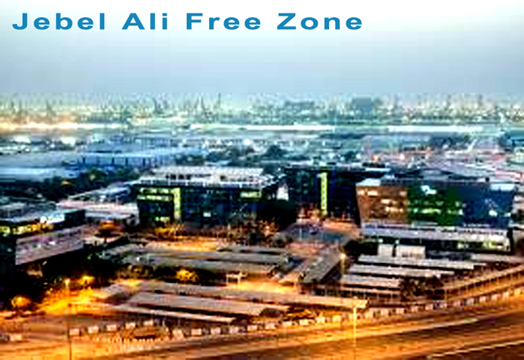
Across the Middle East, free trade zones (FTZs) have been marketed as islands of efficiency in an otherwise complex regulatory ocean. From the UAE’s flagship zones in Dubai and Abu Dhabi to Saudi Arabia’s emerging economic cities, and from Qatar’s carefully curated investment zones to Oman and Bahrain’s niche offerings, the region has invested heavily in creating attractive, investor-friendly enclaves. These zones promise 100 per cent foreign ownership, tax incentives, simplified incorporation, modern infrastructure, and proximity to some of the world’s fastest-growing markets.
On paper, the Middle East should already function as a seamless network of FTZs — a lattice of interconnected commercial hubs enabling capital, talent, and goods to move fluidly across borders. Each zone appears smiling in isolation, projecting a “happy face” of efficiency and openness. Yet, when viewed collectively, these zones fail to operate as a coherent regional system. Instead, they remain fragmented, inward-looking, and structurally disconnected.
The question, therefore, is not whether Middle Eastern FTZs are attractive individually — many are — but why they cannot consolidate into a regional network that multiplies their collective value.
Fragmentation by Design, Not Accident
One of the primary reasons lies in the fact that Middle Eastern FTZs were never designed to work together. Each zone is created as a sovereign instrument, shaped by national priorities rather than regional coordination. Regulatory frameworks, licensing rules, permitted activities, and ownership structures differ sharply not only between countries but even between zones within the same country.
For entrepreneurs and investors, this means that every new FTZ entry is effectively a fresh start. Knowledge gained in one zone rarely translates seamlessly into another. Application processes, documentation standards, compliance requirements, and regulatory interpretations vary widely, creating friction instead of synergy.
Rather than forming a network, FTZs compete with one another for the same pool of foreign direct investment (FDI), offering marginally different incentives but rarely harmonising their rules. This competition encourages duplication of structures instead of integration, ensuring that each zone remains administratively self-contained.
The Domestic Market Wall: A Structural Barrier
A critical limitation undermining FTZ consolidation is restricted access to domestic markets. Free zone entities are generally prohibited from trading directly within the host country’s mainland economy unless they appoint a local distributor, agent, or establish a separate mainland entity.
This restriction is not merely a technical inconvenience; it reflects a deeper political economy choice. FTZs are deliberately separated from domestic markets to protect local commercial interests, preserve regulatory control, and maintain national employment policies. As a result, free zones function as semi-detached economic bubbles rather than fully integrated components of national economies.
When scaled regionally, this issue becomes more pronounced. A company operating across multiple Middle Eastern FTZs may find itself legally present in several jurisdictions but commercially excluded from the very markets surrounding them. This severely limits the possibility of treating FTZs as nodes in a single regional value chain.
Public Contracts and the Credibility Gap
Another barrier to consolidation is the exclusion of free zone companies from public and semi-government contracts in many Middle Eastern countries. In jurisdictions such as the UAE, bidding for government projects often requires a mainland licence, regardless of the company’s scale or international reputation.
This creates a two-tier corporate ecosystem. Mainland companies are perceived as “real” participants in the national economy, while free zone entities are often viewed as transient, export-oriented, or tax-optimised structures. Over time, this perception feeds into investor sentiment. Institutional investors, banks, and large clients may regard mainland-licensed firms as more credible, stable, and politically embedded.
This credibility gap discourages long-term capital formation within FTZs and reinforces the view that free zones are stepping stones rather than permanent bases. A network cannot form when its nodes are not trusted equally.
Regulatory Complexity Without Regional Alignment
Every Middle Eastern FTZ operates under its own regulatory authority, with distinct rules governing incorporation, licensing, permitted activities, and compliance. For founders unfamiliar with the region, navigating this landscape requires local advisors, legal counsel, and often trial-and-error learning.
More importantly, there is no overarching regional framework to harmonise these rules. Unlike the European Union’s single market or ASEAN’s gradual regulatory convergence, the Gulf Cooperation Council (GCC) has not translated political coordination into deep commercial integration at the FTZ level.
Ongoing regulatory obligations further complicate matters. Economic substance regulations, audited financial statements, beneficial ownership disclosures, annual licence renewals, and evolving reporting standards impose recurring administrative burdens. These requirements are often underestimated at the incorporation stage and differ subtly between jurisdictions, making cross-zone expansion costly and time-consuming.
Without alignment, compliance becomes a multiplicative burden rather than a shared standard — a fundamental obstacle to consolidation.
Legal Reform and Transitional Uncertainty
Ironically, the Middle East’s push to attract more FDI through legal reform has, in some cases, increased uncertainty. Countries like Saudi Arabia and Qatar are actively updating commercial, investment, and company laws to modernise their economies. While these reforms are directionally positive, transitional phases often introduce ambiguity.
During reform periods, regulations may change mid-process, approvals may be delayed, and interpretations may vary between authorities. For businesses attempting to operate across multiple jurisdictions, this unpredictability discourages regional integration strategies.
A network requires stability and predictability. Constant legal evolution without synchronisation makes coordination across FTZs risky and administratively expensive.
The Hidden Cost Problem
Headline incorporation fees in Middle Eastern FTZs are often attractively low. Marketing materials emphasise quick setup, minimal capital requirements, and tax efficiency. However, the true cost of operating in a free zone becomes apparent only over time.
Office space requirements, visa quotas tied to leased square footage, annual licence renewals, compliance audits, labour fees, insurance, and banking charges accumulate steadily. For small and medium-sized enterprises (SMEs), these costs can be disproportionately high.
When operating across multiple FTZs, these expenses multiply without economies of scale. Each entity requires its own office, visas, bank accounts, and compliance regime. Without cost-sharing mechanisms or cross-zone recognition, consolidation becomes financially unattractive.
Banking as a Bottleneck
Banking remains one of the most underestimated challenges for free zone companies. Due to stringent anti-money laundering (AML) and know-your-customer (KYC) standards, many foreign-owned FTZ entities face delays or outright refusals when opening corporate bank accounts.
Banks often prefer companies with substantial local operations, long operating histories, or government-linked clients. Free zone entities, especially those structured for cross-border trade or holding activities, are subjected to heightened scrutiny.
A regional FTZ network would require seamless financial integration. Instead, banking practices reinforce fragmentation, forcing businesses to manage multiple banking relationships under different standards and timelines.
Visa and Talent Constraints
Human capital mobility is another weak link. Employee visas in FTZs are typically tied to office size, lease type, or predefined quotas. This limits hiring flexibility and increases fixed costs, particularly for fast-growing companies.
At the same time, the Gulf labour market is highly competitive. Skilled professionals command premium salaries, and SMEs struggle to compete with multinational corporations and state-backed entities. These challenges are magnified when companies operate across multiple jurisdictions, each with its own visa rules and employment regulations.
Without regional visa portability or unified talent frameworks, FTZs cannot function as interconnected labour markets.
Sector Silos and Activity Restrictions
Most FTZs are sector-specific by design — media zones, logistics hubs, technology parks, financial centres. While this specialisation creates depth within individual zones, it limits horizontal expansion.
A company wishing to diversify its activities often needs to amend its licence, add new approvals, or establish additional entities. Across borders, this complexity increases further. What is permitted in one FTZ may be prohibited in another, even within the same sector.
Such structural rigidity prevents the emergence of multi-sector regional champions anchored within FTZ networks.
Administrative Friction and Documentation Culture
Incorporation and ongoing administration in Middle Eastern FTZs involve extensive paperwork. Notarisation, legalisation, translation, and apostille requirements vary by jurisdiction and often by nationality of shareholders.
For foreign investors unfamiliar with regional documentation norms, these processes can be slow and opaque. Approval timelines differ widely, undermining predictability. A networked system requires standardised documentation and mutual recognition — conditions that are currently absent.
Geopolitics and Sovereignty Considerations
Finally, broader geopolitical realities shape FTZ fragmentation. While the GCC promotes regional cooperation rhetorically, economic sovereignty remains paramount. Each state uses FTZs as strategic tools to attract capital, talent, and technology on its own terms.
Differences in reform pace, fiscal policy, and political priorities prevent deep alignment. In this context, integration is perceived not as a collective gain but as a potential dilution of national control.
Why the Happy Faces Do Not Add Up
The Middle East’s free trade zones are individually impressive but collectively incoherent. Each smiles outward, projecting efficiency and opportunity, yet turns inward when integration is proposed. Market access restrictions, regulatory fragmentation, cost structures, labour constraints, banking hurdles, and geopolitical considerations combine to prevent consolidation into a true network.
Until FTZs are treated not merely as national assets but as regional infrastructure — with harmonised rules, shared standards, and mutual recognition — the dream of a Middle Eastern FTZ network will remain unrealised. For now, entrepreneurs must navigate these zones not as interconnected highways, but as isolated islands linked only by air routes and ambition.