
The Jaguar is unique. It was designed for “low-level deep penetration.” It can fly incredibly low, hugging the terrain to avoid enemy radar, and deliver a heavy payload of bombs deep inside enemy territory. It is built like a tank. It has two engines, which is a safety net
In the high-stakes world of defense aviation, “new” is usually the currency of power. Nations posture with fifth-generation stealth fighters, unmanned drones, and next-gen avionics that cost more than the GDP of small islands. Yet, in a quiet hangar in Jamnagar or Ambala, an Indian Air Force (IAF) engineer might soon be opening a crate shipped from Muscat, dusting off a component manufactured in the 1980s, and fitting it into a frontline attack aircraft.
The news that Oman is handing over 20 retired Jaguar fighter-bombers to India—not to fly, but to be cannibalized for spare parts—is a headline that might elicit a chuckle from the uninitiated. It sounds almost pedestrian, like buying a donor car to keep a vintage classic running. But beneath this transaction lies a story that is quintessentially Indian. It is a narrative that bridges the gap between high-altitude geopolitical strategy and the grounded, dusty reality of the Indian household. It is a story of thrift, of valuing the old, and of the sheer, stubborn refusal to let something good go to waste just because the world says it is obsolete.
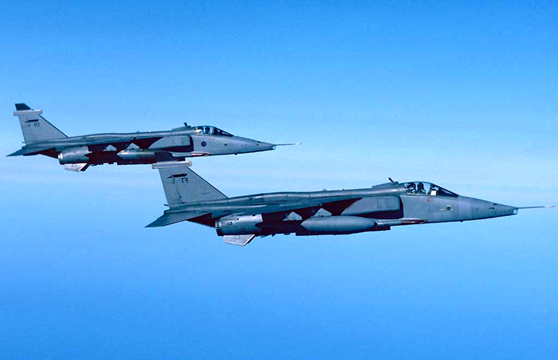
The Omani Gift: A Lifeline for the “Shamsher”
The specific development is straightforward but significant. The Sultanate of Oman, a long-time strategic partner of India in the Gulf, has retired its fleet of SEPECAT Jaguars. These Anglo-French deep penetration strike aircraft, relics of the Cold War, have served their time. For Oman, they are museum pieces or scrap metal. For India, however, they are gold dust.
The IAF is currently the only air force in the world that still operates the Jaguar in significant numbers. We have six squadrons—roughly 100 to 120 aircraft—of this twin-engine beast, known locally as the Shamsher (Sword of Justice). While the British Royal Air Force (RAF) retired them in 2007 and the French followed suit, India has kept them flying.
The problem with being the last user of a vintage machine is that the supply chain dries up. The factories that stamped out the fuselage panels or wound the copper for the alternators closed decades ago. When a bracket breaks or a seal fails, you can’t just order a replacement from Amazon. You have to find someone who still has one on a shelf, or you have to make it yourself.
This is where the Omani “gift” becomes crucial. By transferring 20+ airframes to India, Oman provides a reservoir of pre-manufactured parts. These jets will be dismantled—stripped of their engines, avionics, landing gear, and hydraulic pumps. These “organs” will then be transplanted into the IAF’s serving fleet, extending their life by another decade or more. It is a masterclass in logistical scavenging, ensuring that the Shamsher remains sharp even as its original creators have long since moved on.
The Philosophy of “Paisa Vasool”
To understand why a rising superpower like India is accepting “used” fighter jets, one must look beyond military budgets and into the Indian psyche. There is a deep cultural resonance here. In India, thrift is not just an economic necessity; it is a moral imperative. It is an art form.
We are a people who struggle to throw things away. Open a cupboard in an average Indian middle-class home, and you will find the evidence. You will find old t-shirts that have been demoted to nightwear, then to Holi clothes, then to dusting rags (pochha), and finally, perhaps, to oil rags for the car. The lifecycle of a textile in India is infinite.
This practice, often romanticized as sustainability in the West today, has been the Indian default for centuries. We practice Rafoo (darning) not just to fix a hole, but to honor the garment. We drive our cars until the odometers roll over, and then we drive them some more. The sight of a 1990s Maruti 800 or a Premier Padmini still chugging along Indian roads is a testament to a mechanic’s ingenuity and an owner’s refusal to succumb to planned obsolescence.
The IAF’s approach to the Jaguar is the military equivalent of this domestic thrift. It is the philosophy of Paisa Vasool—extracting every last ounce of value from an investment. When India bought these jets (beginning in 1979), the taxpayer paid a fortune for them. To retire them simply because they are “old,” while the airframes still have life in them, would be seen as wasteful.
This isn’t about being cheap; it’s about being resourceful. Just as a grandmother knows that the old pressure cooker makes better dal than the fancy new electric one, the IAF knows that the Jaguar, for all its age, offers a stability and low-level strike capability that is hard to replicate.
The “Deep Penetration” Necessity
Of course, the IAF does not run on sentimentality. The decision to keep the Jaguar flying is driven by cold, hard strategic realities.
The IAF is currently battling a severe shortage of fighter squadrons. To handle a two-front threat scenario (China and Pakistan), the IAF is authorized to have 42 squadrons. In reality, it is hovering around 30. The vintage MiG-21s are being phased out (after a controversially long service life), and the MiG-27s are already gone.
New aircraft are coming, but they are coming slowly. The indigenous Tejas LCA is a fantastic machine, but production rates are still ramping up. The Rafale is a game-changer, but we only have 36 of them, and they are incredibly expensive. The proposed 114 Multi-Role Fighter Aircraft (MRFA) deal is still stuck in the bureaucratic pipeline.
In this gap—between the retirement of the old MiGs and the arrival of the future fleet—the Jaguar is the bridge. It is the workhorse that holds the line.
The Jaguar is unique. It was designed for “low-level deep penetration.” It can fly incredibly low, hugging the terrain to avoid enemy radar, and deliver a heavy payload of bombs deep inside enemy territory. It is built like a tank. It has two engines, which is a safety net; if one fails or takes a hit, the pilot can often limp home on the other. This ruggedness makes it beloved by pilots, even if they often complain that it is underpowered (a standing joke is that the Jaguar only flies because the earth is curved).
To keep this capability relevant, India hasn’t just maintained the Jaguar; we have upgraded it. The DARIN-III (Display Attack Ranging Inertial Navigation) upgrade suite has turned this 1970s airframe into a modern fighter on the inside. It now boasts modern autopilot, advanced avionics, and better targeting systems.
Imagine taking your grandfather’s 1980 Ambassador car, but replacing the dashboard with an iPad, fitting a GPS, and installing a new fuel injection system. It looks the same from the outside, but it drives like a modern machine. That is the DARIN-III Jaguar. But even a modernized car needs spare tires and brake pads—which is exactly what the Omani jets provide.
The Scavenger Hunt: From France to the UK to Oman
This isn’t the first time India has gone “shopping” for used Jaguars. The IAF has become something of a global collector of this specific aircraft type.
When France retired its Jaguars, India acquired 31 airframes in 2018. They were shipped in containers, stripped down, and stored. Similarly, the UK offered airframes and spares. Now, Oman joins the list.
There is a fascinating divergence here between Western and Indian military philosophy. Western militaries, driven by high labor costs and a focus on technological supremacy, tend to retire platforms early. It is often cheaper for them to buy a new F-35 than to pay the man-hours required to maintain a 40-year-old Jaguar.
India, with its high engineering capability, lower labor costs, and budget constraints, flips this logic. We have the engineers who can perform “life extension” studies. We have the technicians who can hand-machine a part if necessary. We have Hindustan Aeronautics Limited (HAL), which licensed-produced the Jaguar and knows every rivet in its body.
This capability allows India to operate in a “second-hand market” that others cannot touch. We are the ultimate recyclers of the aviation world. We take what the West discards and turn it into a frontline defense capability. It is Jugaad at 50,000 feet (or, in the Jaguar’s case, 500 feet).
A Bridge to the Future
The Jaguar fleet will likely fly until 2035. By then, the airframes will be over 50 years old. It is a staggering thought. A pilot flying a Jaguar in 2035 might be the grandson of a pilot who flew the same type in 1985.
Eventually, the Shamsher will have to go. Metal fatigue is real; physics cannot be cheated forever. The hope is that by 2035, the Tejas Mk2 and the Advanced Medium Combat Aircraft (AMCA) will be ready to take the baton.
Until then, the arrival of the Omani Jaguars is a cause for celebration. It is a “Thank You, Oman” moment, certainly. But it is also a moment of self-reflection. It highlights the Indian genius for making do, for finding value where others see waste, and for maintaining a continuity of strength through a patchwork of smart acquisition and indigenous engineering.
So, the next time you see someone darning an old sock or fixing a toaster that should have been thrown out years ago, don’t look down on it. That spirit of thrift is the same spirit that keeps the skies of India safe. It is the spirit that sees a retired jet in an Omani desert not as junk, but as a sword waiting to be sharpened one last time.