
Lack of funds and lack of good management in Russia has rendered the Sukhoi-57 into an ongoing project and not a good enough product for any air force
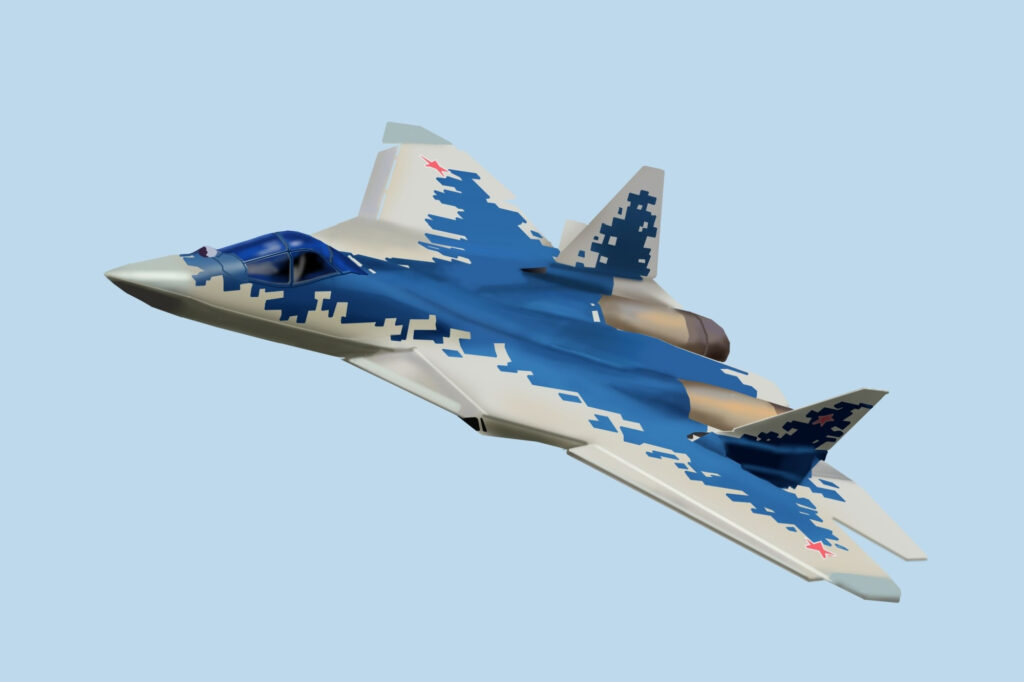
Sukhoi Su57 cannot be readily inducted into Indian Air Force at this point in time. India’s urgent requirement for a true 5th generation fighter emphasizes maturity, stealth depth, and readiness due to threat from China but this is where the Su-57 still struggles. The aircraft is in low-rate production with barely two dozen units fielded, and many core technologies remain unfinished. Its AL-41F1 engines are only a stopgap, with the true Izdeliye 30 powerplant unlikely before 2028–2030. Internal weapon bays, though present, are only ~4.4 m long with <1 t load rating, meaning they cannot house standoff weapons like BrahMos-A, which would require heavy structural redesign. Integrating BrahMos in a 5th generation fighter is necessary to attack targets deep inside mainland China and not just Tibet.
The panoramic cockpit in production Su-57s is modern, but its new software architecture is still a work in progress and sensor fusion maturity isn’t fully achieved, and it will take time for it to become a fully integrated single-picture system that takes data from all Su57 sensors and display on its screen as a composite picture.
From India’s perspective, induction would require integration of indigenous weapons (Astra series, Rudram, SAAW, BrahMos) and Indian datalink hardware, adding years of testing on top of Russia’s own unfinished software roadmap. This means that by the time the Su-57 reach acceptable maturity and complete Indian-specific integration, the timeline would stretch well beyond 2030. By then, India’s own Advanced Medium Combat Aircraft (AMCA) would already be in advanced flight testing, offering a platform designed around Indian weapons, digital infrastructure, and sustainment from the outset. Committing to Su-57 now would risk locking the IAF into a long and costly integration cycle, only to overlap with AMCA’s arrival leaving India with an interim platform that fails to deliver on urgent 5th gen requirements.
Another critical factor is technology transfer. Russia currently has laws restricting the export of core stealth and propulsion technologies, meaning that deep transfer of Su-57 technology is legally constrained. Even if exceptions were negotiated, Russia would be cautious about sharing sensitive design know-how, software source code, or manufacturing processes tied to stealth shaping and coatings. Russia still hasn’t shared full technology of Su-30MKI.
India must then ask: is it prepared to fund and co-develop another 5th generation program in parallel with AMCA, effectively doubling R&D costs and stretching resources? Or does the IAF require a readily available, combat-ready 5th generation fighter that can be inducted quickly and operated with minimal external dependency? In practical terms, the Su-57 offer neither rapid induction nor timely technology transfer. It was a strategic blunder by policy makers to exit the PAK-FA/FGFA program. If FGFA program would have been active we would at least have flying prototypes as of today and we could have inducted locally developed cockpit display and avionics into these prototypes while maintaining other critical Russian hardware like side looking radars and DIRCM. At least weapons integration would have begun. Sukhoi Su57 “has the potential” to become the best 5th generation fighter but it is still a “project” not a “product”

