
The juxtaposition is striking: while admissions elsewhere are slowed by administrative backlogs and policy caps, this specific channel appears poised for expansion. Whether this constitutes a humanitarian intervention or a racially selective policy is now the central question animating diplomatic and domestic debate. Prioritizing white applicants from South Africa while slowing or suspending processing from predominantly Black African nations evokes the ugliest chapters of Western racial politics
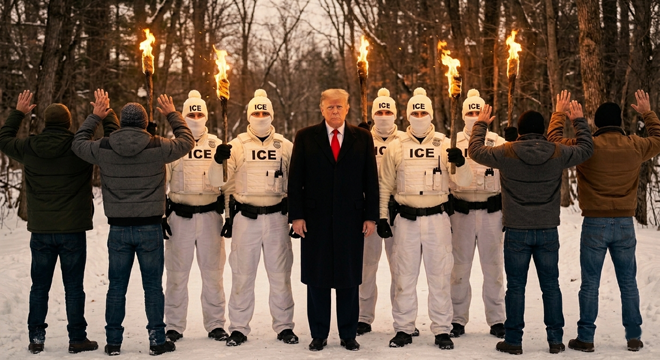
A fresh controversy has erupted in Washington and Pretoria over reports that the United States government plans to process as many as 4,500 white South Africans per month for refugee resettlement, even as refugee admissions from many other parts of the world remain curtailed. The policy direction, attributed to the administration of former President Donald Trump, has sparked sharp debate about race, history, and the moral architecture of American immigration law. Critics argue that the optics of prioritizing white applicants from South Africa while slowing or suspending processing from predominantly Black African nations evokes the ugliest chapters of Western racial politics. Supporters counter that refugee determinations must rest on claims of persecution, not race, and that Afrikaner farmers and other minorities in South Africa have voiced security concerns for years.
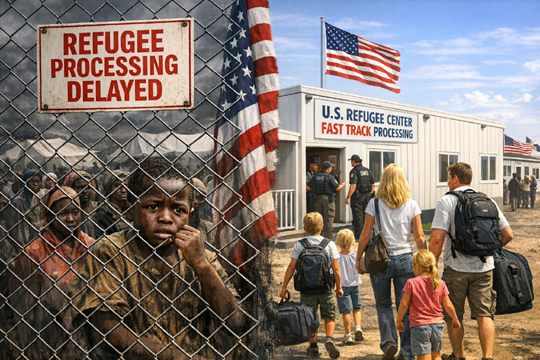
According to reports, the U.S. State Department document outlining a target of 4,500 monthly applications signaled an aggressive scaling up of capacity. Plans to install temporary structures on U.S. embassy property in Pretoria to create a modular processing village underscore the seriousness of the effort. The juxtaposition is striking: while admissions elsewhere are slowed by administrative backlogs and policy caps, this specific channel appears poised for expansion. Whether this constitutes a humanitarian intervention or a racially selective policy is now the central question animating diplomatic and domestic debate.
The legacy of race in American immigration policy
To understand the political symbolism surrounding this decision, one must situate it within the long arc of American immigration history. The United States has oscillated between openness and restriction, often influenced by racial and ethnic anxieties. From the Chinese Exclusion Act of 1882 to the national origins quotas of the 1920s, U.S. immigration law historically favored Northern and Western Europeans. The 1965 Immigration and Nationality Act dismantled explicit racial quotas, establishing a framework more aligned with civil rights principles.
It is this history that fuels comparisons, sometimes hyperbolic, sometimes pointed, between contemporary policy choices and earlier eras of racialized gatekeeping. When critics invoke the specter of the Ku Klux Klan, they are drawing on a painful legacy in which whiteness functioned as a de facto criterion for belonging. Whether or not the present policy fits that description legally, the symbolism of prioritizing white South Africans while delaying Black African applicants inevitably revives memories of discriminatory systems the United States has officially repudiated.
Donald Trump’s ancestry and the politics of identity
The debate also intersects with the personal heritage of Donald Trump. Born in New York City to Fred Trump and Mary Anne MacLeod Trump, he descends from German and Scottish immigrants. His paternal grandfather, Friedrich Trump, emigrated from Kallstadt in southwest Germany in 1885, seeking economic opportunity during America’s westward expansion. His maternal lineage traces to the Gaelic-speaking Isle of Lewis in Scotland, from which Mary Anne MacLeod emigrated in 1930.
These immigrant roots complicate the narrative. Trump’s own family history reflects the quintessential American story of newcomers building prosperity across generations. Yet history also records that Fred Trump at times described the family as Swedish rather than German, a reflection of anti-German sentiment in the aftermath of World War II. Identity in America has always been fluid, shaped by social pressures and political climates.
Critics suggest that emphasizing white South African admissions while restricting broader refugee flows stands in tension with the immigrant narrative embodied by Trump’s own ancestry. Supporters argue that ancestry is irrelevant to policy; what matters, they say, is whether individuals face credible persecution. Nonetheless, the intertwining of personal heritage and national policy adds emotional weight to the debate.
South Africa’s complex European inheritance
To grasp why white South Africans might be singled out in refugee discussions, it is necessary to understand South Africa’s layered colonial past. The Afrikaner community traces its origins primarily to Dutch settlers who arrived at the Cape in the 17th century under the auspices of the Dutch East India Company. Over time, Germans, French Huguenots, and Flemish settlers joined them, forming a distinct cultural group.
German settlers arrived as soldiers, sailors, and artisans. Shared Protestant beliefs and linguistic similarities facilitated their absorption into the emerging Afrikaans-speaking population. Some genealogical estimates suggest that modern Afrikaners may carry a substantial proportion of German ancestry, though the precise figure is debated. Flemish settlers from Flanders likewise contributed to the demographic mosaic, with surnames beginning in “van” or “van der” reflecting geographic origins in the Low Countries.
Afrikaans itself evolved from 17th-century Dutch but incorporated influences from Malay, Khoisan languages, and other sources. The Afrikaner identity, therefore, is neither purely European nor monolithic. It reflects centuries of interaction, conflict, and adaptation at the southern tip of Africa.
Colonial entanglements and racial hierarchy
Any discussion of white South Africans inevitably touches on apartheid, the system of institutionalized racial segregation that governed South Africa from 1948 until the early 1990s. Under apartheid, political and economic power was concentrated in the hands of the white minority, while Black South Africans were disenfranchised and subjected to systematic discrimination.
The end of apartheid in 1994 marked a profound transformation. Democratic elections brought Nelson Mandela to the presidency and initiated an era of constitutional equality. Yet the legacies of apartheid, economic disparity, land ownership patterns, and social mistrust, remain deeply embedded. Land reform debates, rural violence, and economic stagnation have fueled anxieties among some white South Africans, particularly farmers.
It is within this fraught context that refugee claims emerge. Advocates for Afrikaner applicants argue that farm attacks and rhetoric around land expropriation without compensation create a climate of insecurity. Opponents counter that crime in South Africa affects all communities and that systemic persecution against whites does not meet the legal threshold required under international refugee conventions.
The legal framework for refugee admissions
Under U.S. law, refugee status requires demonstrating a well-founded fear of persecution based on race, religion, nationality, political opinion, or membership in a particular social group. The annual refugee cap is typically set by presidential determination. During Trump’s presidency, refugee ceilings were reduced significantly compared to prior administrations.
Reports that the administration intends to process 4,500 white South Africans per month raise questions about how this aligns with established caps. If admissions from one group exceed the overall ceiling, it would signal either a reallocation or a policy exception. Critics argue that such an exception, if based implicitly on race, would conflict with the nondiscrimination principles embedded in U.S. refugee law.
Supporters respond that the refugee framework is inherently case-specific. If individuals present credible claims of targeted violence, they are eligible regardless of race. The controversy, therefore, hinges on whether the prioritization reflects objective assessments of risk or political signaling.
Diplomatic implications for U.S.–South Africa relations
The policy has implications beyond immigration law. South Africa is a strategic partner in Africa, a member of BRICS, and an influential voice in global south diplomacy. A decision by Washington to fast-track white South Africans as refugees could be interpreted by Pretoria as a critique of its domestic governance.
Such perceptions risk straining bilateral relations. South African leaders may view the move as undermining confidence in the country’s stability or as amplifying narratives of white victimhood that resonate internationally but not necessarily domestically. Conversely, proponents within the United States argue that offering refuge is a sovereign humanitarian act, not a diplomatic rebuke.
Balancing humanitarian commitments with diplomatic sensitivities has long challenged U.S. administrations. The optics of race intensify that balancing act in this instance.
The modular village and administrative prioritization
The plan to erect temporary housing and processing facilities on embassy grounds in Pretoria symbolizes a logistical commitment rarely seen for a specific refugee cohort. Modular units would allow for medical screenings, interviews, and documentation procedures on-site, expediting throughput. The infrastructure investment suggests that the initiative is not merely rhetorical.
At the same time, reports indicate that refugee admissions more broadly are paused through early March due to backlogs. For applicants from war-torn regions in Africa and the Middle East, delays can stretch into years. The contrast between acceleration for one group and stagnation for others sharpens perceptions of inequity.
Administrative prioritization is not new in refugee policy. The United States has previously fast-tracked groups such as Iraqi interpreters or Afghan allies following military engagements. The difference here lies in the racial narrative that inevitably surrounds white South Africans in a post-apartheid world.
Race, narrative, and political mobilization
The rhetoric framing this policy often invokes the Ku Klux Klan, a white supremacist organization synonymous with racial terror in American history. While such comparisons may be politically charged, they reflect genuine fears that racial hierarchy could re-enter immigration policy through the back door of selective humanitarianism.
Supporters of the policy reject these analogies as inflammatory. They argue that acknowledging violence against a minority does not equate to endorsing supremacist ideology. Yet in politics, symbolism matters as much as statute. A policy that appears to privilege white applicants risks alienating communities who have long fought for racial equality in America.
Public opinion may ultimately hinge on data. If evidence demonstrates systemic targeting of Afrikaners as a racial group, the refugee rationale gains strength. If violence is shown to be indiscriminate and rooted in broader criminality, the perception of racial favoritism intensifies.
The broader African refugee landscape
Sub-Saharan Africa produces millions of displaced persons due to conflict, climate change, and political repression. From Sudan to the Democratic Republic of Congo, refugee camps strain under the weight of protracted crises. Black African applicants to the United States often face lengthy vetting processes and uncertain outcomes.
In this context, a monthly intake of 4,500 white South Africans would represent a significant share of total African admissions. Human rights advocates question whether resources might be more equitably allocated to populations facing mass displacement and famine. The moral calculus of refugee resettlement inevitably involves prioritization, but criteria must withstand scrutiny.
Identity politics on both sides of the Atlantic
The debate also reverberates within South Africa. Some Afrikaners view the opportunity for resettlement as an insurance policy amid economic uncertainty. Others reject the notion that they are persecuted, arguing that emigration narratives exaggerate threats and undermine national unity.
In the United States, immigration policy remains a polarizing issue. Trump’s earlier platform emphasized border control and reduced refugee ceilings. A targeted expansion for white South Africans appears to invert that restrictionist stance for a specific demographic, reinforcing perceptions that immigration debates are often less about numbers than about who those numbers represent.
Historical ironies and moral complexity
There is an irony in the possibility that descendants of European colonists in Africa might seek refuge in a nation built by immigrants, including those of German and Scottish descent like Trump’s forebears. History’s currents rarely flow in straight lines. Migration patterns shift with economic tides, political upheavals, and cultural anxieties.
South Africa’s European-descended population once held political dominance under apartheid; today it constitutes a minority navigating a transformed constitutional order. Whether that navigation amounts to persecution is the crux of refugee adjudication. The moral complexity defies easy slogans.
Principle or politics?
The reported plan to process 4,500 white South Africans per month as refugees places the United States at the center of a debate about race, law, and global responsibility. It forces a reckoning with America’s immigration history, from exclusionary quotas to civil rights reforms. It invites scrutiny of South Africa’s post-apartheid realities and the lived experiences of its minorities.
Ultimately, refugee policy must balance compassion with fairness, sovereignty with international norms. If admissions are grounded in credible evidence of targeted persecution, they align with humanitarian principles. If they appear racially selective without sufficient legal basis, they risk undermining America’s commitment to equality before the law.
The controversy surrounding Donald Trump and the prioritization of white South Africans will likely persist, shaped by court challenges, diplomatic dialogue, and public debate. What remains clear is that immigration policy is never merely administrative. It is a mirror reflecting a nation’s values, its fears, and its vision of who belongs within its borders.