
The commercialization wave has also increased participation from countries without legacy astronaut corps, enabled by government sponsorship programs, philanthropic efforts where donors effectively Donate seats, and sovereign partnerships structured like long-term investment agreements
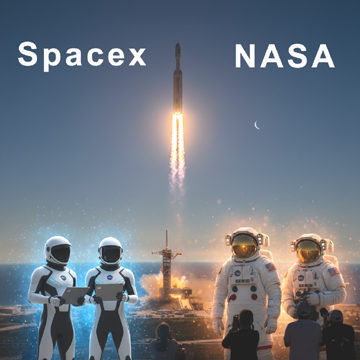
When people hear the phrase “Dragon astronauts,” they often imagine a new elite tribe of spacefarers—sleek suits, touchscreen cockpits, Silicon Valley swagger, and a vibe closer to a startup launch party than a Cold War rocket bunker. In reality, the distinction between Dragon astronauts and traditional agency astronauts is less about who they are and more about how the global space ecosystem has evolved. The transformation from government-monopoly exploration to public-private partnership has reshaped recruitment, training, knowledge systems, operational culture, and even the economics of human spaceflight. The astronauts themselves increasingly operate like highly credentialed professionals navigating a complex ecosystem of Insurance liabilities, Loans for infrastructure, intellectual property, Credit arrangements, and geopolitical risk—closer to executives on a Conference Call with an investment bank than the mythic lone heroes of the Apollo era. The shift is best understood through the partnership between NASA and SpaceX, whose reusable Crew Dragon capsules now routinely ferry multinational crews to orbit, often alongside personnel from European Space Agency and Roscosmos. This collaboration has created a hybrid astronaut identity that blends public-sector rigor with private-sector agility, producing operational differences that ripple across recruitment pipelines, training regimes, mission knowledge, and professional culture.
Recruitment in the age of commercialization
Traditional astronaut recruitment historically resembled the hiring process of a highly selective government research institution—military test pilots, engineers with advanced Degrees, physicians with specialized Treatment knowledge, and scientists trained in extreme environments. The emergence of commercially operated spacecraft has widened the aperture. Today’s astronaut candidate pool increasingly includes industry professionals who understand Software systems, automation interfaces, human-machine interaction, and commercial mission management. Reports from McKinsey & Company and Deloitte on the future space economy emphasize that the workforce demand for commercial space will resemble aviation and energy sectors more than traditional government programs, requiring multidisciplinary competencies including project finance, risk assessment, and cross-border regulatory compliance. In other words, astronauts are becoming hybrid professionals—part pilot, part scientist, part systems integrator, part corporate ambassador. The analogy may sound strange but think of it like an Attorney navigating an international Mortgage dispute while simultaneously managing a complex engineering system. Recruitment now also considers psychological adaptability to commercial environments where mission sponsors might include universities, biotech firms experimenting with Cord Blood research, or private companies funding microgravity manufacturing. The commercialization wave has also increased participation from countries without legacy astronaut corps, enabled by government sponsorship programs, philanthropic efforts where donors effectively Donate seats, and sovereign partnerships structured like long-term investment agreements. According to policy analysis from the Organisation for Economic Co-operation and Development, such public-private arrangements mirror infrastructure financing models seen in energy grids and Gas/Electricity networks, where risk is distributed across stakeholders rather than concentrated within governments alone.
Training differences: analog era versus touchscreen era
Training divergence is perhaps the most visible distinction between Dragon-era missions and earlier spacecraft programs. Traditional astronauts trained extensively on analog controls, manual piloting procedures, and contingency operations requiring deep mechanical familiarity with vehicle subsystems. Commercial spacecraft, by contrast, rely heavily on automation and digital interfaces. The Crew Dragon cockpit features touchscreen controls and advanced autonomous navigation capabilities, reducing manual workload but increasing reliance on Software comprehension and systems oversight. Astronauts must now understand interface logic, cybersecurity considerations, and failure-mode analytics similar to engineers in high-reliability industries like aviation or nuclear energy. This does not mean training is easier—if anything, cognitive complexity has increased. Instead of memorizing thousands of mechanical procedures, astronauts must interpret data streams, manage automated responses, and make high-level decisions under time pressure. Training simulations increasingly resemble financial Trading platforms where operators monitor multiple dashboards simultaneously, intervening only when anomalies appear. Experts from PwC note that digital transformation across industries shifts human roles from manual execution toward supervisory control, and astronaut training exemplifies this trend. Another difference is cross-organizational integration. Astronauts assigned to commercial missions train not only with government instructors but also with private engineers, mission planners, and contractors. They often participate in joint exercises spanning multiple facilities, including mission simulations at Johnson Space Center in Houston and company headquarters in Hawthorne. This distributed training environment mirrors multinational corporate onboarding programs more than traditional military academies.
Knowledge systems and operational culture
The knowledge ecosystem surrounding modern astronauts has evolved dramatically. Government programs historically emphasized hierarchical knowledge transfer—senior astronauts mentoring juniors, formal manuals, and strict procedural documentation. Commercial partnerships introduce flatter knowledge networks resembling technology startups, where engineers, operators, and astronauts collaborate in iterative design loops. Mission preparation now includes real-time data analytics, continuous feedback cycles, and rapid updates to procedures based on operational experience. Astronauts participate directly in design reviews, sometimes influencing spacecraft interface changes between missions. This participatory culture would have been unthinkable during early space programs dominated by rigid bureaucratic structures. The cultural shift also extends to risk perception. Government astronauts traditionally operated under national prestige frameworks where failure carried geopolitical consequences. Commercial missions incorporate risk management frameworks similar to those used in Insurance underwriting and infrastructure finance. Risk is quantified, priced, and distributed among stakeholders. Astronauts therefore develop familiarity with legal frameworks, liability waivers, and contractual obligations—concepts closer to what a corporate Lawyer might encounter than a Cold War pilot. Knowledge of regulatory compliance, export controls, and intellectual property rights becomes essential, especially when experiments involve pharmaceutical Treatment, biotechnology, or proprietary industrial processes conducted in orbit. The astronaut’s role increasingly includes acting as a mission liaison between sponsors and engineers, ensuring experiment protocols are executed precisely, data is transferred securely, and results meet contractual expectations.
Mission operations: integrated control rooms and distributed authority
Mission control for commercial crew missions represents another hybridization. Operations are jointly managed by government and private teams, with responsibilities divided yet highly coordinated. The International Space Station itself—International Space Station—functions as a multinational research hub requiring synchronized operations across agencies and companies. Communication flows resemble global corporate operations centers managing supply chains rather than single-agency command structures. Astronauts must interact with multiple control teams, sometimes switching between communication protocols depending on the system involved. This environment demands strong interpersonal skills, cross-cultural awareness, and adaptability. In many ways, astronauts act like senior executives navigating multinational partnerships, participating in technical briefings that resemble high-stakes Conference Calls involving engineers, scientists, financial stakeholders, and government representatives simultaneously. Operational authority is also more distributed. Autonomous spacecraft capabilities allow astronauts to intervene directly in certain scenarios without waiting for ground commands, increasing decision-making responsibility onboard. This shift parallels trends in remote industrial operations such as offshore energy platforms, where on-site personnel are empowered to make rapid decisions supported by digital tools.
Capacity expansion and democratization of space access
One of the most transformative aspects of commercial crew vehicles is capacity. Reusable spacecraft capable of carrying four or more crew members at lower cost per seat have expanded access to space dramatically. Nations without independent launch capability can now send astronauts through partnership agreements, similar to how airlines purchase seats on commercial flights rather than owning aircraft. This democratization has geopolitical implications. Emerging economies view astronaut missions as national prestige projects, technological learning opportunities, and catalysts for STEM education. Government data repositories from multiple countries show increased investment in space programs following successful astronaut flights, reflecting a multiplier effect on national innovation ecosystems. Bilateral agencies such as development banks often frame space cooperation as part of technology transfer initiatives, comparable to infrastructure development programs in telecommunications or energy grids. The economic logic resembles large-scale infrastructure Loans where upfront costs yield long-term capability gains. Astronaut participation also drives public engagement, inspiring students to pursue Degrees in science and engineering, enroll in specialized Classes, and engage with research institutions. The commercialization of access therefore extends beyond transportation—it reshapes education systems, research funding, and national innovation strategies.
Professional practices: astronauts as multidisciplinary operators
Modern astronauts operate at the intersection of science, engineering, diplomacy, and commerce. They conduct experiments, maintain complex equipment, troubleshoot failures, and represent their sponsoring organizations publicly. The presence of commercial stakeholders introduces new responsibilities such as ensuring contractual deliverables are met, documenting experiment outcomes precisely, and sometimes participating in promotional activities. Astronauts may interact with corporate sponsors funding microgravity research, philanthropic organizations that Donate resources for humanitarian experiments, or startups testing manufacturing processes. Their professional identity increasingly resembles that of project managers overseeing high-value technical programs. The need for documentation and accountability parallels industries like pharmaceuticals, where regulatory compliance is strict and errors can invalidate research outcomes. Astronauts must therefore maintain meticulous records, verify procedures, and sometimes provide sworn statements regarding experiment integrity—activities reminiscent of legal affidavits handled by an Attorney. The analogy may seem exaggerated, but the financial stakes are substantial. Microgravity research can involve millions of dollars in investment, intellectual property rights, and future commercial applications. Astronaut performance directly influences these outcomes, elevating their role from explorers to operational professionals embedded within global innovation networks.
Health, rehabilitation, and human performance science
Another dimension where differences emerge is human performance management. Long-duration missions require rigorous monitoring of physical and psychological health. Advances in biomedical technology have improved training protocols, including personalized exercise regimens, nutritional planning, and Recovery programs designed to mitigate microgravity effects. Astronauts undergo extensive medical Treatment before and after missions, including rehabilitation similar to elite athletes undergoing Rehab following major competitions. Research into bone density loss, muscle atrophy, and cardiovascular adaptation informs training improvements. Commercial partnerships have accelerated innovation by introducing private medical companies into astronaut healthcare systems. Experiments involving stem cells, Cord Blood, and regenerative medicine aim to develop therapies applicable both in space and on Earth. The overlap between space medicine and terrestrial healthcare creates opportunities for technology transfer, with potential applications in aging populations and chronic disease management. Think tanks highlight that investment in astronaut health research yields spillover benefits comparable to pharmaceutical R&D programs, strengthening national healthcare systems and biotechnology industries simultaneously.
Financial ecosystems behind astronaut missions
Behind every astronaut launch lies a complex financial architecture involving governments, private investors, insurers, and contractors. Space missions require risk coverage similar to large infrastructure projects, including launch Insurance, liability coverage, and contingency planning. Investment structures may involve venture capital, sovereign funding, or partnerships with an investment bank underwriting financing arrangements. The commercialization of space has therefore integrated astronauts into global financial systems in ways previously unseen. Their missions can influence stock valuations, investor sentiment, and corporate strategy. Analysts compare the evolution of commercial space to early aviation, where government contracts initially supported industry growth before private markets took over. Business chambers worldwide increasingly advocate for supportive regulatory frameworks to attract space investment, viewing the sector as a driver of economic growth. Astronaut missions become symbolic milestones demonstrating technological capability, encouraging further capital inflows. The financial analogy extends even to individual astronauts, whose professional trajectories may include consulting roles, corporate board positions, or entrepreneurial ventures after active service. Their expertise carries market value similar to executives with rare technical knowledge.
Global comparisons: how other countries approach astronaut development
Different nations adopt varying approaches to astronaut recruitment and training depending on institutional culture and economic resources. European programs emphasize academic excellence and multinational collaboration, reflecting the continent’s cooperative governance structures. Russian training traditions maintain strong links to military aviation heritage, emphasizing endurance and manual piloting skills. Emerging space nations often focus on educational impact, selecting candidates who can inspire youth and promote scientific literacy. Comparative studies by consulting firms highlight that successful astronaut programs require integration with broader national innovation strategies, including education policy, industrial development, and research funding. Countries investing in space capabilities often experience spillover benefits in advanced manufacturing, robotics, and digital technologies. The presence of commercial partners further accelerates these effects by introducing private sector efficiency and competition. Astronaut training facilities themselves become hubs of technological development, attracting universities, startups, and research institutions. The ecosystem resembles technology clusters such as Silicon Valley, where talent concentration drives innovation. Astronaut programs therefore function as catalysts for national technological ecosystems rather than isolated prestige projects.
Knowledge transfer and the future workforce
Perhaps the most significant long-term impact of the Dragon era is knowledge transfer. Astronauts trained in commercial spacecraft systems gain expertise applicable to other industries, including autonomous vehicles, robotics, and advanced manufacturing. Their experience managing complex automated systems under pressure provides insights relevant to sectors ranging from aviation to healthcare technology. Educational outreach programs amplify this impact by connecting astronauts with students through lectures, virtual Classes, and mentorship initiatives. Governments recognize the value of such engagement in building future workforces equipped for high-technology economies. Reports from international development agencies indicate that exposure to space programs increases student interest in STEM careers, contributing to national competitiveness. The knowledge transfer dynamic mirrors historical patterns where military or government technologies eventually transformed civilian industries, such as the internet or GPS. Commercial space may follow a similar trajectory, with astronaut expertise catalyzing innovation across multiple sectors.
The myth versus the reality
Despite media narratives portraying Dragon astronauts as fundamentally different from traditional agency astronauts, the core competencies remain similar: technical mastery, resilience, teamwork, and decision-making under extreme conditions. The differences lie primarily in context. Modern astronauts operate within a hybrid public-private ecosystem shaped by globalization, commercialization, and technological advancement. They must navigate legal frameworks, financial structures, and multinational partnerships alongside scientific objectives. The profession has evolved from heroic exploration toward complex professional specialization embedded within global economic systems. Astronauts today are not just explorers—they are operators, diplomats, scientists, and ambassadors of technological progress. The distinction between Dragon astronauts and NASA astronauts therefore reflects institutional evolution rather than human difference. As commercial space expands toward lunar missions, private space stations, and eventually Mars exploration, the hybrid astronaut model will likely become the norm. Future astronauts may train through partnerships involving universities, corporations, and governments simultaneously, reflecting the interconnected world they represent.
A profession transformed by collaboration
The rise of commercial crew missions marks a turning point in human spaceflight history. The collaboration between government agencies and private companies has reshaped recruitment, training, operational culture, and economic frameworks surrounding astronauts. Dragon-era astronauts symbolize a broader transformation toward integrated global innovation ecosystems where public and private sectors collaborate to achieve ambitious goals. Their profession now intersects with finance, law, healthcare, education, and international diplomacy in ways unimaginable during the early space age. As humanity pushes further into space, the astronaut archetype will continue evolving, reflecting the changing structures of society itself. The next generation may not distinguish between Dragon astronauts and NASA astronauts at all—only between those who venture beyond Earth and those who remain grounded, watching history unfold.