
Handful of nations control enormous shares of global supply while others struggle with margins, delayed payments, and credit risks. According to the Food and Agriculture Organization and the World Trade Organization, the top fruit-exporting nations include China, Spain, the Netherlands, the United States, Chile, Mexico, Vietnam, South Africa, Thailand, and Brazil
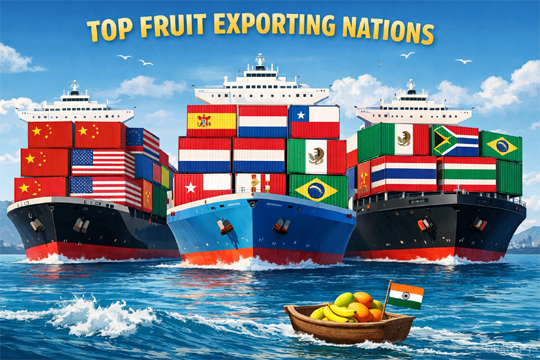
The global fruit export market looks deceptively simple from a distance: orchards, farmers, containers, ships, and supermarket shelves glowing with color. But beneath the surface lies a ruthless ecosystem of leverage, finance, branding, logistics sophistication, and geopolitical positioning. Countries that dominate fruit exports do not merely grow fruit — they engineer entire value chains that combine technology, insurance protection, trade finance, and brand authority. The result is a handful of nations controlling enormous shares of global supply while others struggle with margins, delayed payments, and credit risks. According to global trade datasets from organizations such as the Food and Agriculture Organization and the World Trade Organization, the top fruit-exporting nations include China, Spain, the Netherlands, the United States, Chile, Mexico, Vietnam, South Africa, Thailand, and Brazil. Yet the reasons behind their success differ dramatically, revealing lessons that extend far beyond agriculture into the psychology of global commerce itself.
China’s scale advantage and industrial agriculture machine
China’s leadership in fruit exports is rooted in its enormous production base and increasingly industrialized farming systems. Apples, citrus fruits, and grapes dominate its export profile, supported by massive government-backed agricultural modernization programs. Reports from consulting firms like McKinsey & Company and Boston Consulting Group have repeatedly highlighted China’s ability to combine scale with infrastructure investment — cold storage networks, logistics corridors, and digital marketplaces that reduce waste and improve margins. The Chinese export ecosystem also integrates financial tools such as export Credit guarantees and state-supported Loans that reduce risk for exporters. Unlike many developing economies, Chinese exporters rarely operate in isolation; they are embedded in clusters supported by government banks, insurance schemes, and even investment bank partnerships that enable them to negotiate stronger payment terms globally. This financial muscle translates directly into bargaining power. Buyers understand that Chinese suppliers can walk away from deals, which changes negotiation dynamics entirely.
Spain’s Mediterranean mastery and branding discipline
Spain has transformed geography into competitive advantage. Mediterranean climate conditions allow high-quality citrus, stone fruits, and melons, but what truly differentiates Spain is branding discipline and compliance with stringent European standards. Organizations like the European Commission and the OECD have documented how European exporters benefit from regulatory credibility, traceability systems, and certification regimes that inspire buyer confidence. Spanish exporters operate like premium brands rather than commodity suppliers. They invest in packaging design, quality certifications, and marketing narratives that elevate perception. A supermarket chain in Germany paying premium prices for Spanish oranges is not just purchasing fruit — it is purchasing reliability. Insurance coverage for shipment delays, sophisticated Mortgage-backed financing for agricultural infrastructure, and strong legal recourse through EU trade law frameworks further strengthen Spain’s negotiating position. The presence of specialized Attorney networks and agricultural Lawyer expertise ensures contractual enforcement that many exporters elsewhere lack.
The Netherlands: the small country that rules European fruit logistics
Perhaps the most fascinating case is the Netherlands, a country with limited agricultural land that nevertheless ranks among the world’s largest fruit exporters. The secret lies in logistics supremacy. The country acts as a re-export hub, importing fruits from Latin America, Africa, and Asia and distributing them across Europe with unmatched efficiency. The iconic Port of Rotterdam functions as a global gateway, supported by advanced warehousing, cold chain technology, and digital tracking Software systems. According to reports by Deloitte and PwC, Dutch agritech innovation — including greenhouse cultivation and supply-chain analytics — enables year-round availability and minimal wastage. Financial institutions in the Netherlands offer specialized trade finance instruments, enabling exporters to avoid long credit cycles. When buyers deal with Dutch firms, payment discipline is non-negotiable because the country’s reputation signals authority. This is positioning power in action.
The Americas: specialization creates dominance
In the Western Hemisphere, specialization drives success. The United States exports walnuts, apples, grapes, and berries with strong branding rooted in food safety standards and advanced farming technology. Government data from the United States Department of Agriculture shows how research investment and farmer support programs contribute to export competitiveness. Chile and Mexico provide an even clearer lesson in niche dominance. Chile has become synonymous with cherries and grapes, leveraging Southern Hemisphere seasonality to supply Northern markets during off-season months. Mexico, meanwhile, dominates avocado exports to such an extent that global prices fluctuate based on Mexican harvest forecasts. Industry associations and business chambers like the U.S. Chamber of Commerce often cite Mexico’s avocado sector as a model of coordinated production, branding, and export marketing. Concentration creates leverage. When a country controls more than half of a global supply segment, buyers accept its payment terms.
Emerging tropical exporters and the year-round supply race
Vietnam, Thailand, Brazil, and South Africa represent another layer of the fruit export hierarchy — tropical and seasonal complement suppliers that enable year-round global availability. South Africa’s citrus exports, for instance, fill Northern Hemisphere gaps, while Thailand’s exotic fruits cater to premium niche markets. Development agencies such as the World Bank and bilateral programs from the Asian Development Bank have supported infrastructure upgrades, farmer training, and export certification programs in these countries. These investments show how international financing ecosystems shape trade outcomes. Access to affordable Loans, Insurance against crop failure, and Recovery mechanisms after climate shocks determine whether exporters survive volatile markets.
The import giants shaping global demand
On the demand side, the United States, China, and Germany rank among the largest fruit importers. Consumer expectations in these markets influence global standards. German retailers demand traceability documentation; American buyers expect consistent packaging and delivery timelines; Chinese consumers increasingly favor premium imported fruits as status symbols. Think tanks such as the Brookings Institution have noted how rising middle-class consumption patterns reshape agricultural trade flows. Importers with strong purchasing power can dictate terms — unless exporters possess equal leverage. That imbalance lies at the heart of the payment struggles faced by many suppliers from developing economies.
Why payment terms reveal real power in global trade
The most uncomfortable truth in export markets is that payment terms are rarely about trust; they are about power. When exporters import machinery or raw materials from developed economies, they often pay 50 percent advance and the balance before shipment. Yet when they export finished goods, they may wait 60 to 120 days for payment. This paradox reflects perception gaps. Buyers see some suppliers as interchangeable commodities rather than indispensable partners. Consulting studies from KPMG highlight how companies with strong branding and financial backing negotiate faster payments because buyers perceive them as lower risk. Exporters lacking structured trade finance often extend credit simply to secure orders, creating cash-flow stress that ripples through operations — from paying workers’ salaries to covering Gas/Electricity bills for cold storage facilities.
The psychology of commodity versus authority
Positioning determines whether an exporter is treated as a commodity or an authority. Commodity exporters compete primarily on price, leading to margin erosion and weaker negotiating positions. Authority exporters compete on expertise, reliability, and specialization. The difference resembles the gap between a general practitioner and a specialist with an advanced Degree — both offer services, but one commands higher fees and stronger respect. In trade, specialization transforms perception. A company exporting “textiles” competes with thousands; a company exporting “organic certified athleisure for Nordic markets” occupies a unique niche. This niche positioning reduces buyer leverage and improves payment terms. Reports from global chambers like the International Chamber of Commerce emphasize that branding and certification can significantly increase exporter profitability.
Financial structure: the invisible backbone of export success
Financial sophistication separates winning exporters from struggling ones. Trade finance tools such as letters of credit, export Credit insurance, factoring, and supply-chain financing reduce risk and improve liquidity. Banks and investment bank partners provide working capital so exporters do not rely on buyer payments to fund production. According to data from the International Finance Corporation, access to trade finance remains one of the largest barriers for small and medium exporters globally. Without financial buffers, companies accept unfavorable terms just to survive. Conversely, exporters with structured finance can reject risky buyers, negotiate advances, and maintain cash stability. The presence of professional Advisors — Attorneys, Lawyers, compliance experts — further strengthens contract enforcement and reduces disputes over payment Claims.
Technology and digital leverage in modern exports
Digital transformation is reshaping agricultural exports. Blockchain traceability, AI-powered demand forecasting, and logistics optimization Software reduce uncertainty and increase buyer confidence. Virtual Conference Call negotiations enable exporters to maintain relationships without travel costs, while online Trading platforms connect producers directly with global retailers. Countries investing heavily in agritech — such as the Netherlands and Israel — demonstrate how technology can multiply export value even with limited land. Technology also improves financing access; fintech platforms now provide instant Credit assessments and payment guarantees, reducing dependence on traditional banks.
The Indian exporter dilemma: price competition versus value creation
Many Indian exporters face a familiar trap: intense price competition combined with weak brand perception. Fear of losing orders leads to generous credit terms, which then create cash-flow strain. This strain affects everything from staff salaries to Loan repayments and Insurance premiums. Sleepless nights become routine as exporters chase payments instead of building markets. Yet India possesses enormous potential. Government initiatives promoting agricultural exports, startup ecosystems, and infrastructure investments are creating new opportunities. Reports from organizations such as NITI Aayog and the Federation of Indian Chambers of Commerce & Industry highlight India’s capacity to become a major global food supplier if exporters move up the value chain.
Lessons from global winners: specialization equals power
Global leaders demonstrate a clear pattern: specialization creates leverage. Chile dominates cherries; Mexico dominates avocados; Spain dominates Mediterranean citrus; the Netherlands dominates logistics. Each success story revolves around focus rather than diversification. Exporters who attempt to sell everything often achieve little authority in any segment. Niche expertise attracts premium buyers willing to pay faster and more reliably. This principle applies across industries — from agriculture to technology services. Even sectors like medical exports show how specialization in Treatment, Rehab, or Cord Blood storage services can create international demand and strong pricing power.
Negotiation discipline and buyer qualification
Successful exporters treat buyer selection as seriously as product quality. They conduct due diligence, check Credit histories, and insist on structured contracts. They do not hesitate to say no. This discipline signals confidence, which ironically attracts better buyers. Legal frameworks also matter. Contracts reviewed by experienced Attorneys reduce disputes, while arbitration clauses provide security. Exporters who rely solely on trust often face delayed payments and financial stress. Negotiation discipline is not arrogance; it is risk management.
Branding, storytelling, and emotional value
Modern consumers increasingly care about stories — sustainability, origin, farmer welfare, and ethical practices. Exporters who communicate these narratives effectively create emotional value that transcends price competition. Campaigns encouraging consumers to Donate to farmer welfare programs or support sustainable agriculture can strengthen brand loyalty. Marketing strategies involving digital Hosting platforms, influencer outreach, and educational Classes for buyers enhance engagement. Emotional branding transforms products into experiences, allowing exporters to command better terms.
Infrastructure and policy: the national advantage
Government policies and infrastructure investment strongly influence export competitiveness. Ports, highways, cold storage, and customs efficiency determine delivery reliability. Countries that streamline export procedures reduce costs and improve reputation. Bilateral trade agreements also play crucial roles by lowering tariffs and simplifying regulations. Development banks often fund such infrastructure, recognizing its economic impact. National branding campaigns — like “Chile Fruits” or “Spanish Citrus” — demonstrate how coordinated efforts between government and industry create global recognition.
Cash flow, risk, and the survival equation
Cash flow remains the lifeblood of exporters. Delayed payments create domino effects: inability to pay suppliers, defaults on Loans, missed Mortgage obligations, and compromised operations. Insurance products such as export credit insurance protect against buyer default, while factoring services convert receivables into immediate cash. Recovery mechanisms after financial shocks — including restructuring programs and emergency financing — help exporters survive crises. Companies that ignore risk management often collapse despite strong demand.
Moving from supplier to global brand authority
The transformation from commodity supplier to category authority requires strategic shifts. Exporters must invest in specialization, branding, financial systems, and buyer relationships. They must adopt global standards, build digital presence, and cultivate negotiation confidence. Authority exporters do not chase orders; they attract them. Their reputation precedes them, allowing them to set terms rather than accept them. This shift is psychological as much as operational. Confidence, clarity, and consistency become competitive advantages.
The coming export decade and the opportunity ahead
India and many emerging economies stand on the edge of a powerful export decade. Rising global demand, supply chain diversification, and technological democratization are creating unprecedented opportunities. Entrepreneurs entering export markets today have access to tools previous generations lacked — digital marketing, fintech trade finance, global logistics platforms, and international certifications. With the right strategy, exporters can secure faster payments, higher margins, and stronger global respect.
Re-writing the rules of global trade
The global fruit trade — and export markets in general — rewards those who understand leverage. Production alone is not enough. Power comes from positioning, specialization, financial structure, branding, and negotiation discipline. Countries like China, Spain, the Netherlands, Chile, and Mexico demonstrate that authority changes everything: payment terms, profitability, and reputation. Exporters everywhere can learn from these models. The world is not biased against any nation; it simply respects clarity, consistency, and confidence. When exporters recognize their value and build strategic leverage, they stop waiting 90 days for payment and start setting the rules themselves. The future belongs to those who refuse to be commodities and choose instead to become category authorities — the true architects of global trade.

