
The survival of Hindu traditions over thousands of years is often attributed to this deeply embedded cultural framework. Historical disruptions—from invasions to colonial rule—did not erase these practices because they were decentralized and lived at the household level. Unlike centralized institutions that can be dismantled, everyday practices are far more difficult to dislodge. Brands in India reflect this resilience

At the heart of Indian civilization lies a remarkable continuity—one that has endured across millennia, through invasions, colonial rule, globalization, and technological upheaval. This continuity is often described metaphorically as the “DNA” of Hindu Indian life: a deeply ingrained adherence to familiar rhythms of existence. These rhythms are not merely religious but extend into family structures, food habits, daily rituals, and social norms. Together, they form a resilient cultural ecosystem that absorbs external influences while rarely surrendering its foundational identity.
This persistence is not accidental. It is rooted in a civilizational framework that prioritizes continuity over disruption, adaptation over replacement, and synthesis over erasure. Unlike many cultures that underwent abrupt transformations under external pressure, the Hindu Indian way of life has demonstrated a unique capacity to bend without breaking. This quality has had profound implications—not only for religion and society but also for economics, consumer behavior, and global business strategy.
Rituals as the scaffolding of daily life
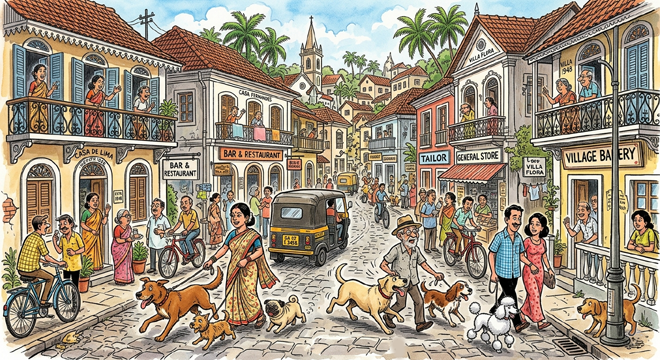
In India, rituals are not confined to temples or festivals; they permeate everyday existence. From morning prayers to food preparation, from seasonal festivals to life-cycle ceremonies, ritual practices create a sense of continuity that binds generations together. These rituals are not rigid commandments but evolving traditions, allowing for flexibility while maintaining a recognizable core.
The joint family system is another pillar of this continuity. Even as urbanization and nuclear families become more common, the psychological and cultural importance of extended kinship remains strong. Decision-making, consumption patterns, and even career choices are often influenced by family considerations. This collective orientation contrasts sharply with the individualistic ethos prevalent in many Western societies.
Food, too, plays a central role. Indian culinary practices are deeply tied to geography, climate, religion, and tradition. Meals are not merely about sustenance but about identity. The persistence of home-cooked food, regional cuisines, and traditional beverages reflects a broader resistance to homogenization.
Cultural resilience in the face of historical pressures
The survival of Hindu traditions over thousands of years is often attributed to this deeply embedded cultural framework. Historical disruptions—from invasions to colonial rule—did not erase these practices because they were decentralized and lived at the household level. Unlike centralized institutions that can be dismantled, everyday practices are far more difficult to dislodge.
This resilience also explains why cultural change in India tends to be incremental rather than revolutionary. External influences are filtered, adapted, and localized before being accepted. The result is a layered culture where ancient practices coexist with modern innovations.
The Indian consumer as a cultural gatekeeper
This civilizational continuity has a direct impact on consumer behavior. The Indian consumer is not merely a buyer but a cultural gatekeeper. Products and services are evaluated not just on price or quality but on their alignment with existing habits and values.
For multinational corporations, this presents both a challenge and an opportunity. Unlike in some regions where global brands can impose standardized offerings, in India they must adapt to local preferences. Failure to do so often results in rejection, regardless of the brand’s global stature.
Fast food meets traditional taste
The experience of McDonald’s in India illustrates this dynamic vividly. When the company entered the Indian market, it quickly realized that its global menu would not suffice. Religious sensitivities, dietary preferences, and taste profiles required a fundamental rethinking of its offerings. The result was a localized menu featuring items like chicken tikka burgers and vegetarian options that resonate with Indian consumers.
Similarly, Domino’s Pizza and Pizza Hut have thrived by embracing Indian flavors. Paneer toppings, spicy variants, and region-specific innovations have become central to their success. These adaptations are not superficial but strategic, reflecting a deep understanding of local tastes.
When adaptation fails: the case of breakfast habits
Not all global brands have succeeded in navigating this cultural landscape. Kellogg’s provides a notable example. Despite decades of presence in India and significant marketing efforts, the company struggled to displace traditional breakfast habits. Indian breakfasts are often hot, savory, and freshly prepared—qualities that cold cereal does not easily replicate.
The persistence of traditional options such as parathas, idlis, and poha underscores the strength of culinary habits. Even among urban consumers, where convenience might favor packaged foods, there remains a strong preference for familiar tastes and textures. Kellogg’s experience highlights a crucial lesson: altering deeply ingrained habits is far more challenging than introducing new products.

Beverages and the power of tradition
The beverage market tells a similar story. Despite aggressive marketing by global giants like Coca-Cola and PepsiCo, traditional drinks such as lassi and home-brewed tea continue to dominate. These beverages are not just drinks; they are cultural artifacts, tied to daily routines and social interactions. Tea, in particular, occupies a unique position in Indian life. It is consumed across regions, classes, and occasions, often serving as a social lubricant. The ritual of making and sharing tea cannot be easily replaced by bottled alternatives. Similarly, lassi, with its regional variations and seasonal relevance, remains deeply rooted in local culture.
Apparel and the evolution of fashion identity
The apparel industry offers another perspective on cultural adaptation. Foreign brands initially struggled to gain traction in India because they failed to account for local preferences in clothing styles, climate, and cultural norms. Over time, successful brands began incorporating Indian elements into their designs, marketing, and retail strategies.
This shift reflects a broader trend: globalization in India often takes the form of localization. Rather than replacing traditional attire, global brands coexist with and adapt to it. The popularity of fusion wear—combining Western and Indian elements—illustrates this synthesis.
Financial services and cultural alignment
Even in sectors that might appear culturally neutral, such as financial services, adaptation is crucial. The case of Ameriprise Financial India LLP is instructive. The company initially operated on a brand-agnostic, fee-based advisory model, which aligns with practices in more mature financial markets. However, this approach did not resonate with Indian consumers, who are often more comfortable with commission-based models and tangible products like insurance and fixed deposits.
Recognizing this, Ameriprise pivoted its strategy to align with local preferences. This shift underscores the importance of understanding not just economic factors but also cultural attitudes toward money, risk, and trust.
The broader lesson for global business
The experiences of these companies reveal a fundamental truth: India cannot be approached as just another market. It is a civilizational ecosystem with its own logic, shaped by thousands of years of continuity. Success in India requires more than localization; it demands cultural empathy and strategic flexibility.
This does not mean that global brands must abandon their identity. Rather, they must find ways to integrate it with local traditions. The most successful companies are those that strike this balance, creating products and experiences that feel both global and Indian.
Continuity as a competitive advantage
From a broader perspective, the persistence of traditional practices can be seen as a form of competitive advantage. It creates a stable foundation upon which new ideas can be built. Instead of constant disruption, there is a process of gradual evolution, allowing for sustainable growth.
This stability also fosters resilience. In times of economic or social uncertainty, traditional practices provide a sense of continuity and security. This is particularly relevant in a rapidly changing world, where many societies struggle with the pace of transformation.
The interplay of tradition and modernity
India’s journey is not a rejection of modernity but a negotiation with it. Technology, urbanization, and globalization are reshaping the country in profound ways. Yet, these changes are filtered through a cultural lens that prioritizes continuity.
For instance, digital platforms have transformed how people shop, communicate, and consume content. However, the underlying preferences—whether for certain foods, rituals, or family structures—remain remarkably consistent. This interplay between tradition and modernity is one of the defining features of contemporary India.
A living civilization
Ultimately, the idea of a “basic DNA” of Hindu Indian life is a way of describing a living civilization—one that evolves without losing its essence. This essence is not static; it adapts to new circumstances while retaining its core values.
The implications of this are far-reaching. For policymakers, it highlights the importance of culturally informed decision-making. For businesses, it underscores the need for localization and empathy. For society as a whole, it serves as a reminder of the strength that comes from continuity.
Conclusion: adaptation without surrender
The story of India’s cultural resilience is not one of resistance alone but of selective adaptation. External influences are not rejected outright; they are absorbed, modified, and integrated into the existing framework. This process ensures that change does not come at the cost of identity.
Whether in food, family, religion, or commerce, the underlying principle remains the same: continuity matters. It shapes behavior, influences decisions, and determines outcomes. For global brands, understanding this principle is the key to success. For India, it is the foundation of a civilization that continues to thrive in a rapidly changing world.