
Losing body fat, requires interrupting the body’s expectation of regular intake, reducing constant digestion, restoring metabolic flexibility, and re-aligning daily habits with movement, rest, and mental stimulation. What makes it difficult is not biology but lifestyle inertia
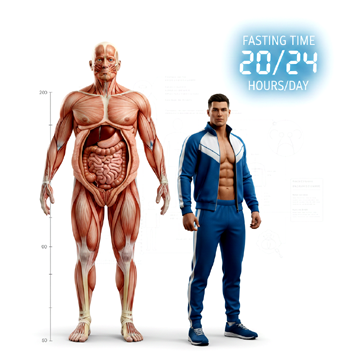
Fat loss is not a mystery; it is a rhythm. Modern conversations around fat loss are noisy, emotional, and commercial. Diet plans change every season, supplements promise miracles, and fitness influencers turn biology into entertainment. Yet, stripped of marketing and jargon, the logic of fat accumulation and fat loss remains brutally simple. The human body evolved to survive scarcity, not abundance. Fat is not an enemy; it is insurance. The real problem begins when insurance turns into permanent storage because the body no longer experiences uncertainty.
Losing body fat, in its essence, is not complicated. It requires interrupting the body’s expectation of regular intake, reducing constant digestion, restoring metabolic flexibility, and re-aligning daily habits with movement, rest, and mental stimulation. What makes it difficult is not biology but lifestyle inertia.
Digestion mode versus fasting mode
At any given moment, the body largely operates in one of two metabolic states. The first is digestion and storage mode, where food is broken down, glucose is circulated, insulin rises, and excess energy is stored—often as fat. The second is fasting and mobilization mode, where insulin drops, stored fat is accessed, and energy is drawn from reserves.
When food arrives predictably and frequently, the body never needs to access its savings. This is what may be described as a digestion, piling-up layers (DPUL) mode. In this state, fat accumulation is not a failure of willpower; it is a rational biological response to certainty. The body is being paid a regular “salary” of calories, so it quietly saves what it does not immediately need.
In contrast, when food intake is deliberately restricted to narrower windows, the body shifts into a fasting-to-melt-body-fat (F2MBF) mode. Here, fat is no longer a passive reserve; it becomes a working resource. The body learns that stored energy is meant to be used, not hoarded.
Why constant eating creates constant storage
Eating three full meals a day, plus snacks, desserts, and beverages, mirrors a monthly income that never fluctuates. When income is guaranteed, saving becomes automatic. Fat behaves the same way. Regular meals train the body to expect fuel at fixed intervals. There is no incentive to burn reserves because replenishment is assured.
This does not mean that food is harmful or that meals are unnatural. It means that predictability removes metabolic urgency. Historically, humans ate when food was available, not when the clock demanded it. Periods of scarcity were built into life. Today, scarcity has been engineered out of daily existence, and fat accumulation is the inevitable consequence.
Intermittent fasting, extended fasting windows, or even simply skipping meals occasionally reintroduce uncertainty. They remind the body that storage has a purpose: survival during absence.
Carbohydrates and the modern sedentary body
Carbohydrates are not inherently evil, but they are context-sensitive. In a physically demanding life—farming, hunting, long-distance walking—carbohydrates are efficient fuel. In a sedentary life dominated by sitting, screens, and mental stress, they are often excessive.
After the age of 35, metabolic efficiency declines. Muscle mass reduces, insulin sensitivity drops, and energy requirements fall. Yet eating patterns often remain unchanged. The result is surplus energy with nowhere productive to go.
Reducing carbohydrates, especially refined ones, lowers insulin spikes and allows fat-burning pathways to function. This does not require absolute elimination but demands restraint. For many adults, minimal or occasional carbohydrates are sufficient, especially when physical activity is limited.
Making the body crave, not expect
One of the most overlooked principles of fat loss is expectation management. A body that expects food does not burn fat. A body that craves food does.
Craving is not hunger panic; it is a controlled signal that stored energy must be accessed. By delivering less than expected—through fasting, smaller meals, or reduced frequency—the body adapts. Over time, cravings soften, energy stabilizes, and fat becomes accessible.
This is not deprivation. It is recalibration. The body learns that abundance is no longer guaranteed and adjusts accordingly.
The role of water, sleep, and circadian discipline
Hydration plays a supporting role in fat metabolism, digestion, and detoxification. Drinking adequate water helps regulate appetite signals and supports organ function. However, excess without balance can strain the system. The principle is not excess but consistency and clarity.
Sleep is non-negotiable. Seven hours of quality sleep is not indulgence; it is metabolic repair. Poor sleep elevates stress hormones, disrupts insulin regulation, and promotes fat storage. Waking early, aligning with daylight, and maintaining a stable circadian rhythm reinforces hormonal balance.
Morning reading or writing is not a lifestyle luxury. It sets mental tone, reduces impulsivity, and anchors the day in intention rather than reaction.
Sluggish digestion and the myth of “eating for energy”
Body fat is often blamed on overeating alone, but sluggish digestion and impaired gut function play a significant role. When the stomach and intestines struggle to process food efficiently, energy extraction becomes inefficient, inflammation rises, and storage increases.
Eating less frequently gives the digestive system time to reset. Fasting is not just about fat loss; it is about digestive rest. A rested gut functions better, absorbs nutrients more efficiently, and sends clearer satiety signals.
In many cases, fatigue attributed to “not eating enough” is actually the result of eating too often.
Sitting, blood flow, and metabolic stagnation
Prolonged sitting is one of the most underestimated contributors to metabolic dysfunction. When the body remains seated for long hours, blood pools in the lower body, particularly around the inner thighs and hips. Over time, this stagnation hardens tissue, reduces vascular clarity, and limits oxygen delivery.
The legs are not merely limbs; they are auxiliary pumps for the heart. Walking, standing, cycling, and moving regularly assist circulation, support lung capacity, and indirectly improve digestive efficiency.
Movement does not need to be intense. It needs to be frequent. The goal is to keep blood moving and tissues alive.
Cardio Is not about weight, it is about flow
Cardiovascular movement—walking, cycling, light jogging—is often misunderstood as a calorie-burning tool alone. Its deeper value lies in restoring internal flow. A body that flows well burns fat more efficiently, digests better, and recovers faster.
Daily walking or cycling establishes rhythm. Rhythm stabilizes hormones. Hormonal stability enables fat loss. This chain is more important than intensity or duration.
Pollution, diet, and strategic nutrition
Living in polluted environments places additional oxidative stress on the body. Citrus fruits, rich in antioxidants and vitamin C, can help counter some of this burden. However, fructose, even from natural sources, can contribute to fat storage if consumed excessively or in isolation.
The sequencing of food matters. Eating greens first slows sugar absorption, moderates insulin response, and reduces metabolic shock. Citrus after greens becomes supportive rather than disruptive.
Nutrition is not only about what you eat, but when and in what order.
Mental stagnation and physical decline
The body and brain are inseparable. Mental monotony accelerates physical decay. When the brain stops learning, curiosity fades, motivation drops, and discipline weakens.
Studying something new every year—whether a language, a skill, a subject, or a philosophy—keeps neural pathways active. An active brain demands an active body. This feedback loop is powerful and often ignored in physical health discussions.
For those trapped in monotonous jobs, deliberate learning becomes essential. It offsets routine, sharpens awareness, and prevents emotional eating driven by boredom rather than hunger.
Fat loss as a lifestyle signal, not a goal
Fat accumulation is not a moral failure. It is a signal. It indicates predictability, comfort, excess intake, low movement, and mental stagnation. Fat loss, therefore, is not about punishment but about reintroducing challenge.
Eat less often. Move more naturally. Sit less. Sleep better. Learn continuously. Make the body uncertain enough to use what it has stored, and calm enough to do so efficiently.
When these elements align, fat loss becomes a side effect, not an obsession.
Discipline without drama
The modern world encourages excess—of food, comfort, sitting, and distraction. The body responds logically by storing energy. Reversing this does not require extreme measures or constant suffering. It requires intentional scarcity, rhythmic movement, digestive rest, and mental engagement.
Fat is savings. When savings grow uncontrollably, it is not because the system is broken, but because the signals are wrong. Change the signals, and the system corrects itself. In that sense, losing body fat is not hard. It is simply unfamiliar to a world that has forgotten how to live with restraint, rhythm, and curiosity.
Pooping well empowers metabolism
One of the most ignored indicators of health in modern life is bowel movement. People track weight, steps, calories, sleep cycles, and heart rates, yet rarely ask a simple question: Am I clearing my system properly every day? Regular, complete bowel movements are not a minor detail; they are central to fat loss, mental clarity, and overall vitality.
When the intestines are sluggish, toxins linger. Waste that should have exited the body hours ago remains inside, fermenting, producing gas, inflammation, and systemic stress. The body then reallocates energy to containment rather than optimization. Fat loss slows, digestion weakens, and the mind feels dull. In such a state, even disciplined eating and exercise yield limited results.
Pooping well several times a day—especially after meals—is a sign that digestion is efficient and that the gut-brain axis is functioning smoothly. It indicates that food is being processed, nutrients absorbed, and waste expelled without delay. This clearance reduces toxic load, lowers inflammatory signals, and frees the liver to focus on fat metabolism rather than damage control.
Frequent bowel movements are not about eating more; they are about digestive flow. Greens, fiber-rich vegetables, adequate hydration, movement, and fasting windows all contribute to this rhythm. When food intake is less frequent but cleaner, and digestion is given time to complete its cycle, elimination improves naturally.
A clean intestine also sharpens hunger signals. When waste accumulates, the body often confuses toxicity-induced discomfort with hunger, leading to unnecessary eating. Clearing the gut restores honest communication between the stomach and the brain. Hunger becomes precise, cravings reduce, and eating becomes intentional rather than compulsive.
There is also a mental dimension. A body that eliminates efficiently feels lighter, calmer, and more alert. Many people report clearer thinking, better mood, and improved focus when bowel movements are regular and complete. This is not coincidence. The gut houses a large portion of the nervous system, and stagnation there reflects everywhere else.
In this sense, regular intestinal clearance is not detox folklore. It is housekeeping. Just as a home becomes dysfunctional when garbage is not taken out daily, the body underperforms when waste is retained. Fat loss, energy, and clarity thrive in cleanliness, not accumulation.
A disciplined lifestyle that includes fasting, hydration, movement, greens-first eating, and reduced carbohydrate load naturally promotes better elimination. When the intestines are clear, the body no longer needs to store excess. It feels safe to burn, release, and renew. Ultimately, pooping well is not an embarrassing footnote to health—it is one of its clearest signals.

