
When this fizzy dairy curiosity from Victorian England made its way to India, it did not remain a bland colonial experiment but underwent a full transformation. Indians added khus, rose and lemon to it. Shops in undivided Punjab, before Partition, began serving this concoction
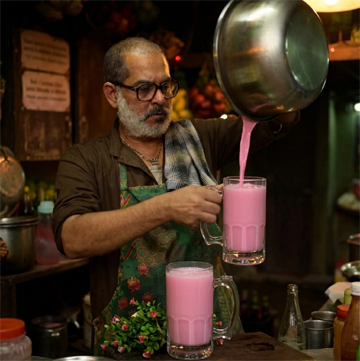
The brilliant movie from Aditya Dhar’s directorial hat, Dhurandhar has managed to jog a memory of a refreshing pre-partition drink. Not with a sweeping romance, not with a thunderous climax, but with a quiet, almost mischievous whisper: doodh soda.
There I was, minding my own cinematic business, watching Dhurandhar unfold, when suddenly the words appeared like a plot twist no one saw coming: “doodh soda.” Now, films have introduced us to many things, philosophies, fashion trends, questionable hairstyles, but rarely have they revived an entire beverage category. This was not just a drink. This was a portal. A portal to a time when people looked at a glass of milk and thought, “You know what this needs? Bubbles.”
Victorian England: where curiosity met questionable decisions
To understand doodh soda, we must travel back to Victorian England, a time when people wore elaborate clothing, wrote long letters, and apparently experimented with mixing milk and soda. Now, Victorian England was a place of innovation. The Industrial Revolution was humming along, science was advancing, and someone, somewhere, decided to pour soda into milk. Because why not? This was the same era that gave us steam engines and telegraphs, so perhaps we should be grateful that milk soda is the strangest thing to emerge from it. One imagines a gentleman in a waistcoat, monocle slightly tilted, stirring a glass and declaring, “Ah yes, this shall be the future.” History, as it often does, had other plans.
The great Indian upgrade
But here’s where the story gets interesting, because if there’s one thing India does exceptionally well, it is taking an idea and giving it a personality makeover. When this fizzy dairy curiosity made its way to India, it did not remain a bland colonial experiment. Oh no. It underwent a full transformation. Enter khus. Enter rose. Enter lemon. Suddenly, this was not just milk and soda. This was an experience. On the bustling streets of undivided Punjab, yes, Punjab before Partition, vendors began serving this curious concoction. It was refreshing. It was slightly tangy. It was unapologetically unique. And most importantly, it worked.
The science nobody asked for but everyone got
Now, let’s pause for a moment and appreciate the sheer audacity of this drink. Milk, as we know, is calm. It is serene. It is the introvert of beverages. Soda, on the other hand, is chaos. It fizzes. It bubbles. It refuses to sit still. Mix the two, and you don’t just get a drink, you get a personality conflict in a glass. And yet, somehow, it balances out. The result? A fizzy, slightly tangy, surprisingly refreshing beverage that defies logic and expectations in equal measure. It’s the kind of drink that makes you question everything you thought you knew about liquids.
School days and experimental taste buds
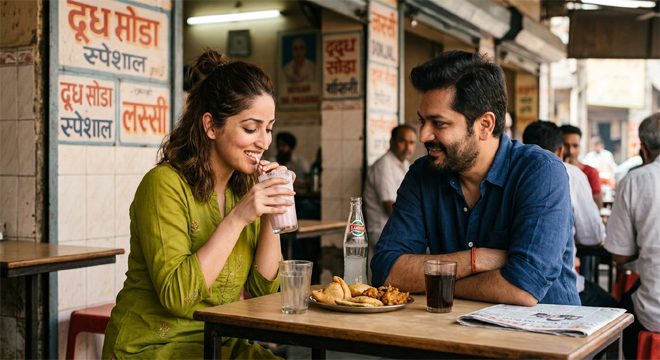
Long before doodh soda became an internet curiosity, many of us unknowingly conducted our own experiments. Back in the glorious decades of the 1970s, 1980s, and 1990s, there was a particular kind of rebellion that did not involve breaking rules, but bending beverages. Take a bottle of Coca-Cola. Add cold milk. Stir cautiously. Observe. What followed was a taste that was… confusing. But also intriguing. It was fizzy. It was creamy. It was slightly tangy. It was, in its own strange way, delightful. At the time, we did not realise we were recreating a pre-Partition street drink. We thought we were just being inventive. History, it turns out, was quietly nodding in approval.
The golden age of doodh soda
There was a time when doodh soda was not a curiosity. It was a staple. On hot summer days, when the sun seemed personally offended by your existence, a glass of doodh soda offered relief. It was affordable. It was accessible. It was everywhere. Street vendors would mix it with practiced ease, creating a drink that was as much about theatre as it was about taste. The clink of glasses. The fizz of soda. The swirl of milk. The splash of syrup. It was a performance.
Then came modernity (and marketing budgets)
And then, as often happens, modernity arrived. With it came global brands, aggressive marketing, and a flood of beverages that promised convenience, consistency, and aspirational lifestyles. Suddenly, doodh soda was competing with glossy advertisements, celebrity endorsements, and refrigerators filled with neatly branded bottles. It did not stand a chance. Slowly, quietly, it began to disappear. Not with a bang, but with a sigh.
The tragedy of forgotten flavours
Today, doodh soda exists in fragments. In memories. In small pockets where tradition stubbornly refuses to fade. You might find it in a quiet corner of an old market. Or hear about it from someone who remembers “how things used to be.” It has become one of those things that people talk about with a mix of nostalgia and disbelief. “Did we really drink that?” “Yes. Yes, we did.”
The internet discovers what grandmothers already knew
In recent years, the internet has rediscovered doodh soda. Videos, posts, and articles have begun to circulate, describing its taste, its history, its peculiar charm. For many, it is a novelty. For others, it is a memory. And for a select few, it is validation. Because nothing feels quite as satisfying as discovering that your childhood experiments were, in fact, culturally significant.
The taste test: brave or foolish?
Let us address the elephant in the room: would you actually drink doodh soda today? This is not a question with a simple answer. On one hand, curiosity beckons. The idea of a forgotten drink, revived through cinema and nostalgia, is undeniably appealing. On the other hand, there is a voice in your head whispering, “Milk and soda? Really?” The only way to resolve this internal conflict is, of course, to try it. Preferably with a sense of humour.
Why it works (against all odds)
The brilliance of doodh soda lies in its contradictions. It is both creamy and fizzy. Familiar and strange. Comforting and surprising. It does not fit neatly into any category. And perhaps that is why it worked. Because sometimes, the best things in life are the ones that refuse to make sense.
Cinema as a time machine
What makes the mention in Dhurandhar so significant is not just the drink itself, but what it represents. Cinema has a unique ability to resurrect the past. To bring back forgotten words, forgotten habits, forgotten flavours. A single line of dialogue can send people down a rabbit hole of memory and discovery. In this case, that rabbit hole is filled with milk, soda, and a surprising amount of history.
The larger story: how India adapts everything
Doodh soda is not just a drink. It is a story. A story of how ideas travel. How they evolve. How they become something entirely new in a different context. It is a reminder that Indian culture does not merely absorb influences, it transforms them. What began as a Victorian experiment became a Punjabi street staple. What was once ordinary became extraordinary. And what was once forgotten is now remembered.
Should doodh soda make a comeback?
This is the question that inevitably follows. In an age of artisanal beverages, craft everything, and nostalgic revival, doodh soda seems perfectly positioned for a comeback.Imagine it: Boutique cafes. Minimalist menus. “Heritage Milk Soda” served in aesthetically pleasing glasses. Instagram would have a field day. And yet, part of its charm lies in its simplicity. Its unpretentious origins. Its street-side authenticity. Can that survive a modern makeover? Only time, and perhaps a few brave entrepreneurs, will tell.
The final sip
In the end, doodh soda is more than just a drink. It is a reminder of a time when experimentation was simple, flavours were local, and refreshment did not come with a marketing campaign. It is a testament to human curiosity, cultural adaptation, and the occasional triumph of unlikely combinations. So the next time you watch Dhurandhar and hear the words “doodh soda,” don’t just dismiss it as a quirky detail. Pause. Reflect. And maybe, just maybe, consider giving it a try. Because history, like soda, has a way of bubbling back to the surface. And sometimes, all it takes is a glass of milk to make it fizz.