
Electric trains running with hydrogen as the fuel. That’s where Japan is at. Launching in 2030
Japan’s first hydrogen-powered train, the HYBARI, is a hybrid electric multiple unit (EMU) developed by JR East, Toyota, and Hitachi. It uses hydrogen fuel cells to generate electricity, which powers the train and produces only water vapor as a byproduct. The goal is to replace diesel trains on regional lines with this zero-emission alternative and achieve commercial service by 2030 as part of Japan’s carbon-neutral transportation efforts.
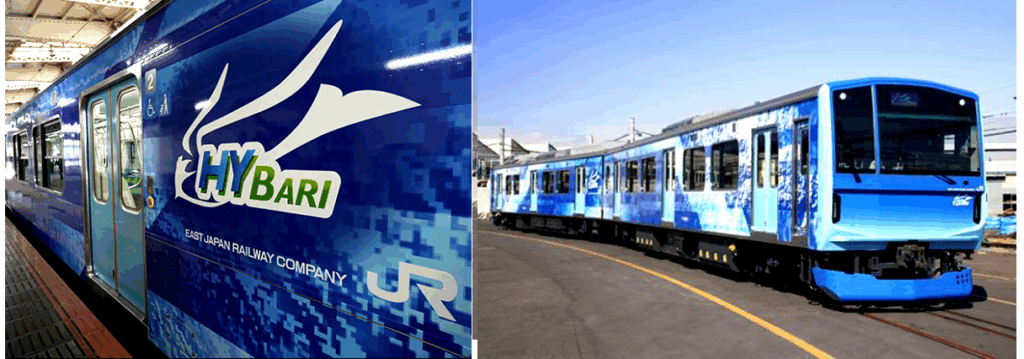
Technology: The HYBARI uses a hybrid system that combines hydrogen fuel cells with batteries to generate electricity. When hydrogen and oxygen combine in the fuel cell, the only byproduct is water vapor.
Purpose: This initiative is part of Japan’s strategy to decarbonize its transport sector by creating a sustainable alternative to diesel-powered trains.
Benefits: The trains are quieter and produce no carbon emissions, smoke, or other harmful pollutants, making them an eco-friendly option.
Status: The train has undergone test runs, and commercial service is planned for 2030.
Other developments: While Japan is moving forward with hydrogen trains, other countries are also developing their own hydrogen-powered rail systems.